
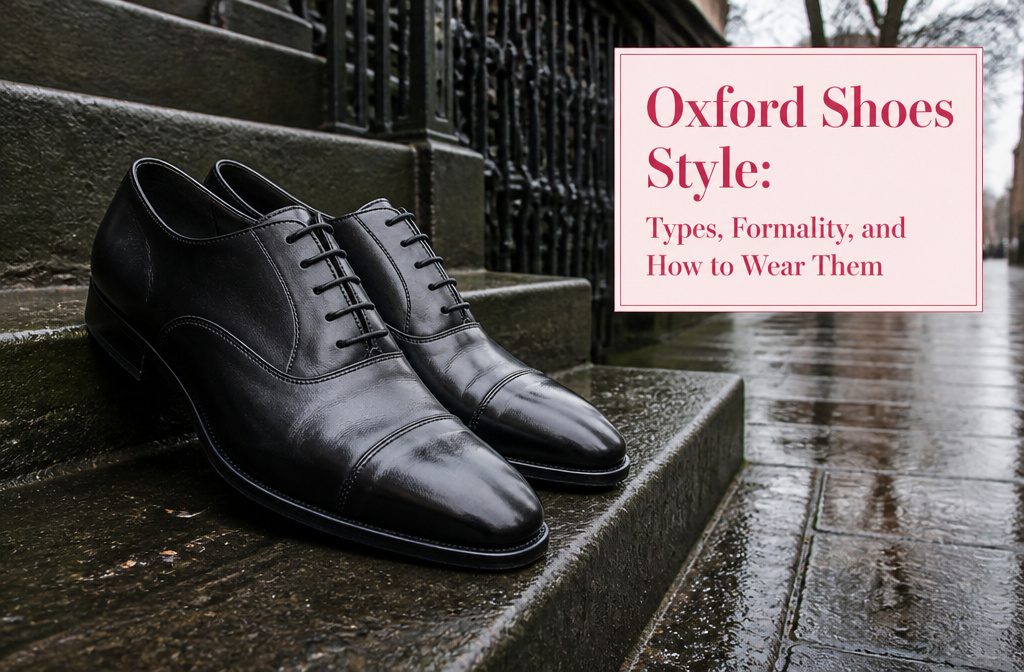
An Oxford is a dress shoe with closed lacing: the eyelet tabs are stitched under the vamp, so the laces pull into a flat V. It also needs a low heel and a cut just below the ankle.
Miss one and it’s something else, usually a Derby, whose open flaps read more relaxed.
What Defines an Oxford
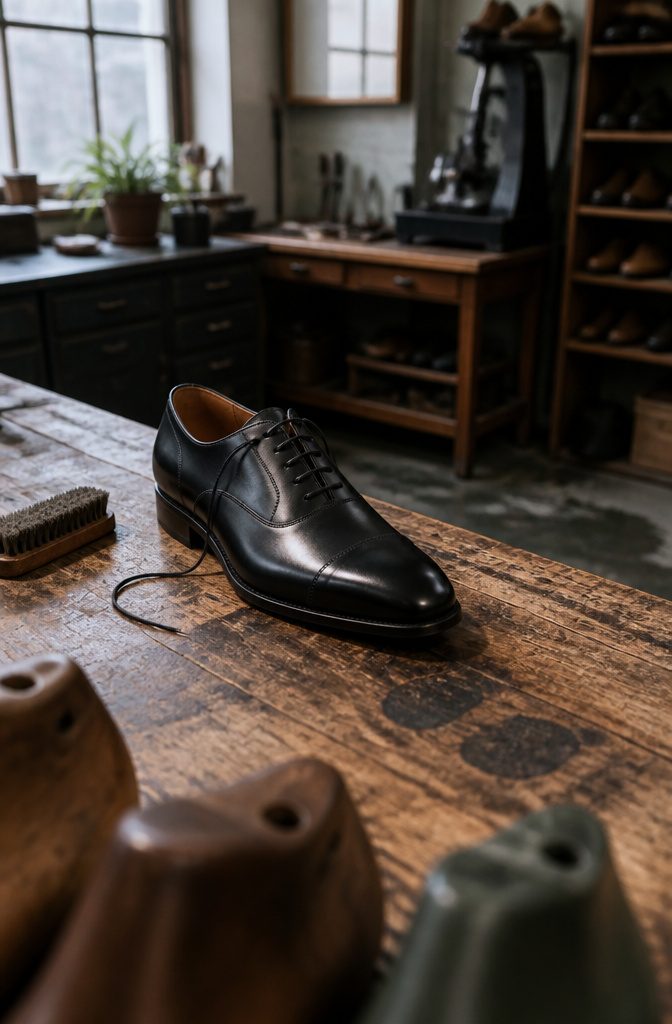
On an Oxford, the eyelet tabs are stitched under the vamp, so the laces pull together into a flat V and the front of the shoe looks sleek and polished.
A Derby does the opposite: its eyelet facings sit on top of the vamp, and those flaps open wide. That suits a higher instep, but it reads more relaxed.
Lacing is the first test I apply, though a true Oxford needs closed lacing, a low heel, and a cut just below the ankle. Miss one and it is something else.
The style traces to the "Oxonian," an ankle-high half-boot from 1825. Oxford University students in the 1820s and 1830s found those boots heavy and pushed for a lighter, low-cut shoe, which became the Oxford.
Oxford Styles and Toe Types
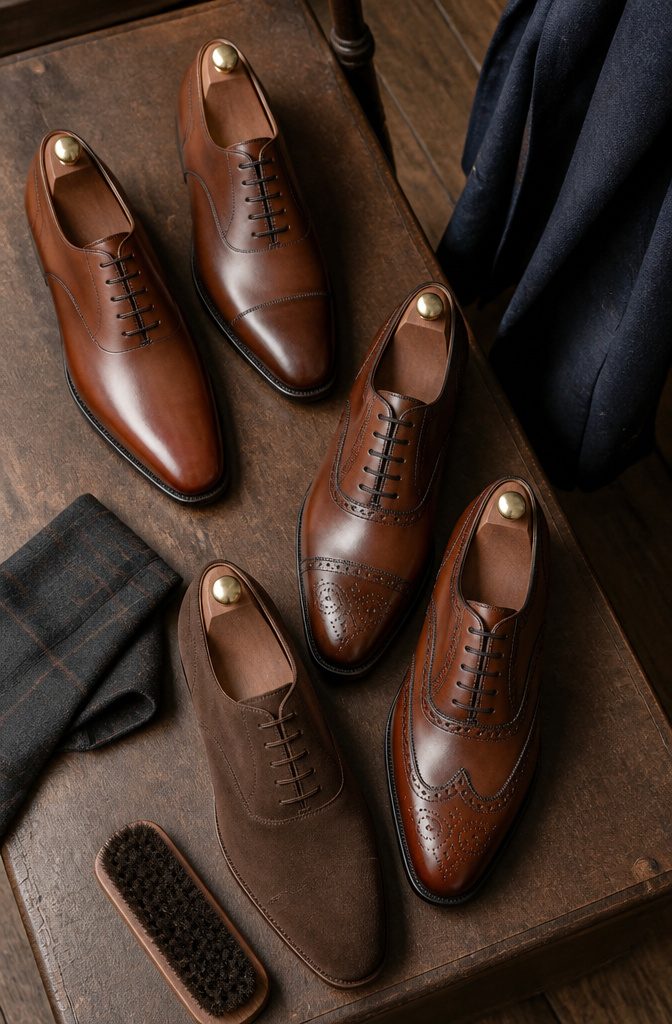
A plain toe oxford has no seams, stitching or perforations across the toe, which makes it the most formal style.
A cap toe adds a stitched line across the toe box. The semi-brogue keeps that straight cap and adds broguing along the seam, often with a medallion on the toe.
A wingtip has a W-shaped toe cap and the most ornate look of the group. A wholecut is made from a single piece of leather, so nothing interrupts the finish.
Leather is the standard material, and modern versions also come in suede and patent leather. For one pair that covers work and weekends, I’d pick a semi-brogue in medium brown.
Formality by Color and Detail
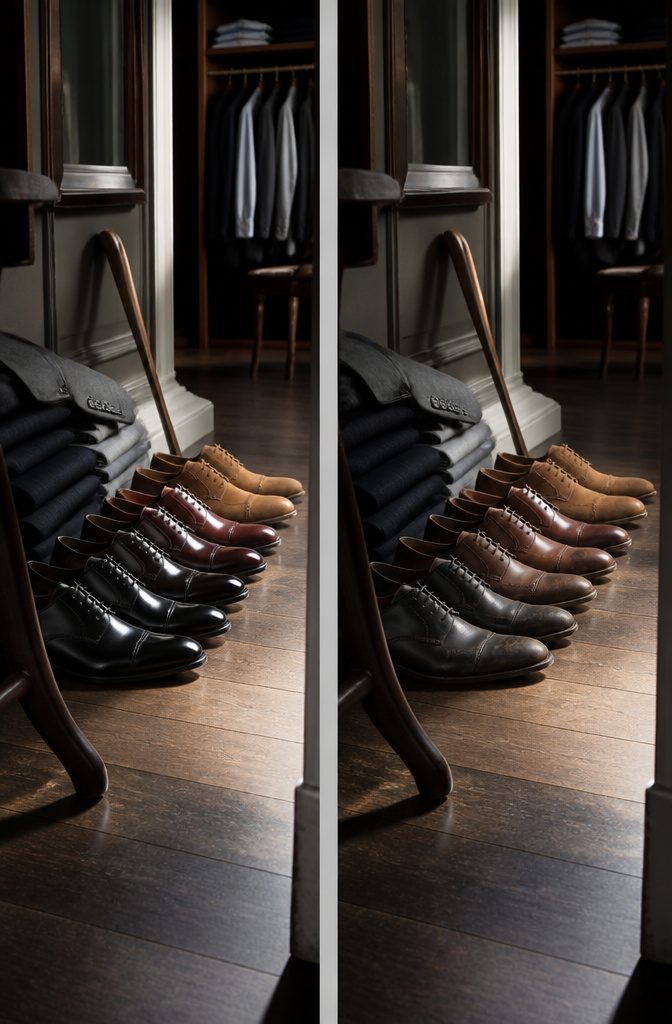
Black sits at the formal end: a plain toe in black suits black-tie, funerals and conservative offices, and a black cap toe is where I’d start a collection.
Dark brown or espresso is the daytime workhorse, softer than black and easy with navy, gray and earth tones.
Oxblood reads formal without black’s severity. Medium brown or cognac leans smart-casual, and tan is the most relaxed, best in warm weather.
Detail follows the same logic: less broguing and darker leather means more formal.
A plain or cap toe outranks a wingtip, and suede softens the look further. Even a casual Oxford still dresses up more than a loafer in the same color, because the closed lacing keeps its edge.
Pairing Oxfords With Outfits
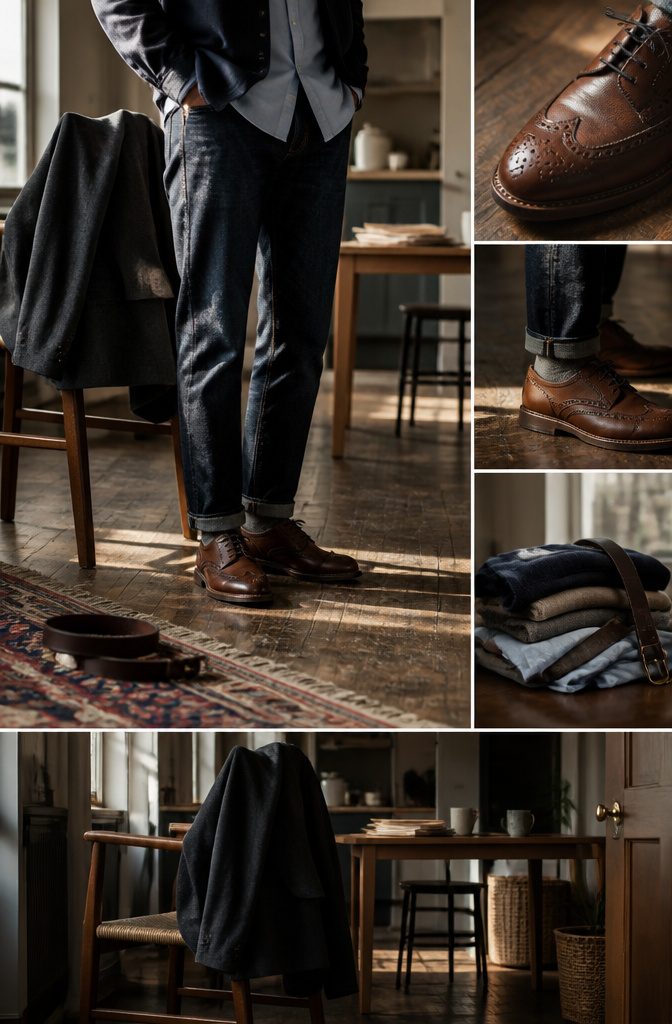
A navy or charcoal suit pairs best with black Oxfords. Dark brown works too, and on a mid-gray suit it adds depth that black can’t.
With chinos, brown or suede pairs read smarter than black.
Add a button-down and a blazer or cardigan. Black with chinos or jeans looks rigid, and I’d skip it.
Dark slim or tapered denim with brown or wingtip Oxfords is the pairing I’d choose first.
Dress it up with a crisp shirt, or down with a tee and jacket. No-show socks or rolled trousers relax it further.
Women’s Oxford Outfits
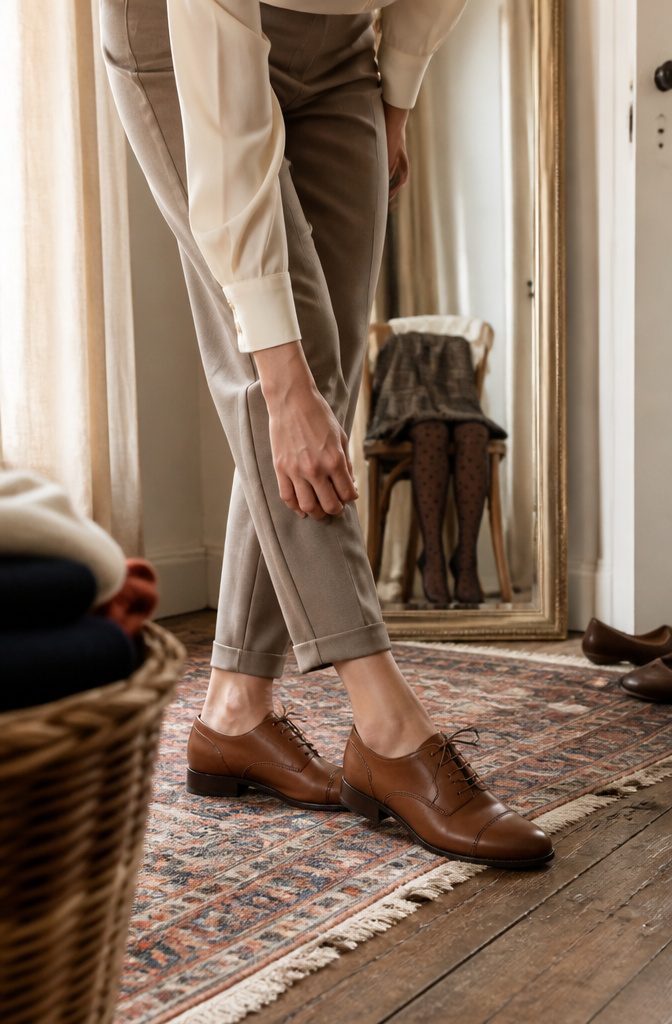
Tailored trousers and a blouse give the Oxford its most reliable job: a business-casual outfit that looks sharp without going stiff.
With dresses and skirts, the shoe turns playful and a little vintage, especially over patterned tights or socks. Jeans work best high-waisted or cropped, which mixes modern and retro.
Fashion-led versions bend the rules.
Ballet oxfords pair a ballerina flat’s softness with a brogue’s structure, and platforms add height. Mansur Gavriel’s Oxford Dance costs $495.
Prices spread wide. The Linea Paolo Mirna Oxford Flat at $140 and the Dr. Martens 1461 at $170 to $190 are where I’d start, since J.Crew’s Lace-Up Oxford runs $278 and Church’s Burwood Met Studded Brogues reach $1,370.
Winter Wear and Care
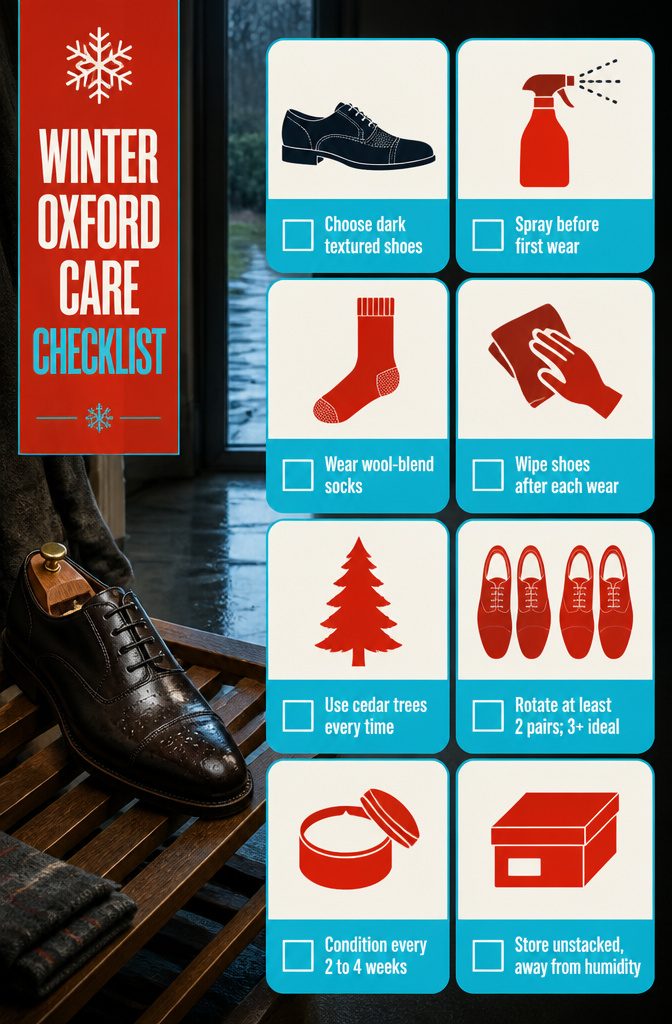
Winter asks more of an Oxford, and a handful of habits cover most of it:
- Choose dark shoes with a textured finish. They hide scuffs and water marks between cleanings.
- Treat them with a water-resistant spray before wearing, and look for grippier soles on icy days.
- Wear thicker wool or wool-blend socks for warmth.
- Wipe the shoes with a damp cloth after each wear.
- Use cedar shoe trees every time you take them off. They absorb moisture and prevent creasing, and I’d call them the highest-impact habit here.
- Rotate at least 2 pairs, with 3 or more ideal, so wet leather dries fully between wears.
- Condition every 2 to 4 weeks, then polish to restore color.
- Store them in dust bags or boxes, unstacked, away from humidity.
Do this consistently and a well-made Oxford can last a decade or more.
Frequently Asked Questions
What are the best Oxford shoes for men?
A black cap toe is the best first pair, and a medium brown semi-brogue is the better choice if you want one pair for both work and weekends. Black suits suits, black-tie and conservative offices.
Dark brown or espresso is the daytime workhorse, softer than black and easy to wear with navy, gray and earth tones. Choose plainer toes and darker leather for formal settings, and add broguing or lighter colors as the occasion relaxes.