
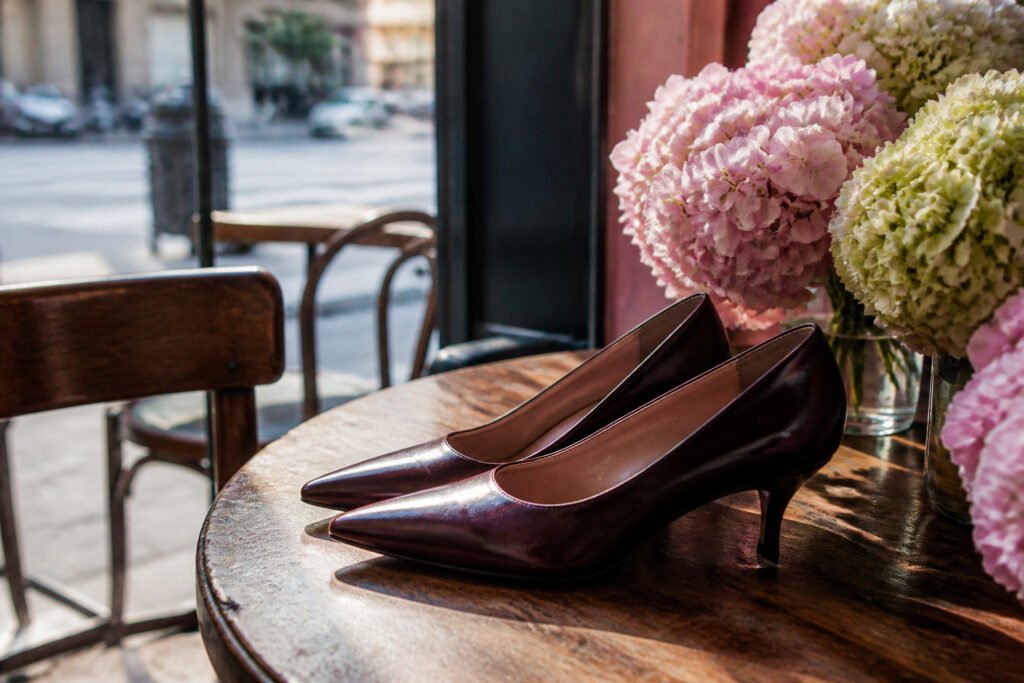
Yes, pointy shoes are in style for 2026, but only if you choose the low-heeled versions that now dominate over stilettos.
Prada’s antiqued leather kitten-heel pumps, spotted repeatedly at Milan Fashion Week, set the reference point: a sharper, longer point than the 2010s silhouette, paired with enough cushion and stability to walk a city block without calling a car.
1. Are Pointy Shoes in Style Right Now

Yes, pointy shoes are back in style for 2026, and the silhouette showing up everywhere is sharper than the rounded toes that dominated the past few seasons.
Pointed-toe kitten heels and boots are the two shapes driving the trend, with Prada’s antiqued leather pumps leading the charge on runways from Milan to New York.
The appeal sits in the balance: the low kitten heel adds just enough lift for a polished feel without tipping into "Uber-only" territory, while the pointed toe keeps the line refined.
Street style has followed quickly. In London, guests traded worn trainers for ivory pointed courts; in New York, the same shape appeared with tailored shorts and mini slip skirts, proving the heel works across hemlines.
For boots, the modern pointy toe version pairs soft leather uppers with cushioned insoles and stable block heels, making the silhouette as wearable as it looks.
The overall effect reads grown-up and intentional, a step away from the comfort-first flat without abandoning practicality entirely.
2. Which Pointy Styles Are Trending

The 2026 pointy shoe comeback centers on two silhouettes I keep spotting: the pointed-toe kitten heel in court shoe form, and the same toe shape carried into ankle boots.
Both share that knife-edge point, but the proportions feel different from earlier waves.
The toe is longer and leaner than the 2010s stiletto pump, and the heel stays low enough that you can actually walk a city block without calling a car.
Prada’s pointed pumps with low kitten heels have become the reference point. The brown version with bow detailing and raw-cut edges showed up repeatedly at Milan Fashion Week, and the cream colorway is nearly as common in street style shots.
What makes these distinct from previous pointy shoe moments is the deliberate practicality. The heel adds lift without the "Uber-only" limitation of higher styles, and the pointed toe reads refined rather than aggressive.
Pointed-toe ankle boots are running parallel, with soft leather uppers and cushioned insoles addressing the comfort gap that used to come with the shape.
Block heels and low-heeled versions dominate over stilettos this cycle, which matters if you are building a wardrobe around pieces that work for more than one occasion.
The sculptural heel details and textured finishes keep the look current, but the core appeal is that the point now signals polish without sacrificing wearability.
3. How Pointy Shoes Read in Current Fashion

Pointy shoes read as intentional in 2026 because the wider move is away from the pandemic casualness that dominated the last few years.
The polished, put-together aesthetic rewards sharper silhouettes, and a tapered toe signals that someone selected their footwear rather than defaulting to whatever was comfortable at the door.
They sit squarely inside minimalism and quiet luxury, the two currents that still dominate, because the shape itself is decoration enough. No hardware, no logo, no platform required.
The visual elongation of the leg line flatters without shifting the whole proportion of an outfit.
A pointed toe creates a continuous vertical where a square or round break would sit, which matters more now that hems are dropping and trousers are fuller.
Seasonally, they bridge cold and warm months alike: boots for fall and winter, flats and pumps for spring and summer, the same sharp line carrying through.
I see them as one of those rare shapes that works harder than its competition, trading a little ease at the toe for a lot of structure everywhere else.
4. Styling Pointy Shoes for Real Outfits

Wide-leg trousers give pointy shoes their best stage. The hem should just brush the top of the toe, letting the point peek through with each step for that elongating effect.
I prefer this pairing in the office over a pencil skirt; the trousers carry the shoe’s sharp line upward without competing for attention.
Midi skirts work on the same principle of contrast. The soft, feminine line against an angular toe balances an outfit without trying to match elements that refuse to match.
For weekend errands, cropped straight-leg jeans serve the same function: the exposed ankle shows off the silhouette, and a fitted top keeps the proportions clean.
Neutral tones, black, brown, beige remain the safest investment, though ivory, metallic silver, and deep burgundy offer a seasonal update if your wardrobe already runs to those bases.
The metallic reads evening; the burgundy carries through day to night with a tailored coat.
Two ways to play the casual angle.
One: full polish with structured pieces, treating the pointy boot as the power element. Two: deliberate contrast with denim and minimal hardware, letting the shoe do the only sharp work in the outfit.
The second wins for versatility; you will wear those combinations more often, and the shoe still reads as intentional rather than dressed-up leftover.
Where Pointy Shoes Came From

The pointy shoe starts earlier than most people guess. In medieval Europe, wealthy men wore leather poulaines with toes that could stretch 12 inches past their feet, stuffed with moss or wool to keep the shape rigid.
The look was so tied to status that King Edward IV passed laws in 1463 capping toe length at 2 inches for anyone below the rank of lord.
That restriction kept the longest points as a visual marker of nobility, and it let the king limit imported fabrics while he was at it.
Religious leaders backed the rules on modesty grounds, though only for the lower classes; they also claimed the long toes blocked proper kneeling.
The physical cost was real enough: poulaines bent toe bones and made bunions more common. From there the silhouette shrank, shifted to women’s fashion, and kept resurfacing whenever a designer wanted a sharp line.
The medieval origin explains why pointy shoes still read as deliberate and slightly theatrical: they were built to display status, not to disappear.
What Modern Comfort Looks Like

The real question with pointy shoes is whether they still punish your feet the way they did ten years ago.
Soft leather uppers and cushioned insoles have changed the calculation. Current pointy toe ankle boots use these materials alongside stable block heels that distribute weight better than the stiletto versions still on the market.
Memory foam footbeds and padded collars, borrowed from what works in sneakers, now show up in dressier silhouettes too.
That said, the trade-off has not disappeared. A sleek stiletto heel still narrows your base of support, and a sharply tapered toe box limits how much your forefoot can spread.
The low-heeled versions and block-heel constructions are the ones I would actually wear past dinner. Sculptural heels and textured finishes add interest without adding wobble.
LWG-certified leather matters here because it signals tanning standards that usually produce more pliable uppers, and pliable uppers break in faster. Hand-stitched construction, where you find it, tends to flex at stress points rather than fighting your foot.
The honest limit: even the best-cushioned pointy shoe will never have the toe room of an almond or square-toe boot. If you are between sizes or know your feet swell by afternoon, the half-size up is the safer call.
Sizing Pointy Shoes for Your Foot

A pointy toe box narrows the forefoot in a way that round or almond shapes do not, and that taper changes where your foot meets the shoe.
The widest part of a round toe sits directly across the ball of the foot, but a pointy style carries that width farther forward before pinching.
That means women with a wider forefoot or a prominent bunion often feel the squeeze earlier, while a narrow foot with tapered toes may find pointy styles more secure than sloppy.
The fit question is less about length and more about volume through the vamp.
A low-profile foot can slide into a sleek pointy flat without strain, but a higher instep needs the extra height that a slightly deeper heel or a soft upper provides.
Leather with some give will mold across the forefoot over a few wears; stiff synthetic uppers rarely forgive.
I size up by half in most pointy heels because my toes need that forward room, but in pointy flats I stay true to size since the heel does not pitch my weight forward.
More toe room means more heel slip, and a tighter heel means cramped toes; you have to pick your problem.
Try both sizes if you are between, and walk on a hard floor, not carpet. The right pointy shoe feels slightly firm at the forefoot but never sharp.
Frequently Asked Questions
Are pointy shoes in style?
Yes, pointy shoes are back in style for 2026, led by pointed-toe kitten heels and ankle boots.
Prada’s antiqued leather pumps have become the reference point, showing up repeatedly from Milan to New York. The silhouette reads grown-up and intentional, balancing polish with enough practicality for real wear.
How do I style pointy shoes?
Pair them with wide-leg trousers so the hem just brushes the toe, letting the point peek through with each step.
Midi skirts and cropped straight-leg jeans work too, the contrast between soft lines and the angular toe balancing the outfit. Neutral tones stay the safest investment, though metallic silver and deep burgundy offer a seasonal update.
Why are pointy shoes considered fashionable?
They create a continuous vertical line that visually elongates the leg, flattering without shifting an outfit’s whole proportion.
In 2026’s move toward polished, put-together dressing, the tapered toe signals deliberate selection rather than a default to comfort. The shape itself acts as decoration, fitting cleanly into minimalism and quiet luxury without needing hardware or logos.
Are pointed shoes in style in 2026?
Yes, the 2026 comeback centers on two silhouettes: the pointed-toe kitten heel in court shoe form, and the same toe shape carried into ankle boots.
Both share a longer, leaner point than the 2010s stiletto pump, with heels low enough to walk a city block.
Street style has followed quickly, from ivory pointed courts in London to the same shape with tailored shorts and mini slip skirts in New York.
What shoes are out of style in 2026?
Rounded toes that dominated past seasons have given ground to sharper silhouettes, and the pandemic-era casualness of defaulting to whatever was comfortable at the door is fading.
The polished aesthetic now rewards footwear that looks selected rather than slipped on, with pointy shoes sitting squarely inside the minimalism and quiet luxury currents that still dominate.
What is the hottest shoe trend right now?
Pointed-toe kitten heels and boots are the two shapes driving footwear trends in 2026.
Prada’s low kitten-heel pumps with bow detailing and raw-cut edges showed up repeatedly at Milan Fashion Week, and the cream colorway is nearly as common in street style shots.
For boots, soft leather uppers with cushioned insoles and stable block heels make the pointy silhouette as wearable as it looks.