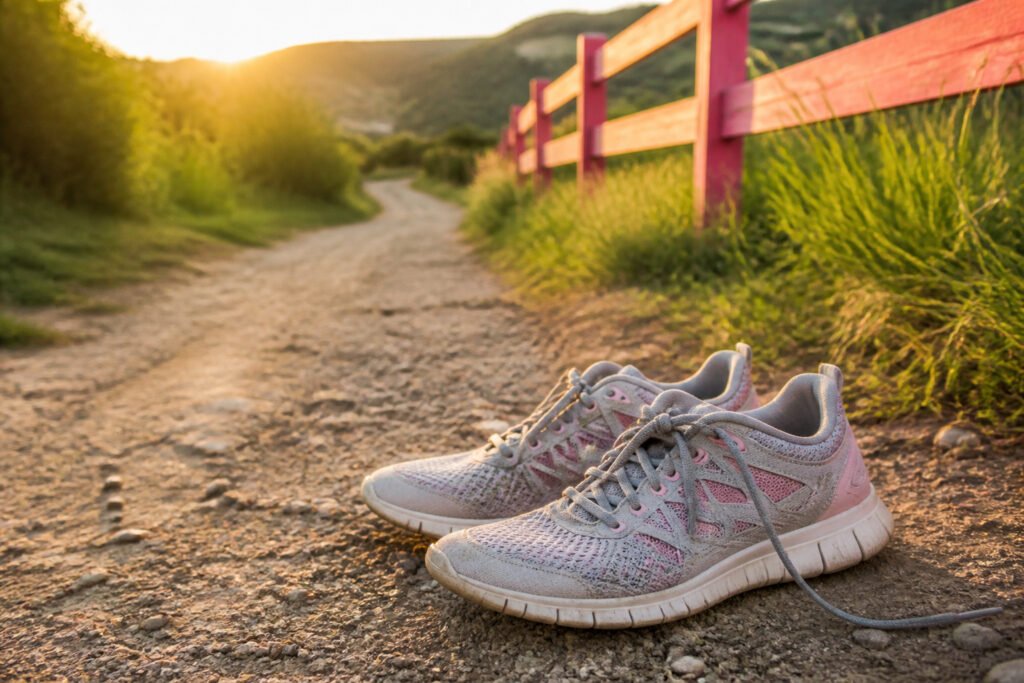
Women’s Nike Free 5.0 running shoes are lightweight, flexible trainers built around a stretch mesh upper and deep flex grooves.
They fit best on narrow to average-width feet; wide-footed runners routinely size up a full size or switch to Skechers Go Bionic or Merrell Bare Access instead.
The minimal midsole that gives the shoe its natural ground feel also means the upper takes more stress, and the forefoot snugness that average-width wearers barely notice eventually splits the mesh at its widest point.
1. Alternatives for Wide Feet

Skechers Go Bionic and Merrell Bare Access come up most often as direct replacements when the Nike Free 5.0 feels too narrow.
Both have wide toe boxes similar to the Frees but without the pressure at the ball of the foot that eventually splits the upper.
The Go Bionic runs light and inexpensive, though wearers note the foam breaks down faster than standard running shoes. Merrell Bare Access adds more cushion underfoot while keeping the same flexible sole.
Saucony Kinvara sits at standard width for women, a B, which matches the Free rather than solving it. New Balance Minimus still offers width options in most models, and the MT110 in particular carries a pretty wide toe box.
Altra Instinct and Altra Olympus both run generous, the Instinct closer to a true minimalist feel while the Olympus, despite its wide forefoot, is zero-drop only by technicality, stacked with cushioning.
Hoka One One tends narrow across the board, and the Terra Kiger from Nike’s own trail line feels similar underfoot but opened the forefoot slightly in its second version.
For a true wide-foot fix, skip the half-measures and go straight to what Free wearers actually switched to.
2. Sizing Up in Nike

Nike’s sizing tends to run small and narrow across the board, and the women’s Nike Free 5.0 running shoes are no exception.
I have seen enough buyer feedback to treat the brand’s listed size as a starting suggestion rather than a final answer.
Going up half a size is the minimum most women need, and a full size up is not unusual, especially if the forefoot feels pinched in your usual length.
The Free 5.0 does open up a bit wider at the front than some casual Nike models, but the overall last still favors a narrower foot.
For online shoppers, this creates a real problem: you cannot assume the size you wear in New Balance or Asics will transfer over.
One option is to order two sizes and return what does not fit, though that means fronting the cost and waiting. Another is to measure your foot in centimeters and check it against Nike’s own chart, then still round up.
The risk of guessing wrong is high enough that I would not buy these at full price without a return policy I trust.
3. What Wearers Actually Say

The women’s Nike Free 5.0 running shoes draw people in with a stretch mesh upper and deep flex grooves that let the foot move naturally, yet owner reports on Reddit and forum threads at Fluther reveal a pattern that repeats after a few months of wear.
The forefoot fits snugly, sometimes tight enough that wide-footed runners see holes form at the widest point of the upper, and several owners mention sizing up a full size or more just to get enough width through the front of the shoe.
In one Zappos video walkthrough, the asymmetrical lacing structure and stretch collar get praised for easing instep pressure, which sounds like a fix until you read that same narrow forefoot described by multiple wearers as a hair too slim even in the men’s equivalent width.
The lightweight, low-foam midsole that gives the shoe its flexible feel also means less structure overall, so the upper takes more stress and the outsole wears faster than conventional running shoes.
For women with average or narrow feet, the trade-off might balance out.
For anyone who needs real width through the toe box, the Free 5.0’s popularity starts to look like a mismatch between the foot and the last it was built on.
Arch Support Reality

The Nike Free 5.0 was built around flexibility, not structure.
The sole bends easily through the midfoot, which feels liberating if your arches are neutral or on the higher side, but women with flat feet or low arches often notice the collapse first.
The shoe gives where you need it to hold.
I have watched enough fit discussions to spot the pattern: the same wearer who loves the ground feel on day one starts describing soreness along the inside of the foot by week three.
The fix is usually an aftermarket insert, something with a medial post or at least a shaped footbed to replace the stock liner.
That adds volume, so the toe box that felt generous suddenly fits closer, and the heel that locked in place can ride up a step. Half the time the insert costs nearly as much as the shoe did on sale.
If you know you rely on arch support in your daily shoes, budget for the insert from the start, or try the Free on a short run before committing to a training cycle in them.
The shoe is not wrong; it is just wrong for feet that need help standing tall.
Frequently Asked Questions
Do Nike shoes run really small?
Yes, Nike shoes tend to run small and narrow across the board, and the women’s Nike Free 5.0 is no exception.
Most women need to go up at least half a size, and a full size up is common if the forefoot feels pinched. The brand’s listed size works better as a starting suggestion than a final answer.
What is the Nike Free Run 5.0 good for?
The women’s Nike Free 5.0 running shoes suit runners with neutral or higher arches who want a flexible, natural feel.
The stretch mesh upper and deep flex grooves let the foot move freely, though the minimal structure means the upper wears faster and the arch collapses easily for flat-footed wearers.
What happened to Nike Free run shoes?
The Free Run line evolved into numbered models like the Free 5.0, with the 3.0 predecessor discontinued.
The current 5.0 keeps the flexible sole but fits narrower than some earlier versions, and owners still report the same forefoot pressure that split the uppers on older pairs.
Do they still make Nike Free run shoes?
Yes, Nike still produces Free running shoes, including the women’s Nike Free 5.0 running shoes. They remain available through retailers like Zappos and Nike’s own site, though fit complaints about narrow lasts and sizing inconsistencies persist in buyer feedback.
Are Nike Free 5.0 good for walking?
They can work for walking if your feet are narrow and your arches are neutral, but the minimal arch support and flexible midfoot make them a poor match for flat feet or plantar fasciitis.
Women who need support often end up buying aftermarket inserts, which tightens the already snug toe box further.