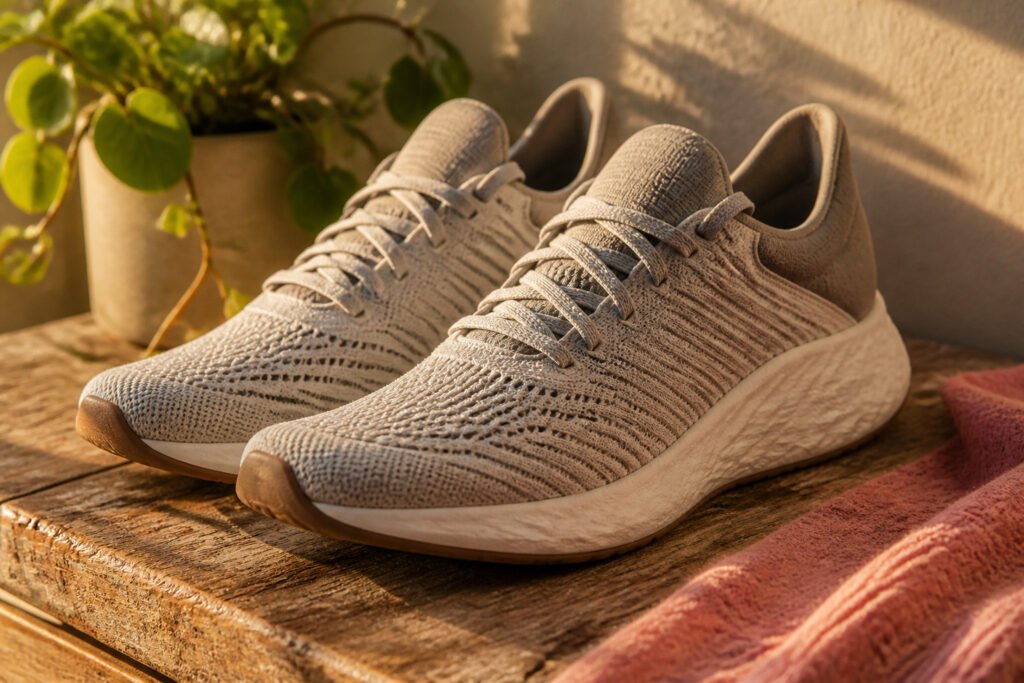
New Balance shoes span a pricing ladder from $44.97 closeouts to $140 performance builds, and the pair that works depends entirely on whether you need a daily walker, a road runner, or something that survives lateral gym work.
The Roav at $79.98 uses Ultra Soft foam thicker at the heel than the forefoot, built for errands that stretch into three miles, not split times.
That same $79 tier also holds the 515 Sustainable, which swaps virgin synthetics for recycled content without adding cost.
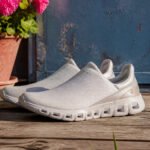
Roav Sneakers

The men’s Roav sits at $79.98, which puts it in New Balance’s accessible tier without dropping into the discount-bin territory where midsoles turn to plywood after a month.
That price matters because it signals who this shoe is built for: someone who walks daily and needs the shoe to stay pleasant at mile three, not a runner logging split times.
Design-wise, the Roav reads more lifestyle than performance.
The upper uses a blended knit that breathes without the aggressive perforations you’d see on a dedicated running model, and the silhouette stays slim enough to wear with jeans without that bulky cross-trainer look.
New Balance positions it as a crossover piece, the shoe you grab for a Saturday of errands that stretches into an unplanned three-mile walk because parking was hopeless.
Comfort comes from what New Balance calls its Ultra Soft cushioning, a foam compound thicker under the heel than the forefoot.
I notice the drop in the 8mm range, enough to ease the strike for heel-first walkers without forcing a gait change.
For the wearer, this means arch support that lasts through a full day on concrete, though I’d swap these out before a dedicated workout; the foam rebounds slower than Fresh Foam and will feel flat if you try to push tempo in them.
The ideal buyer is the person who owns one pair of sneakers that needs to handle coffee shop, dog walk, and casual office. At this price, the Roav delivers that versatility competently, which is rarer than it sounds.
515 Sustainable Sneakers

The Men’s New Balance 515 Sustainable Sneakers at $79.99 sit right where retro styling meets an actual materials story.
Most listings for the 515 line skip the sustainability angle entirely, which is a shame because this version exists for buyers who want the classic dad-sneaker look without the usual petroleum-heavy construction.
What you’re getting is a standard 515 silhouette built with recycled and responsibly sourced components rather than virgin synthetics. The upper trims down the usual plastic load, and the rubber outsole incorporates recycled content where the regular 515 doesn’t bother.
It wears the same, walks the same, and costs the same $79.99 as the non-sustainable colorways I’ve seen. The difference is in the supply chain footprint, not the footbed feel.
For women shopping this for themselves or sizing down in men’s, the 515 Sustainable runs true to the line’s medium width and everyday-support last.
It is not a performance shoe; the midsole is standard EVA, not Fresh Foam or FuelCell, so I would not take it past light gym work or long standing days.
But as a campus or commute sneaker that happens to cut virgin material use, it outperforms the standard 515 on ethics without asking extra at checkout.
M410V9 Trail Running Shoes

Trail running demands a different shoe geometry than pavement pounding, and the Men’s New Balance M410V9 sits at a price that lets most runners find out what that means without a major investment.
The outsole lugs grip loose dirt and gravel where road rubber would slide, and the upper typically trades breathable mesh for tougher overlays that brush off rocks and roots.
I see this model come up regularly when readers ask about solid starter trail shoes, and at $69.99 it answers that question without the premium that advanced technical trails demand.
The M410V9 suits packed dirt paths, gravel rails-to-trails conversions, and moderate singletrack rather than technical mountain terrain.
The stack height stays lower than plush road trainers, which gives better ground feel on uneven surfaces but means less cushioning for long pavement sections if you split your miles between surfaces.
For runners whose trail use is occasional or whose local terrain is moderate, that trade reads as smart value rather than missing feature.
One limit worth noting: this is a men’s model, and women reading those reader questions will want to check New Balance’s comparable women’s trail offerings or size down with width considerations.
The construction holds up to real trail use, though, and the price leaves room in the budget for a dedicated road pair when your weekly mileage justifies it.
MX608V5 Training Shoes

Training shoes sit on a different engineering footing than running or casual styles, and the Men’s New Balance MX608V5 at $79.99 shows where that line falls.
A running shoe is built for forward motion, cushioning heel-strike and toe-off in a straight line. The MX608V5 instead stabilizes the foot for lateral cuts, pivots, and loaded movements you hit in the gym or on a cross-training floor.
The outsole grips flat surfaces without the aggressive lug pattern that would trip you up on tile, and the midsole is firmer than Fresh Foam, giving you a stable platform for lifts rather than the sink that soft cushioning creates under a barbell.
New Balance builds these in their standard width range, so you can match the fit to your foot rather than sizing up or down to compensate.
For the price, you are getting a dedicated cross-training tool rather than a running shoe pressed into double duty.
I would not take these on long runs; the lateral support that keeps your ankle steady during side shuffles becomes unnecessary weight and restriction once you settle into a stride.
But for the person who wants one shoe that handles weights, light cardio, and machine circuits without buying into a separate category, the MX608V5 fills that slot cleanly.
Aesthetics are the real consideration: this is a heritage training silhouette, not the slim profile that current casual sneakers favor, so it works best with athletic or relaxed gear rather than trying to pass under tailored pants.
680 V8 Running Shoes

Fresh Foam sits at the heart of the 680 v8, New Balance’s budget road-running shoe that men can still find around $69.98 while supply lasts.
The v8 uses a single-piece midsole built for pavement miles, not trails, with a feel firmer than the plushFresh Foam X found higher up the line. That trade keeps the shoe light at a price that undercuts most dedicated trainers.
Upgrading to the v9 brings a softer, more responsive ride and a redesigned upper, so the v8 now functions as the company’s clearance entry point.
Breathable mesh and enough heel counter to keep the foot tracking straight come standard; wide widths are available, though stock thins as the model phases out.
For a runner logging easy miles on asphalt and watching spend, the v8’s value equation still holds.
The v9 is the better shoe, but at that $69.98 clearance tier, the v8 asks you to give up only the newest foam formula, not the fundamentals of fit and finish.
ML408 Sneakers

The New Balance ML408 at $79.98 sits firmly in the casual column, not the performance one. That’s the draw: a retro-influenced silhouette built for everyday wear rather than split times or trail terrain.
The 408 line draws from heritage running design without insisting you actually run.
Materials lean toward suede and mesh uppers in the muted palettes that have defined New Balance for decades: greys, navy, the occasional cream. Cushioning is present but not engineered; think comfortable walk to the train, not half-marathon recovery.
What separates this from performance models like the Fresh Foam or FuelCell lines is the absence of tuned midsole technology.
I see the ML408 as a visual cousin to the brand’s serious trainers, stripped of the stack height and responsive foam that drive up cost and weight.
You trade energy return for versatility; these work with jeans or chinos in ways a bright, technical runner rarely does.
At this price point, the value proposition is straightforward. The ML408 gives you New Balance’s recognizable silhouette and the brand’s range of sizes and widths without the premium attached to their Boston-made tiers or their latest foam innovations.
For daily rotation when comfort matters but podium ambitions don’t, that’s usually the smarter spend.
M520v9 Running Shoes

The New Balance M520v9 at $69.98 sits at the entry point of their running lineup, and that price tells most of the story. You get basic EVA foam cushioning without the proprietary tech that defines the 680 or Fresh Foam lines.
For someone running a few miles on pavement a couple times a week, or walking the dog on mixed surfaces, the ride is adequate. The upper is breathable mesh with synthetic overlays, nothing fancy but it holds shape.
Where the M520v9 stops is exactly where the 680 V8 picks up.
The 680 adds ACTEVA midsole foam and a more structured heel counter for around $20 more, and that difference matters if you are logging real weekly mileage or dealing with any pronation issues.
Fresh Foam starts another tier above that, with the laser-etched midsole geometry New Balance developed from pressure-mapping data.
I would skip the M520v9 if you are training for a 10K or heavier, or if you already know you need arch support.
It suits the casual runner who wants a recognizable brand name without paying for engineering they will not use, or the person who needs a backup pair for short treadmill sessions.
The outsole rubber is full-contact and wears evenly, which is more than I can say for some budget trainers that shed tread at the heel in two months.
Fresh Foam 680 V9

The Fresh Foam 680 V9 runs $63.71 on sale against an $85.00 MSRP, which lands right where a daily trainer should: priced well without feeling like a budget compromise.
New Balance upgraded the midsole to its newer Fresh Foam formulation for this version, and that is the detail that moves it from acceptable to the one I would point most runners toward first.
The foam gives back more energy than the V8’s setup while keeping the same neutral, forgiving ride that works for heel-strikers and midfoot landers alike.
I would not chase the V8 at closeout prices unless your foot already loved that exact fit; the V9’s midsole tweak is worth the small premium even at full price, and at twenty-five percent off it is the clear pick in the Fresh Foam line for someone who wants one shoe that handles easy miles and long walks without looking like a medical device.
FuelCell Rebel v4

The FuelCell Rebel v4 sits at $97.96 on sale, down from $140, and that discount matters because this shoe occupies a different tier than the daily trainers most women default to.
New Balance positions its FuelCell line for responsive speed work, meaning the midsole foam is tuned to return energy fast rather than absorb it slowly for all-day comfort.
I see this split clearly when friends ask me to recommend New Balance shoes.
The Rebel v4 is what you reach for when your training schedule includes tempo runs, intervals, or any session where you want the shoe to push back.
The plate and geometry here are built for turnover, not for logging easy miles while you listen to a podcast.
There is a real downside here and I think it is worth naming upfront. That responsive platform feels firmer underfoot than Fresh Foam options, and the narrower fit through the forefoot suits a more performance-oriented foot shape.
If your running is mostly casual 5Ks or you stand for long stretches at work, this is not your shoe.
The Rebel v4 earns its place for runners who already know they want a speed day tool, not for someone hoping one shoe will do everything.
DynaSoft Nergize Sport V2

The DynaSoft Nergize Sport V2 sits at a sale price of $44.97, down from an MSRP of $75.00, making it the cheapest entry in this New Balance lineup by a noticeable margin.
That discount lands you DynaSoft cushioning, a midsole compound built more for cross-training and light gym work than for pounding pavement on long runs.
The foam feels springy underfoot during bodyweight circuits or short treadmill intervals, though I would not reach for it on days when miles stack up.
The savings have to come from somewhere, and this is where.
This shoe sacrifices the specialized foams and structured plates found in running-specific models like the FuelCell Rebel v4 or trail options like the Minimus TR V2. For someone rotating between a few casual workouts and errands, that stripped-down approach works.
I see it as a second pair: the shoe you keep in a gym bag or wear for a quick walk when your main runners need a rest day.
At $44.97, the cost stays low enough that replacing it after a year of moderate wear does not sting.
Comfort and Performance

New Balance builds its reputation on shock absorption and supportive midsoles that hold up whether you are running, walking, or standing through a full shift.
The cushioning systems vary by activity: running shoes pack more responsive foam to handle impact, while walking and daily-wear styles favor firmer stability that keeps your ankles from rolling on flat pavement.
Breathable uppers keep the weight down, and the wide width options matter more than most buyers expect. A shoe that fits the full width of your foot lets the midsole do its job instead of collapsing at the edges.
I look for that combination first, because a technically advanced sole means nothing if your foot is sliding sideways inside the shoe.
Styles From Retro to Modern

New Balance keeps its older silhouettes in rotation for a reason. The 515 and ML408 carry that suede-and-mesh look that pairs easily with jeans or a casual dress, and the materials stay soft rather than technical.
Those retro models sit heavier on the foot, which I notice after a full day of errands, but in exchange you get a shoe that does not read as gym gear.
Performance builds move in the opposite direction. The FuelCell Rebel v4 and Fresh Foam lines strip weight wherever they can, using engineered mesh uppers and midsole foams shaped for rebound rather than cushion alone.
The Rebel v4 in particular runs $97.96 on discount against a $140.00 MSRP, which tells you where New Balance positions it: serious enough for tempo runs, styled clean enough for grocery runs after.
What separates the two camps is not just looks. Casual styles like the 515 use standard rubber outsoles and pigskin overlays that scuff characteristically and age well.
The athletic tiers add FuelCell or Fresh Foam X midsoles, heel counters, and directional flex grooves that only matter if you are actually moving in them.
For daily wear that never sees a workout, I would take the retro model and spend the difference elsewhere. If your one pair has to handle a lunch walk and a weekend jog, the modern build earns its price.
Sizes and Widths

New Balance built its reputation on sizing that actually fits real feet.
Most of its core lines come in lengths from 5 to 13 and widths from narrow to extra-wide, which matters more than people expect until they try a standard D width on a genuinely wide foot and feel the squeeze across the ball.
The brand labels this clearly: B for narrow, D for standard, 2E for wide, 4E for extra-wide on men’s models, with comparable gradations in women’s sizing.
I always tell friends to measure both feet at the end of the day, when they’re largest, and order for the bigger one.
Half the time the left runs a touch larger, and a cramped toe box ruins a shoe that otherwise would have worked for years.
Orthotic compatibility varies by model. The 608 training shoe and similar structured styles tend to have removable insoles with enough vertical room to swap in a custom insert without lifting your heel out of the shoe.
Lower-profile sneakers sometimes lack that depth, so the insert either won’t sit flat or the heel slips.
If you need orthotics, look for styles where the factory insole comes out cleanly and the collar sits a little higher around the ankle. That’s the difference between a shoe that accommodates your foot and one that fights it.
Sustainable and Adaptive Options

The 515 line carries a sustainability angle that is easy to miss among the retro styling. Recycled content shows up in the upper materials and the packaging, not as a separate collection but baked into the standard production.
For buyers who rank environmental impact alongside comfort, this is the detail that separates the 515 from similarly priced retro sneakers that treat sustainability as an afterthought.
New Balance also runs a Zappos Adaptive program that sells single shoes or mismatched pairs.
The option matters for amputees, people with a full size difference between feet, or anyone who has burned money on a pair when they only needed one.
You request it through Zappos customer service rather than the standard cart, and stock runs narrower than the full catalog.
I would not count on every colorway being available, but the program exists and the process is straightforward once you know to ask.
Frequently Asked Questions
What are the best New Balance shoes for running?
The Fresh Foam 680 V9 is the best daily trainer for most runners, with an upgraded midsole that returns more energy than the V8 while keeping a neutral, forgiving ride.
The FuelCell Rebel v4 works better for speed work like tempo runs and intervals, though it feels firmer and fits narrower. For trail running, the M410V9 handles moderate terrain at a lower price.
How do I choose the right size for New Balance shoes?
Measure both feet at the end of the day when they’re largest, then order for the bigger foot.
New Balance offers lengths from 5 to 13 and widths from narrow (B) to extra-wide (4E in men’s), so match width to your actual foot rather than sizing up or down.
If you need orthotics, pick styles with removable insoles and a higher ankle collar so the insert sits flat without heel slip.
Are New Balance shoes good for wide feet?
Yes. New Balance built its reputation on width options that most brands skip, offering narrow, standard, wide, and extra-wide in most core lines.
A shoe that fits the full width of your foot lets the midsole work properly instead of collapsing at the edges.
Half the time the left foot runs slightly larger, so sizing for the bigger foot prevents a cramped toe box.
What are the top 5 New Balance shoes?
The Fresh Foam 680 V9 leads for daily running at $63.71 on sale, followed by the FuelCell Rebel v4 at $97.96 for speed training.
The Roav at $79.98 covers everyday walking and casual wear, the 515 Sustainable at $79.99 offers retro style with recycled materials, and the MX608V5 at $79.99 handles gym cross-training with lateral stability.
Is New Balance a Nike brand?
No. New Balance is an independent company headquartered in Boston, Massachusetts since 1906, with no ownership ties to Nike.
The brand competes directly in athletic footwear but distinguishes itself through its own cushioning technologies like Fresh Foam and FuelCell, plus an unusually wide range of sizes and widths.
Are new balances as good as Hokas?
New Balance and Hoka target different priorities. New Balance offers more width options and tends toward firmer, more stable rides in its daily trainers like the 680 V9.
Hoka built its name on maximal stack height and plush cushioning. Runners who need structured support or have wide feet often prefer New Balance; those wanting soft impact absorption may favor Hoka.
Do podiatrists recommend New Balance shoes?
Podiatrists frequently recommend New Balance for patients needing orthotic accommodation, since many styles like the 608 training shoe have removable insoles with enough vertical room for custom inserts.
The wide width options also help prevent lateral foot collapse inside the shoe. The brand’s structured heel counters and stable platforms support proper alignment better than minimal or narrow designs.