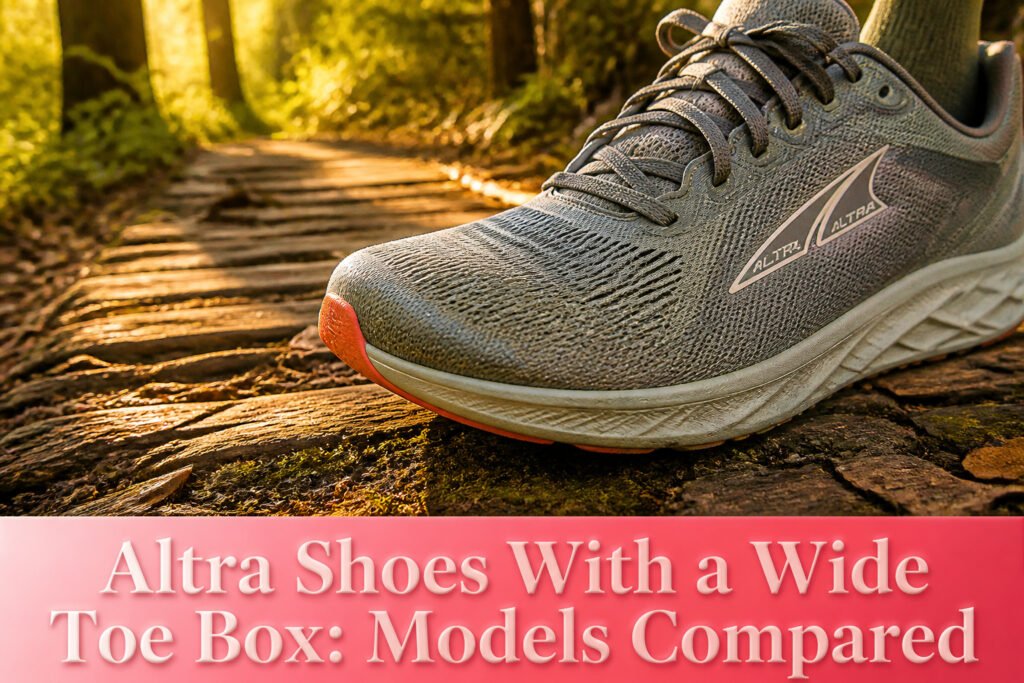
Altra running shoes are built around a foot-shaped toe box that lets your toes splay naturally instead of jamming together.
Not every model suits every runner: some hold to a zero-drop platform that demands weeks of calf adaptation, while others split the difference with a 4 mm drop.
The Torin 9, at 9.8 oz for men, sits right in the middle of Altra’s cushioning range and serves as the default daily trainer for runners who want that forefoot room without committing to trail or race specialization.
Altra Torin 9

The Altra Torin 9 weighs 9.8 oz in men’s sizing and 8.1 oz in women’s, light enough for daily miles without feeling stripped down.
Its zero-drop platform, 0 mm from heel to toe, keeps your foot level and lets the FootShape toe box do what it was designed for: let your toes spread naturally on landing and push off without the squeezed-in feeling that turns a run into a fight against your own shoes.
Altra’s Ego cushioning sits right in the middle of their range, protective enough for pavement but not so plush that you lose ground feel.
I think of this as the model for runners who want the wide toe box benefit for everyday training rather than trail or race day.
The balanced cushioning supports a natural stride, and at this weight you are not dragging extra foam around just to get that room up front.
You give up some of the aggression you get from Altra’s speed-focused options.
The Torin 9 is not trying to pop off the line; it is built for the runner who logs regular miles and wants the zero-drop, foot-shaped geometry to feel normal by mile three, not mile three hundred.
Altra Experience Form

Altra’s guide rail stability system works like a bumper of dense midsole foam raised on the medial side, catching overpronation before it collapses your stride.
The Experience Form keeps that correction without squeezing the forefoot, so runners who need structure do not have to give up the room that makes Altra worth switching to.
This is also the model where Altra breaks from its own zero-drop norm. The 4 mm drop sits between traditional running shoes and the brand’s usual flat platform, a safer landing for runners whose calves or Achilles protest a full transition.
At 9.6 oz for men’s and 7.8 oz for women’s, the shoe carries the stability without the weight that typically punishes support shoes.
I would point the hesitant convert here first: the toe box still splays naturally, the drop eases the learning curve, and the guide rail does its job without announcing itself.
Altra Experience Flow 3

The Altra Experience Flow 3 fills a gap that most brands ignore entirely: a lightweight daily trainer at 9 oz men’s and 7.5 oz women’s that still lets your toes spread naturally.
Most shoes force a choice between low weight and foot-shaped room. This one carries both.
Its 4 mm drop sits at roughly the thickness of two nickels stacked, a middle ground for runners curious about lower-drop geometry but unwilling to commit to zero-drop overnight.
The Altra Ego midsole lands in that narrow zone testers describe as neither firm nor plush, just responsive enough for quicker turnover without punishing longer efforts.
Versatility is where the Flow 3 earns its keep. Road, light trail, tempo days, easy miles: the cushioning stays consistent across surfaces, and the ride stays smooth enough that speed work doesn’t feel like a compromise.
For runners who want the benefits of a wide toe box without the bulk typically packaged with it, this is the model that actually delivers.
Altra Lone Peak 9+

The Lone Peak 9+ is where Altra’s trail line meets its most generous toe box implementation, and that combination matters most on descents and technical ground where foot swell and toe splay are non-negotiable.
The shoe weighs 10.6 oz in men’s sizing and 8.9 oz in women’s, which sits light for the protection it carries.
This is the first Lone Peak to use a Vibram Megagrip outsole, and the multi-directional lugs show their worth on wet rock and loose dirt alike.
The 0 mm drop keeps your heel and forefoot level, a geometry that changes how you load the shoe on steep downhills.
What I notice is how the extra toe room works with that flat platform: your forefoot can spread to stabilize without the front of the shoe boxing it in, which is exactly when toes otherwise jam or blister.
The 25 mm stack height gives enough cushion for rocky trails without muting ground feel.
A ripstop upper and an extra eyelet for lace lockdown keep the midfoot secure, though testers with narrower feet found that same roominess left them wanting more hold through the arch.
This is a wide-foot priority pick, not a universal fit.
A waterproof GTX version runs $180 if you need it. For dry conditions, the standard Lone Peak 9+ already delivers the most spacious FootShape toe box in Altra’s trail lineup.
Altra Vanish Carbon 3

The Vanish Carbon 3 is where Altra’s wide toe box philosophy meets actual racing hardware.
At 7.7 oz for men and 6.7 oz for women, this is the lightest race-day option in their lineup, and the first Vanish Carbon to carry a 4 mm drop rather than zero.
That small lift matters: Altra’s own running economy tests showed a 2.6 percent improvement over the previous model, enough to keep them competitive against Nike and Adidas super shoes without abandoning the foot-shaped fit that drew most of us to the brand in the first place.
The propulsion comes from a split-toe carbon plate sandwiched in a full PEBA midsole.
The plate’s split under the big toe is deliberate, letting your foot engage naturally rather than fighting a rigid slab. The upper keeps Altra’s signature roomy toe box, which solves the classic race-shoe problem for wide-footed runners.
Most carbon-plated racers narrow aggressively through the forefoot to save weight and add stability; this one doesn’t, and that generosity costs you nothing in the weight column.
The trade-off sits in the 4 mm drop itself. Runners with sensitive calves or Achilles issues sometimes find even low-drop shoes aggravating after miles of hard pacing.
For me, the Vanish Carbon 3 wins for wide-footed competitors who want the pop of a super shoe without the vice-grip toe box that usually comes with it.
If your race day demands a true zero-drop feel, this isn’t it, but it’s the closest Altra has come to giving speed and space in the same package.
Altra Olympus 6

The Altra Olympus 6 is where the brand’s wide toe box meets its most generous cushioning, built for long distances and recovery days when your feet need the most protection.
At 10.6 oz for men’s and 8.7 oz for women’s, it carries noticeable weight, but that mass goes into a plush stack height that absorbs road and trail impact without the cramped forefoot typical of max-cushion shoes.
Altra shapes this model on a women’s-specific last, narrowing the heel and midfoot to match female biomechanics while keeping the toe box broad enough for natural splay.
The result is a secure rearfoot that does not slide, paired with a forefoot that lets toes spread on long descents.
I find this combination rare in cushioned shoes, which often solve stability by squeezing the whole foot. Here the plush midsole does the shock absorption, and the wide toe box does the alignment, so neither job interferes with the other.
The Olympus 6 feels substantial, and on quick tempo runs the cushion can feel like too much shoe. For easy mileage, ultras, or days after a hard effort, that same stack height protects joints and lets the foot move naturally.
If your priority is covering distance in comfort rather than setting a PR, this is the Altra where the wide toe box serves its purpose best.
Altra Escalante 5

The Altra Escalante 5 is where the brand’s wide toe box philosophy meets a true racing flat build.
At 9.7 oz for men and 7.6 oz for women’s sizing, it carries less mass than almost anything else in Altra’s line while keeping the same anatomical forefoot room that makes the brand workable for bunions or metatarsal spread.
The 0 mm drop sits on a 24 mm stack of Ego foam, low enough that you will notice gravel texture through the sole and high enough that a ninety-minute tempo run won’t leave your calves screaming.
Altra did not rotate the shoe into a new category with this update: the knit upper breathes the same, the toe box spreads the same, and the ground feel stays direct.
Runnersworld tags it for marathon racing, which reads optimistic to me unless you are already efficient and slight; the foam does not pack the return of a carbon-plated competitor.
What changed is inside.
A TPEE strobel and sockliner add a small degree of step-in comfort that the prior version lacked, and more rubber coverage on the outsole should push durability past the two-hundred-mile mark where earlier Escalantes started going slick.
For me, this is the shoe for Tuesday track sessions and Saturday 5K efforts, not the daily miles I would hand to the Torin 9.
It asks more from your form and gives less forgiveness on tired legs, but you get a shoe that gets out of your way when you want to turn over fast.
FootShape Toe Box

Altra’s FootShape toe box is widest at the ends of the toes, not the ball of the foot, which is the reverse of how conventional athletic shoes taper.
The anatomical last follows the actual outline of a human foot, letting your toes splay naturally on landing and push-off rather than being squeezed into a wedge.
That room matters for more than comfort. A narrow toe box jams toes together with every footfall, especially downhill, and that repeated pressure contributes to bunions and hammertoes over time.
The FootShape design keeps toes from being driven into each other, which also stabilizes ankles and knees by letting the foot spread and recoil as it was built to.
Circulation improves too; toes stay warm and responsive instead of going numb from constriction.
A narrow toebox that cramps your toes can negatively affect your performance (and set you up for injuries).
Altra now scales the width across three lasts: original (the widest), standard, and slim.
Even the slim gives more toe room than most conventional shoes, while the original is the one to reach for if you already have bunions or a broad forefoot.
The zero-drop platform gets the press, but the FootShape last is what keeps me looking at Altra first: a stable base starts with where your toes actually sit.
Zero-Drop and Your Body

A zero-drop platform keeps heel and forefoot at equal height, which shifts your strike pattern toward the midfoot and eases load on knees and hips.
The adjustment is not instant. If you are coming from traditional running shoes, your calves and Achilles have been accustomed to a raised heel shortening that tendon; lowering it demands more stretch and strength from both.
The adaptation period should be gradual.
Start with shorter runs and expect soreness in the lower leg for the first few weeks. One way to bridge the gap is to try Altra’s 4 mm drop models first, which split the difference before you commit to full zero-drop.
Among the current lineup, the standard Torin and Lone Peak hold to 0 mm, while the Experience Form and Experience Flow 3 sit at 4 mm.
I would not move to zero-drop for a race or a long run until you have at least a month of easy miles in the shoe.
Ego Cushioning Grades

Altra breaks its midsole foams into three tiers that sit under the same wide toe box, but feel nothing alike once you start moving.
- Ego is the baseline: springier and more durable than traditional EVA, built for daily miles where you want some bounce back without thinking about it. The Experience Flow 2 uses a newer take called Ego P35, which owners in video reviews describe as softer and more balanced than earlier versions, with 32 mm stack in the heel and 28 mm in the forefoot.
- Ego Max trades responsiveness for plushness. Made from compression-molded EVA, it is softer underfoot than standard Ego but gives back less energy, so it suits recovery days and long efforts where cushioning matters more than pop.
- Ego Pro is the race-day foam. Thermoplastic elastomers formed through a supercritical fluid process make it the lightest and most responsive of the three, the one you reach for when turnover and ground feel decide the shoe.
The choice is straightforward.
Want protection and bounce for easy runs? Ego or Ego P35.
Need to spare your legs on a long haul? Ego Max.
Chasing a PR? Ego Pro.
Stability Without Squeeze

Traditional stability shoes narrow the forefoot to lock the foot in place, which works against runners who need both pronation control and room for natural toe splay.
Altra’s Experience Form takes a different approach with its guide rail, a strip of dense midsole foam raised along the medial side that acts as a bumper against overpronation without squeezing the forefoot.
The guide rail only engages when your foot rolls inward, letting neutral strides run unaffected while still catching collapse during fatigue or sharp turns.
That matters for runners with flat feet or mild overpronation who have already figured out that standard stability shoes pinch their toes.
You get the correction where you need it, in the midfoot, and the wide toe box stays wide through the front.
You lose some lateral support: Brooks runs guide rails on both sides of some models, which keeps knee and ankle alignment stricter for severe overpronators.
For most women shopping the Altra line, though, the single medial rail plus FootShape toe box hits the balance that traditional stability designs never quite managed.
Women’s Fit Details

Altra builds its women’s line on a women’s-specific last that narrows through the heel and midfoot, a shape that matches the biomechanics of female feet with generally longer arches.
The difference from unisex or men’s sizing is real: men’s lasts carry a wider forefoot and sturdier structure, while women’s models account for a higher plantar arch, lighter body weight, and a different toe-to-heel ratio.
If your heel slips in men’s or unisex Altras, the women’s cut is worth trying. The narrower rearfoot locks the heel in place, and the midfoot taper keeps the foot from sliding forward into the wide toe box.
That said, women with wide heels or who prefer a roomier midfoot may find the women’s last too constricting. Altra notes you can cross over to men’s sizing if the fit works better, just mind the width shift.
To test which last suits you, check heel grip first: lace the shoe, stand, and see if your heel lifts when you rise onto your toes. Then check midfoot pressure: the shoe should feel secure, not squeezed.
The women’s specific design wins for narrow-heeled, standard-width feet. For wide heels or high-volume feet, the men’s or unisex build likely fits truer.
Frequently Asked Questions
Are Altra shoes good for wide feet?
Yes. Altra’s FootShape toe box is widest at the ends of the toes, not the ball of the foot, so your forefoot can spread naturally.
The brand now scales width across three lasts: original (widest), standard, and slim; even the slim gives more room than most conventional shoes.
What is a zero-drop shoe?
A zero-drop shoe keeps heel and forefoot at equal height, so your foot sits flat rather than sloping downward from heel to toe.
Altra designs most of its shoes this way to promote a natural stride and lower-impact landing, though some models use a 4 mm drop to ease the transition.
Do I need to ease into zero-drop shoes?
Yes. Start with shorter runs and expect soreness in your calves and Achilles for the first few weeks.
Try Altra’s 4 mm drop models first if you want to bridge the gap before committing to full zero-drop, and give yourself at least a month of easy miles before racing or running long in a 0 mm shoe.
Which Altra shoe has the widest toe box?
The Lone Peak 9+ carries the most spacious FootShape toe box in Altra’s trail lineup, built to handle foot swell and toe splay on technical ground and descents.
For road runners, the Torin 9 and Escalante 5 both use the original last, the widest of Altra’s three width grades.
Is Altra better than Hoka?
Altra and Hoka solve different problems. Altra gives you a wide toe box and zero-drop or low-drop geometry for natural foot movement; Hoka maximizes stack height and cushioned protection with a traditional heel-to-toe slope.
Runners who need forefoot room or want to strengthen foot muscles tend toward Altra; runners who want pillowy impact absorption and a familiar drop tend toward Hoka.