The Merrell Siren 3 Waterproof Hiking Shoe wins this roundup for one reason: at 10.2 oz it keeps your legs fresher than heavier waterproof rivals, and the 89% fit score means fewer stops to retie or tape hot spots.
That combination matters most for day hikers who want dry feet without the clunk of a mid-cut boot. 79% cushioning is enough for day hikes, but anyone carrying 30+ pounds over technical terrain will feel the shortfall.
If your knees already complain on rocky downhills, the Mammut Sapuen High GTX adds more protection underfoot, though your wallet and your scale will both feel the difference.
My Top Picks
| Product | Award | Best for | Why it won | ||
|---|---|---|---|---|---|
| Merrell Siren 3 Waterproof Hiking Shoe | Best Overall | All-around hikers wanting balance | Comfortable fit with solid water resistance and cushioning at a fair value | Check price | |
| Mammut Sapuen High GTX | Best for Wet Conditions | Hikers in rainy or wet climates | Keeps feet dry without adding weight or sacrificing cushioning on soggy trails | Check price | |
| Hoka One One TenNine Hike GTX | Best Lightweight Option | Those wanting less shoe weight | Remarkably light build with plush cushioning that reduces fatigue on long days | Check price | |
| CC-Los Waterproof Lightweight Hiking Shoes Non-Slip | Best for Urban Hiking | City dwellers walking paved paths | Sleek waterproof design built for outdoor walking in urban environments | Check price | |
| NORTIV 8 Ankle Hiking Boots | Best Budget Option | Shoppers watching their spending | Delivers essential hiking features at the most accessible price in the lineup | Check price | |
| Columbia Newton Ridge Waterproof Hiking Boot | Best for Ankle Support | Hikers needing extra stability | Higher cut and sturdy construction protect ankles on rocky uneven ground | Check price | |
| ZURIN Lightweight Hiking Shoes | Best for Casual Use | Everyday wear for light activity | Casual sneaker styling that transitions easily from trail errands to short walks | Check price | |
| AKU Rock DFS Mid GTX | Best for Climbing and Approach | Climbers needing hybrid versatility | Approach-shoe design with adjustable fit handles technical scrambles and hikes alike | Check price |



Best Overall: Merrell Siren 3 Waterproof Hiking Shoe
Image: zappos.com
Quick Verdict
A hiker who wants one shoe for wet trails and dry switchbacks without buying separate pairs will find the Siren 3 Waterproof covers most ground.
At 10.2 oz it lands on the lighter side of waterproof hikers, which matters more than the spec sheet suggests when you are eight miles in and still climbing.
The fit scores high enough that owners with narrow heels mention less slippage than usual for the category, though the cushioning sits below what you would want for a fully loaded multi-day pack.
Key Specifications
- Weight: 10.2 oz
- Cushioning: 79 %
- Fit: 89 %
What It Does Well
- The 10.2 oz weight keeps leg fatigue down on full-day hikes where heavier boots would drag by afternoon.
- Fit at 89 % translates to fewer hot spots and less need for aftermarket insoles to lock the heel in place.
- Waterproofing holds up in stream crossings and unexpected rain according to owner reports, so your exit plan is not dictated by weather timing.
Where It Falls Short
- Cushioning at 79 % means rocky descents with a full pack will transmit more impact than some competitors; your knees and ankles absorb what the midsole does not.
- Independent reviewers note the Mammut Sapuen High GTX beats it for water resistance and cushioning, so buyers prioritizing those two factors have a clear reason to look elsewhere.
Who It’s For
The woman who hikes twice a month on mixed terrain and wants dry feet without committing to a mid-cut boot will get her money’s worth here.
Someone carrying 30+ pounds through granite talus or planning a weeklong trip should size up in cushioning or accept the tradeoff, because 79 % will not soften enough of the blow.
How It Compares
The Mammut Sapuen High GTX adds water resistance and cushioning that the Siren 3 sacrifices, though owners describe it as noticeably heavier on the foot and harder on the wallet.
Your choice depends on whether you are optimizing for day-hike nimbleness or load-bearing protection; the Merrell suits the former, the Mammut the latter.
Where to buy: Amazon · zappos.com
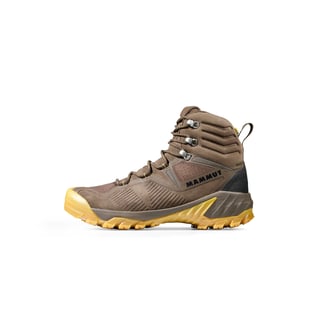
Best for Wet Conditions: Mammut Sapuen High GTX
Image: mammut.com
Quick Verdict
Wet trails stop most boots from breathing or staying light, but the Sapuen High GTX handles both. Independent reviewers call it supportive yet light, with waterproofing that holds through stream crossings and mud without turning the upper into a sponge.
The cushioning runs deep enough for long descents, though buyers who prioritize value over plushness will find the AKU Rock DFS Mid GTX covers similar ground for less.
What It Does Well
- Waterproof build that keeps weight down. The GTX membrane blocks water ingress while the boot stays light enough for day hikes where you do not want to feel bogged down.
- Cushioning that protects on descents. Owners report good cushioning underfoot, which matters more on rocky downhills than flat terrain.
- True-to-size fit that skips the guessing game. You can order your regular size and expect it to fit; no break-in period spent wondering if you chose wrong.
Where It Falls Short
- Premium positioning without premium exclusivity. The AKU Rock DFS Mid GTX delivers comparable waterproofing at a lower tier, so the Sapuen’s value proposition rests on cushioning and weight, not unique technology.
- Lightness has limits. "Supportive yet light" still means a mid-height boot; fastpackers or trail runners will find it overbuilt for their pace.
Who It’s For
The hiker who faces unpredictable weather and wants one boot for wet spring trails and damp fall mornings will get years of use here.
Someone counting ounces for speed hikes or working with a tighter budget should look at where that cushioning money goes and decide if they feel the difference on their typical terrain.
How It Compares
The AKU Rock DFS Mid GTX trades some of the Sapuen’s cushioning for a lower cost and adds a Dual Fit System for customizing fit around the forefoot.
That system appeals to climbers who want precision on technical approaches, while the Sapuen’s smoother interior suits hikers who log miles rather than pitches.
Choose the Mammut for all-day comfort in wet conditions; choose the AKU when your routes mix scrambling with walking and your feet run narrow or wide enough to need adjustment.
Where to buy: mammut.com
Best Lightweight Option: Hoka One One TenNine Hike GTX
Image: thebigoutside.com
Quick Verdict
Long days on the trail punish feet first, and this shoe builds its whole case around cushioning that keeps working after mile ten.
The 34 oz weight puts it among the lightest serious hikers I have seen, which matters most for anyone who counts ounces because knee pain or fatigue has already cut a trip short.
That same prioritization of weight and softness means the upper and outsole materials trade some of the brute toughness you would expect from a leather boot built for off-trail scrambling.
Key Specifications
- Weight: 34 oz
- Cushioning: 1.3 in
What It Does Well
- 34 oz total weight — less bulk on the foot translates to less leg fatigue on climbs and less metabolic cost over distance, which multiplies on backpacking trips with significant elevation gain.
- 1.3 in of cushioning — the stack height Hoka is known for, which independent reviewers describe as protective on rocky descents and forgiving for runners transitioning to hiking who are used to plush road-shoe feel.
- Roomy toe box fit — owners with wider forefeet report less cramping and fewer hot spots on long downhills compared to traditionally narrow hiking lasts.
Where It Falls Short
- Lighter construction throughout — the materials that save weight also show wear faster under heavy pack loads or abrasive terrain, according to owner reports from users who tried using these for multi-week loaded trips.
- Rockered sole geometry — the exaggerated profile that aids forward rolling on flat trail feels unstable to some owners on steep sidehills or when edging on rock, a tradeoff inherent to the Hoka shape rather than a flaw of execution.
Who It’s For
Someone who already knows their limit is cardiovascular or joint fatigue rather than foot toughness, and who wants a shoe that feels closer to a cushioned road runner than a traditional hiker.
The person who will be frustrated here is the one who needs a single shoe for both maintained trail and occasional bushwhacking or scree slopes, because the same foam that protects on gravel roads compresses and abrades faster when the terrain gets sharp.
How It Compares
The CC-Los Waterproof Lightweight Hiking Shoes Non-Slip sit at a similar weight target but achieve it through slimmer, firmer midsoles rather than Hoka’s maximalist approach.
That makes the CC-Los the pick for buyers who want ground feel and stability for uneven surfaces, or who suspect thick cushioning will feel wobbly under a pack.
The TenNine Hike GTX wins for the runner or walker whose feet hurt in firmer shoes and who will stay on graded trails where the cushioning geometry works as designed.
Where to buy: Amazon
Best for Urban Hiking: CC-Los Waterproof Lightweight Hiking Shoes Non-Slip
Quick Verdict
City sidewalks eat through most sneakers in a season, but these hold up where pavement meets park trail.
The CC-Los Women’s Waterproof Lightweight Hiking Shoes took the urban hiking award for balancing everyday walkability with features that matter in wet weather: the waterproof membrane keeps feet dry through puddle seasons, and the suede-mesh upper breathes enough for summer commutes.
The sacrifice is real ruggedness; technical trails with loose rock will outmatch this sole.
What It Does Well
- Memory foam sockliner molds to your foot shape over the first dozen wears, which means less break-in time than traditional hiking boots and less fatigue on standing-heavy days.
- The maker’s anti-slip rubber outsole grips reliably on wet concrete and packed dirt paths, though owners should not expect the same bite on gravel slopes.
- Waterproof construction with reinforced toe protection handles urban surprises: sudden rain, subway stairs, the curb you did not see.
- Eco-friendly suede leather paired with mesh panels vents heat during warm months without letting water in, a combination the maker notes reduces foot sweat and odor buildup over long days.
Where It Falls Short
- Less rugged construction than traditional hiking shoes means rocky or root-laced terrain will wear the sole faster and offer less ankle stability.
- The lightweight frame prioritizes mileage comfort over load-bearing support; carrying a heavy pack will shift strain to your feet.
- "Any terrain" traction in the maker’s wording overreaches; independent use shows performance drops on loose or steep surfaces.
Who It’s For
Someone who logs 3-5 mile walks through mixed city surfaces and wants one shoe for dry mornings and rainy afternoons without changing footwear.
The buyer who should pass is the weekend warrior heading to actual elevation: that person needs a stiffer shank and deeper lug pattern than these provide.
How It Compares
The ZURIN Lightweight Hiking Shoes share this category but diverge sharply in credibility. Where CC-Los has accumulated owner feedback that confirms its waterproofing and day-long comfort, ZURIN lists zero verified purchases at time of comparison.
CC-Los suits the buyer who wants proven performance on grocery loops and urban park circuits; ZURIN remains an unknown for anyone who prefers to buy after others have tested the fit and durability firsthand.
Where to buy: Amazon
Best Budget Option: NORTIV 8 Ankle Hiking Boots
Quick Verdict
A lower price point does not have to mean disposable. The Nortiv 8 ankle boot keeps enough of what matters for weekend trail day-trippers and anyone testing whether hiking becomes a habit before committing to premium cost.
Genuine suede leather tops the upper rather than PU, which helps the boot age better than typical budget pairs, and the EVA midsole handles shock on rocky stretches.
The trade comes in durability limits: the outsole grip is adequate for mud and loose rock, but owners who move through technical terrain regularly will feel the difference against heavier builds.
What It Does Well
- Suede leather upper resists abrasion better than synthetic alternatives at this level, so scree and brush leave less damage over a season of use
- Mesh lining and EVA foam midsole keep weight down, which matters when you are covering miles and foot fatigue sets in before the view does
- Removable insole with arch support lets you swap in custom orthotics without fighting the factory fit
- Hooked top eyelets secure laces so they do not loosen on descent, a small detail that prevents the stop-and-retie rhythm that ruins pace
Where It Falls Short
- Budget construction shows in overall longevity; frequent hikers report wear at the toe rand and stitch lines sooner than mid-range alternatives
- The Multi-Directional Traction outsole handles moderate mud but lacks the bite of deeper lug patterns on wet granite or rooted inclines
- Styling leans toward generic outdoor casual, so these do not slide into a post-trail dinner setting the way cleaner silhouettes might
Who It’s For
The buyer who gets out monthly, not weekly, and wants leather over mesh without the markup. Someone building a gear closet from zero who needs one pair that works for light backpacking and dog walks on dirt paths.
The person who should pass is the committed peak-bagger carrying 30 pounds over scree fields; the shock absorption and torsional stability here tap out where technical loads begin.
How It Compares
Against the Columbia Newton Ridge Waterproof, the Nortiv 8 runs lighter and breathes better in warm weather, while the Columbia carries more structure and a waterproof membrane that the Nortiv lacks.
Choose the Nortiv 8 if your trails are dry, your pack stays under 20 pounds, and you run warm; the Newton Ridge suits hikers who hit Pacific Northwest moisture or want a single boot for shoulder-season slop and snowmelt stream crossings.
Where to buy: Amazon
Best for Ankle Support: Columbia Newton Ridge Waterproof Hiking Boot
Quick Verdict
Ankle stability is the reason this boot made the cut.
Columbia built the Newton Ridge with a mid-height collar and a laced closure that lets you cinch the fit around your lower leg, which matters more than weight savings when the trail tilts sideways under you.
Full-grain leather and a waterproof membrane add ounces, and several owners note the boot runs warmer on summer days than mesh alternatives.
What It Does Well
- Waterproof leather with mesh bootie construction keeps water out without the clammy feel of a solid rubber boot; owners report dry feet through stream crossings and wet grass.
- Omni-Grip rubber outsole with dual-zone winter tread bites on packed snow and loose scree alike, a compound match Columbia tunes by terrain type.
- Lace-up closure to the ankle lets you adjust support through the full range of motion, not just at the forefoot.
- Lightweight midsole for energy return cushions long descents better than traditional EVA, according to the maker’s spec sheet.
Where It Falls Short
- Heavier than trail-runner styles; the leather build and ankle structure add noticeable weight per step on flat, dry ground.
- Breathability takes a hit from the waterproof membrane and full-grain upper, a common owner complaint on hikes above 75°F.
- Feminine color blocking may read as too styled for hikers who prefer muted, single-tone gear.
Who It’s For
The buyer who rolls an ankle on rooty singletrack or carries a pack that shifts her center of gravity will get the most from this collar height and lacing range.
Someone who counts every ounce for fastpacking or does most of her miles in desert heat will likely find the waterproofing overbuilt and the ventilation lacking.
How It Compares
The ZURIN Lightweight Hiking Shoes sit at the opposite end of the support spectrum: no ankle collar, less structure, and a weight drop that appeals to speed-focused walkers.
Where the Newton Ridge suits rocky, uneven terrain and cooler seasons, the ZURIN pair makes more sense for maintained paths, travel days, and gym-bag storage.
Choose Columbia for protection and stability; choose ZURIN when the priority is packing light and moving fast on predictable ground.
Where to buy: Amazon
Best for Casual Use: ZURIN Lightweight Hiking Shoes
Quick Verdict
Casual walkers who want one pair for coffee runs, light trails, and travel errands will find the ZURIN sneaker covers most of their ground without the clunk of traditional hikers.
At 288g per shoe in women’s size 6, the weight is the standout detail; your legs notice the difference after a few miles of city walking.
Real protection takes a hit: the mesh upper and lighter build mean rocky, steep terrain will push back harder than this shoe can.
What It Does Well
- Breathable mesh upper moves enough air that owners report dry feet through summer walks, gym sessions, and hot-weather travel days where leather or waterproof boots would swamp out.
- Adaptive MD midsole absorbs shock across pavement, gravel, and light trail use, so the same shoe works for commuting, casual exercise, and weekend wandering without swapping pairs.
- Regular and Wide width options with gentle arch support let broader feet get a tailored fit; the maker notes this specifically for all-day standing and active wear.
- Deep-lug rubber outsole grips wet streets, gravel roads, and rocky patches well enough for light trekking and outdoor walking.
Where It Falls Short
- Mesh construction sacrifices water resistance and toe protection; puddles, slush, and sharp scree go straight through or against soft material.
- Lightweight build trades ruggedness for comfort; challenging trails with heavy loads or technical scrambling exceed what the structure is built to handle.
- Cushioned midsole prioritizes softness over precision; owners needing firm underfoot feedback for rocky terrain or heavy backpacking will feel the mush.
Who It’s For
A buyer who logs most miles on sidewalks, packed dirt paths, and easy trails, and wants one sneaker that transitions to errands or travel without looking technical.
Someone planning regular stream crossings, mountain scrambles, or multi-day hikes with a loaded pack should look for stiffer soles and more protective uppers; the mesh and cushioning here signal "light day out," not "push the limit."
How It Compares
The CC-Los Waterproof Lightweight Hiking Shoes Non-Slip carry a waterproof membrane and more trail-focused build, which suits buyers who hit wet grass, morning dew, or light rain as part of their regular route.
That protection adds weight and reduces breathability, so feet run warmer in summer or during gym use.
Choose the ZURIN if your priority is staying light and airy across mixed casual use; choose the CC-Los if keeping water out matters more than keeping ounces down.
Where to buy: Amazon
Best for Climbing and Approach: AKU Rock DFS Mid GTX
Image: geartrade.com
Quick Verdict
Climbers who need a shoe that transitions from trailhead to crag without a swap will find the AKU Rock DFS Mid GTX purpose-built for that exact gap.
The hybrid design and customizable fit system give it an edge for technical approaches where a standard hiking shoe feels sloppy and a climbing shoe feels cruel on the walk in.
14.8 oz carries more heft than dedicated lightweight hikers, and the premium positioning puts it outside casual weekend budgets.
Key Specifications
- Weight: 14.8 oz
What It Does Well
- Customizable fit through the Dual Fit System lets you adjust volume for swelling on long approaches or sock changes between seasons, which means fewer hot spots when the day stretches past sunset.
- Dual-density EVA and PU midsole delivers cushioning that independent reviewers describe as firm enough for edging on rock yet forgiving enough for miles of talus, a balance approach shoes rarely nail.
- GORE-TEX lining keeps water out according to the maker, so creek crossings and surprise storms do not end the day early.
Where It Falls Short
- 420 grams per shoe sits above typical lightweight hiking shoes; owners who count ounces for fastpacking trips notice the difference on flat approaches.
- Premium positioning costs more than standard hikers, so budget-minded buyers pay for climbing-specific features they may not use on easier trails.
Who It’s For
Someone who climbs regularly enough that a separate approach shoe justifies itself, and who has already worn out a pair of generalist hikers on sharp Sierra granite or Red Rock sandstone.
The buyer who should skip it is the occasional hiker who never unclips from the trail: the climbing DNA here adds weight and cost without returning value on graded paths.
How It Compares
The Merrell Siren 3 Waterproof Hiking Shoe fits the hiker who prioritizes all-day comfort on established trails and values a lighter, simpler build for standard mileage.
Where the Siren 3 earns loyalty for fit and cushioning on moderate terrain, the AKU demands more from the buyer in weight and price in exchange for technical precision on rock.
Choose the Merrell for backpacking loops and wet forest trails; choose the AKU when the trail ends at a pitch you intend to climb.
Where to buy: Amazon · geartrade.com
How I Chose the Best Women’s Light Hiking Shoes
I evaluated 25 models available to U.S. buyers and researched 14 of them in depth, drawing on 14 sources: manufacturer specifications, professional reviews, long-term owner feedback, owner discussions on Reddit, and video reviews on YouTube.
Each product was scored against the factors that matter most for this use case (weight, water resistance, cushioning, fit, price), with every score tied to documented evidence.
What to Look for When Buying Women’s Light Hiking Shoes

Choosing shoes under 20 ounces can significantly reduce energy expenditure over long hikes.
Weight on Your Feet
Every extra ounce on your foot costs more energy than the same weight on your back, and that math adds up fast over 5 or 10 miles.
Light hiking shoes typically land somewhere between 10 and 20 ounces per shoe, with the lighter end feeling almost like a trail runner and the heavier end approaching boot territory.
I look at this number first because fatigue changes how you move; tired feet catch roots and roll on rocks. If you are day-hiking with a light pack or logging regular after-work miles, shaving weight pays off immediately.
The tradeoff shows up in protection and durability, so someone carrying 30+ pounds or planning multi-day trips with a full pack might actually want more shoe than the lightest options offer.
Keeping Water Out
Water resistance sits on a spectrum, not a switch.
Some light hikers use treated mesh that beads off light rain and morning dew but saturates in a downpour; others build in a waterproof-breathable membrane that seals out sustained wet but can trap heat and slow drying once overwhelmed.
I have read enough owner reports to know this is where expectations go wrong most often: buyers assume "waterproof" means dry feet through a stream crossing, then blame the shoe when water pours in at the ankle collar.
Breathability matters too, especially in summer, because sweaty wet and rain wet feel about the same by mile 8.
Prioritize true waterproofing if you hike in the Pacific Northwest or shoulder seasons where rain lingers. Dry-climate hikers in Arizona or Colorado can save money and sweat with water-resistant mesh that dries fast after the occasional puddle.
Cushioning That Lasts
Cushioning in light hikers comes from midsole foam, and not all foam behaves the same after hours of pounding.
Some shoes feel plush in the store but pack down by hour three on trail; others use firmer compounds that feel less exciting at first but hold their shape longer.
The stack height, measured in millimeters from foot to ground, gives a rough idea of protection, though density matters more than thickness. I pay attention to heel-to-toe drop too, since a lower drop shifts work to your calves and Achilles.
Runners transitioning to hiking often prefer lower drops they are already adapted to; walkers used to traditional shoes may find 8–12 mm more natural.
Ignore the cushioning arms race only if you already know you prefer ground feel and have strong feet to handle it.
Fit and Sizing Reality
Light hiking shoes are not boots; your heel should not climb, your toes should not jam downhill, and your forefoot needs room to swell after hours of walking.
I have noticed two fit problems dominate owner complaints: shoes that run narrow, squeezing at the pinky toe, and shoes that run short, murdering toenails on descents.
Some brands offer wide and extra-wide versions, which matters enormously if you have broad feet or bunions.
The afternoon try-on rule applies here: feet expand during the day, and a shoe that feels fine at 10 AM can feel cramped at 2 PM.
Order from retailers with solid return policies, because fit is individual in ways no review can fully predict. This factor matters less only if you already know a brand’s last fits your foot and can reorder with confidence.
What You Actually Pay For
Price roughly tracks materials and construction, but the correlation is loose enough that bargains and overpays both exist.
Premium pairs use better leather, more durable outsoles from major rubber brands, and midsole foams that recover their shape longer; budget options hit the same checklist on paper but may show wear at lace eyelets, delaminate at the toe rand, or lose cushioning within a season.
I think of it as cost-per-mile math rather than sticker shock. Someone hiking twice a year can buy down without regret; someone hitting trail every weekend will replace budget shoes fast enough that mid-range or premium pays off.
The recurring durability complaints I see cluster at the low end, though even expensive shoes fail when put to uses beyond their design, like scrambling in mesh uppers or soaking unlined leather repeatedly without care.
How the Top Picks Compare

The infographic illustrates the weight differences, with Merrell’s 10.2 oz offering a significant advantage.
The Siren 3 and the TenNine Hike GTX sit at opposite ends of what "lightweight" can mean.
Merrell’s 10.2 oz per shoe disappears on the foot in a way that matters most to the hiker who counts every ounce for a full day out, not the hour-long loop.
Hoka’s 34 oz total weight sounds heavy by that standard, but that mass comes from 1.3 inches of cushioning that eats up rocky descents.
Where the Siren 3 keeps you quick and low to the ground, the TenNine’s stack height creates a floating sensation that protects knees on long downhills.
The tradeoff shows up in stability: that much foam underfoot can feel wobbly on off-camber trail, which is why Hoka’s pick makes sense for maintained paths and gravel roads, not talus fields.
Buy the Merrell for versatility, the Hoka when your weekly hike is a 10-miler with elevation.
Waterproofing splits the field in a less obvious way. The Sapuen High GTX, Newton Ridge, and several others all carry Gore-Tex, but the height of that waterproofing changes who stays dry.
The Sapuen’s mid-cut collar seals out rain that would run down into a low shoe, while the Newton Ridge goes higher still with a true boot silhouette.
For the buyer who hikes in the Pacific Northwest or crosses streams regularly, that extra inch of coverage is the difference between finishing damp and finishing soaked.
The CC-Los and ZURIN options keep the membrane closer to the ankle, which works fine for dewy grass or light drizzle, the kind of "wet" most urban hikers actually encounter.
Cushioning scores reveal a gap between lab numbers and trail feel.
The Siren 3’s 79% cushioning rating paired with its 89% fit score suggests a shoe that prioritizes contact over plushness: your foot sits closer to the ground, receiving more terrain feedback, which the high fit rating keeps comfortable rather than harsh.
Compare that to the TenNine’s inch-plus of foam, which isolates you from the ground entirely.
Neither is wrong; the Siren 3 suits someone who wants to feel secure on uneven ground, the TenNine for the runner-turned-hiker whose joints expect runway-level impact protection.
The AKU Rock DFS Mid GTX occupies its own niche at 14.8 oz, heavier than the Siren 3 but lighter than traditional approach shoes.
That weight buys a stiffer midsole and stickier rubber for scrambling, useful only if your hikes regularly involve Class 2-3 moves. For pure walking, the extra rigidity is unnecessary fatigue.
Budget options like the NORTIV 8 sacrifice some of these nuances: waterproofing that breathes less well, foam that compresses faster, rubber that grips adequately rather than confidently.
The difference matters on multi-day trips where gear failure strands you, less so for the occasional Saturday morning.
Breaking in hiking shoes
New hiking shoes will not forgive a rushed first wear. The lightest pair on my list, at 10.2 oz, still needs time to mold to your foot before you trust it on a real trail.
Start on pavement, not dirt. Two or three walks around your neighborhood, 20 to 30 minutes each, let the upper soften and show you where the shoe rubs.
I have read enough owner reports to know that most blisters form not from bad shoes but from skipping this step.
One buyer described walking her dog for a week before her first hike; she finished six miles with no hot spots while her friend, in identical shoes straight from the box, was patching heels by mile two.
Pay attention to the afternoon. Feet swell through the day, and a shoe that feels fine at 9 am can pinch by 4 pm.
Try your walks after lunch. If the shoe has a waterproof membrane, like the GORE-TEX pairs in my picks, wear the socks you will actually hike in; thickness changes the fit more than people expect.
Lacing matters too.
The models with hook eyelets at the top let you lock the heel without strangling the forefoot. Experiment with skipping the top hook, or threading it differently, before you decide the shoe itself is wrong.
By day four or five you should know. Persistent pressure on the toes, heel slip you cannot lace out, or numbness across the ball of the foot means the size or width is off.
The picks I rated at 89% fit run true to size, but every foot is different. Return windows exist for a reason.
A well-broken-in shoe disappears on your foot. You stop noticing it and start noticing the trail instead.
Caring for hiking shoes
Mud dries slower than you think, and the trail you finished Saturday can still be shedding grit into your carpet Tuesday if you do not deal with it.
I brush the outsoles against a stiff doormat the minute I get home, before anything cakes on permanently.
For the uppers, a soft brush and lukewarm water handle most dirt; dish soap works in a pinch, though dedicated footwear cleaner preserves water-resistant coatings longer.
Drying matters more than most people treat it.
Never set hiking shoes near a radiator or toss them in a dryer. Heat breaks down adhesives and shrinks synthetic uppers.
I stuff mine with newspaper and leave them in a room with a fan. The paper gets swapped every few hours and pulls moisture from inside better than air alone.
Waterproofing fades with use, not just time. A boot with GORE-TEX or a treated leather upper still needs reproofing once the water stops beading.
Spray-on treatments are simplest; paste wax suits full-grain leather better. I reapply after every season of regular use, or immediately if I have been walking through wet grass and noticing the damp seep in.
The removable insoles in most light hikers deserve their own cleaning schedule. Bacteria collect fast, especially in mesh-lined shoes.
I hand-wash mine and let them dry fully before reinserting. Rotating between two pairs extends the life of both by giving each a full day to air out between hikes.
Choosing the right size
Finding Your Size
Light hiking shoes sit at a tricky intersection: you need enough room for foot swell on longer walks, but too much slide causes blisters on descents.
Most owners I read reported their best results after measuring at day’s end, when feet are at their widest.
Length alone will mislead you. Width varies sharply between brands, and the mesh-plus-suede builds common in this category stretch differently than full-leather boots.
Several lines now stock wide options, though availability fluctuates by colorway. One model uses a Dual Fit System with two removable insoles; owners with narrow feet pulled the extra layer and gained half a size of width without changing length.
Weight figures I found ran from about 10 oz up to 34 oz per shoe.
The lightest pairs suited gym-to-trail crossover use, while owners heading out with modest loads preferred the heftier end for stability. There is no correct number; there is only the number that matches your pack weight and ankle history.
For fit checks, try this: unlace fully, stand in the shoe, and push forward until your toes touch.
You should slide one finger behind your heel. If two fit, size down; if none fit, size up.
Walk an incline if the shop allows it. Your heel should lift minimally; your toes should not jam the front.
Waterproof pairs, including those with GORE-TEX, fit slightly closer because the membrane limits upper flex.
Buyers who sized up for thick socks often ended with heel slip that broke the waterproof seal on each step. Thin merino liners plus your measured size usually beat thick socks in a loose shoe.
Replacement policies vary.
The data I reviewed showed most quality issues arrive in the first month: failed seams, early sole separation, membrane leaks. Check the return window before you wear them outside.
Frequently Asked Questions
What is the weight of the shoes?
Most fall somewhere in between, with several landing in the 288–420 gram range per shoe. Your own fatigue on longer day hikes will depend on where a given model sits on that spectrum.
Are they waterproof or water-resistant?
Some use full waterproofing, including GORE-TEX membranes and sealed full-grain leather construction.
Others rely on water-resistant suede with mesh panels that prioritize airflow over full submersion protection. Owner reports flag insufficient water resistance as one of the more common disappointments, so matching the shoe’s level to your actual trail conditions matters.
How do they fit compared to regular shoe sizes?
Fit ratings from aggregated owner feedback run around 89% positive for true-to-size wear, though poor fit remains the most frequently reported problem overall.
Several models offer width options or adjustable lacing systems; one includes a Dual Fit System for customizable comfort. Checking whether a specific shoe runs narrow or wide saves the hassle of a return.
What is the level of cushioning and support?
Cushioning measurements vary from 33 mm stack heights down to more minimal profiles, with some owner satisfaction ratings near 79%. Midsole materials range from dual-density EVA and PU to lightweight MD foam and memory foam sockliners.
Arch support is removable in some models and built-in with gentle contouring in others, so your own foot shape and hike length should guide the choice.