The trousers already in your closet decide the boot: slim dark denim suits a black Chelsea, stiff raw denim wants a smooth leather hiker, and dark wool calls for a polished brown Oxford boot.
The range runs from matte suede desert boots and wheat nubuck Timberlands to Tecovas cowboy boots, so finish and formality shift a lot from pair to pair.
Black Chelsea Boots rely on elastic gussets and a pull tab instead of laces, so if your heel lifts in the store, it will keep lifting after the break-in.
1. Suede Desert Boots
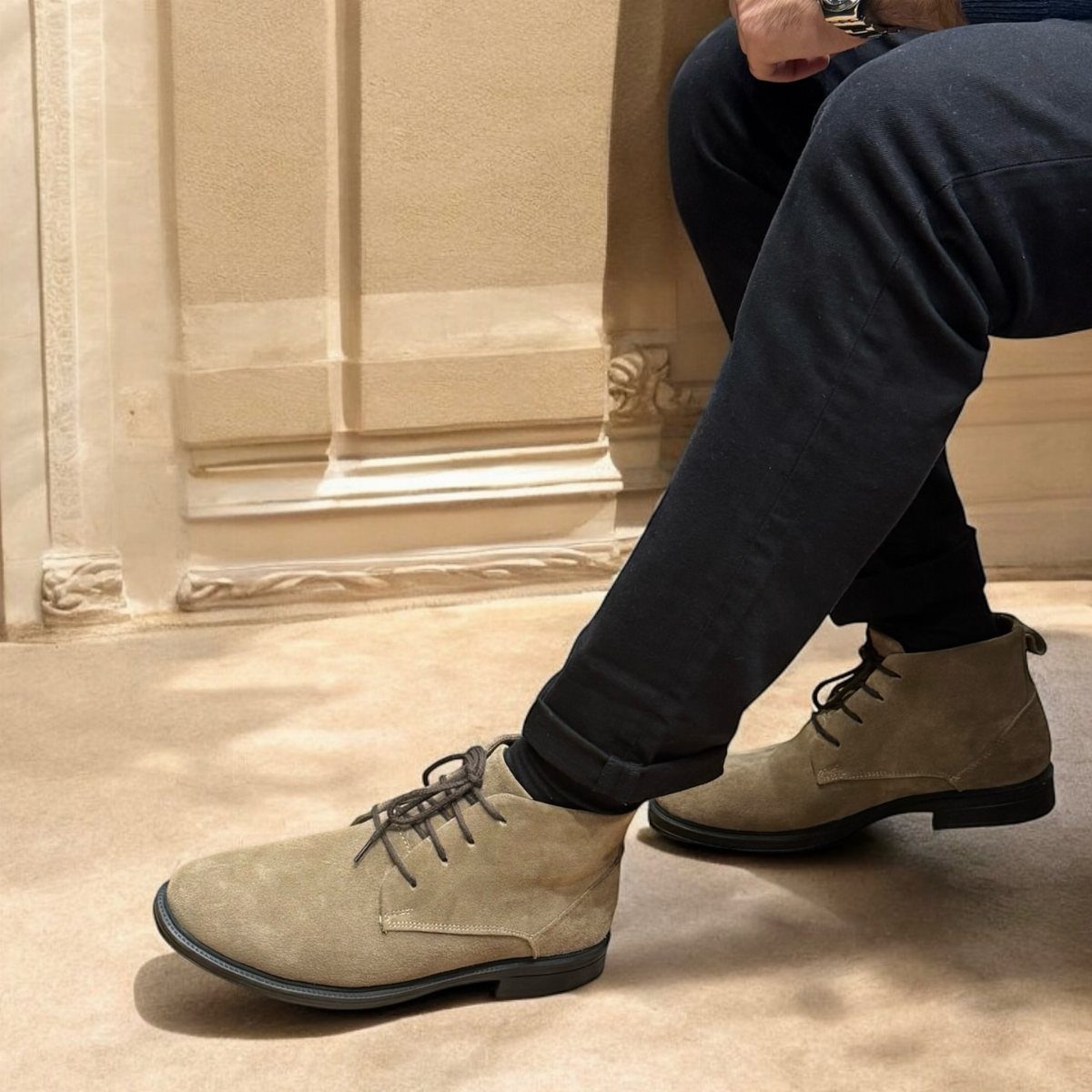
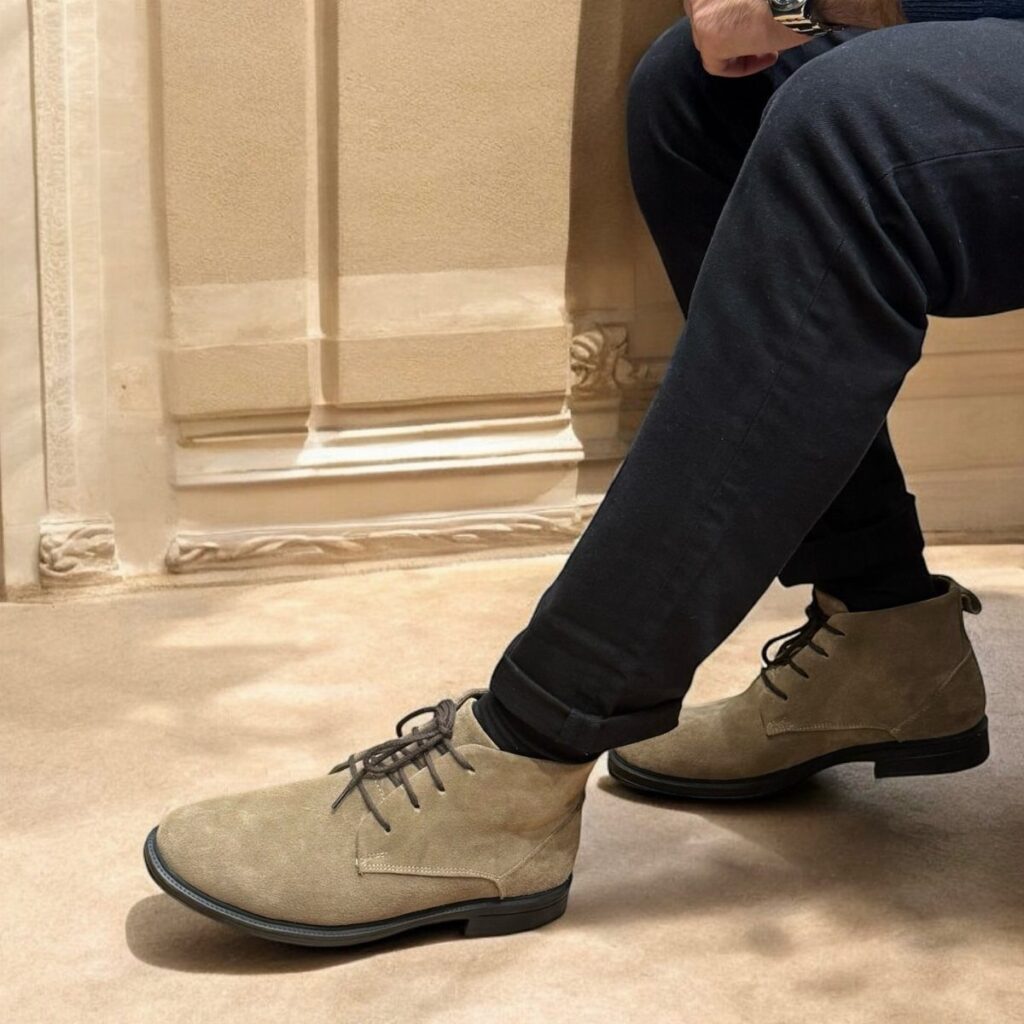
Tan suede against dark trousers is a contrast that needs almost nothing else around it.
Navy, charcoal or black all work, and a plain tee or knit on top keeps the boots as the one soft, matte texture in the outfit.
I like the trousers cut straight and finished right at the ankle, so the full boot shows.
2. Black Chelsea Boots
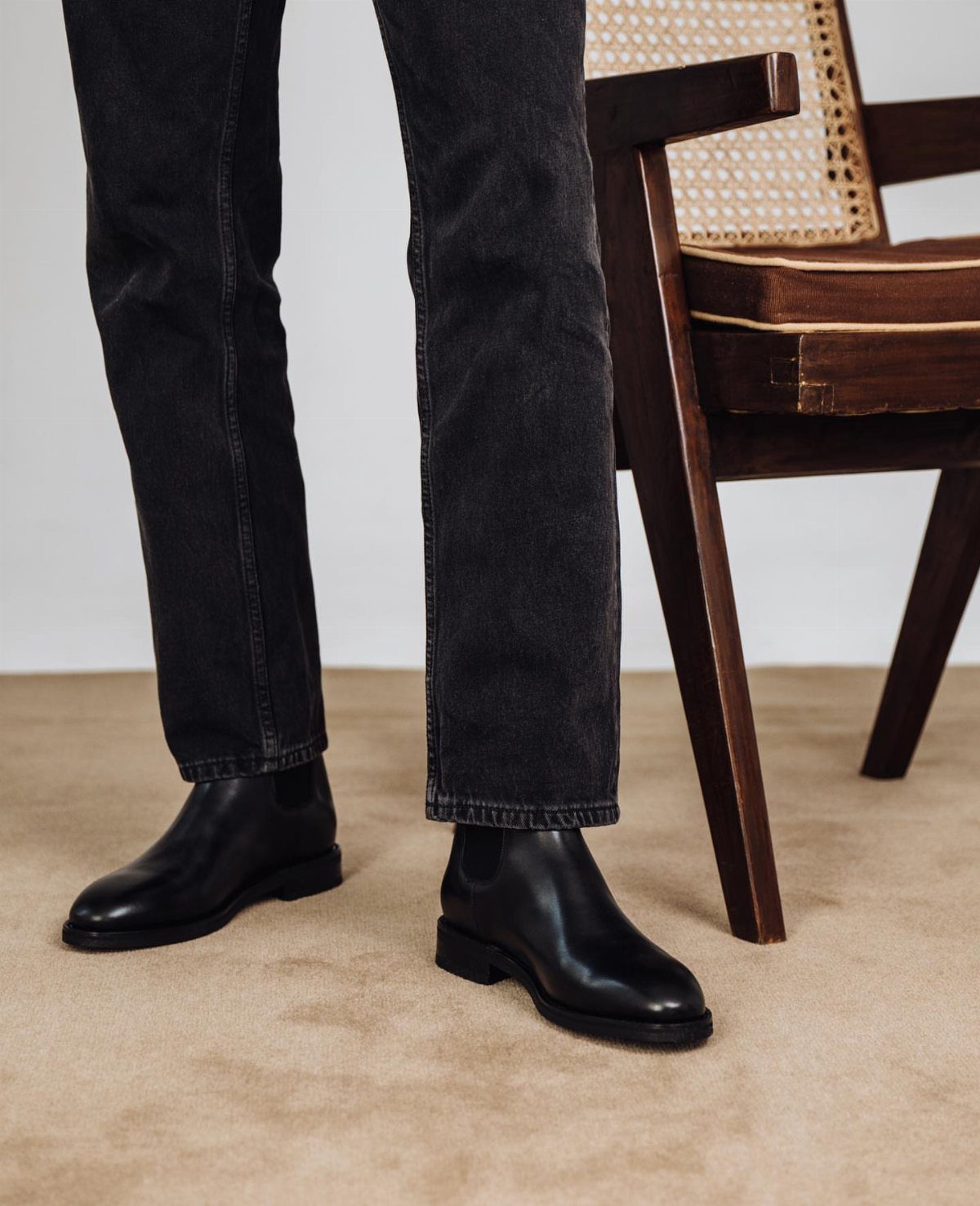
No laces, just an elastic panel on each side: a Chelsea pulls on and off, and that clean ankle line is why it works with slim, dark denim.
Black boots with black or charcoal jeans give a long, unbroken column, and I would keep the rest of the outfit just as quiet.
Wear the jeans slim and cut close to the ankle. A wide hem bunches over the boot and hides the shape you bought it for.
The 12-inch shaft—the part of the boot that rises from your ankle to your lower calf—isn’t overly tall or stiff, so it slips easily under straight or relaxed-fit jeans.
3. Luxury Hiking Boots with Raw Denim
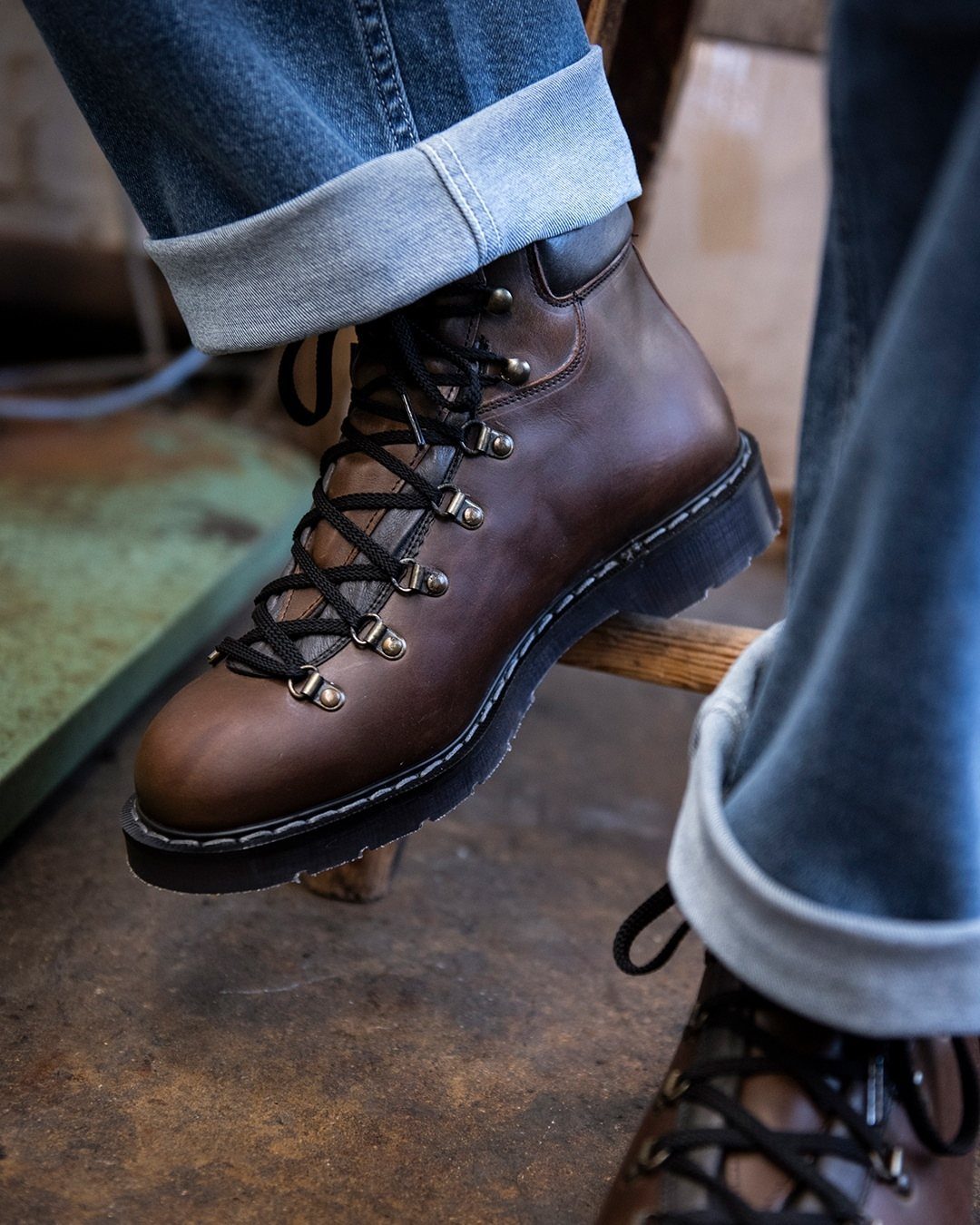
Stiff, unwashed denim and a lace-up leather hiker make a good pair because both look better the longer you wear them.
Cuff the jeans once or twice, enough to show the boot’s laces and upper, and let the brown leather sit against the blue.
Pick a boot in a smooth, plain leather if you want it to read as fashion rather than trail gear. A rugged lug sole is fine, but I would skip bright laces and trim.
4. Tecovas Cartwright Cowboy Boots
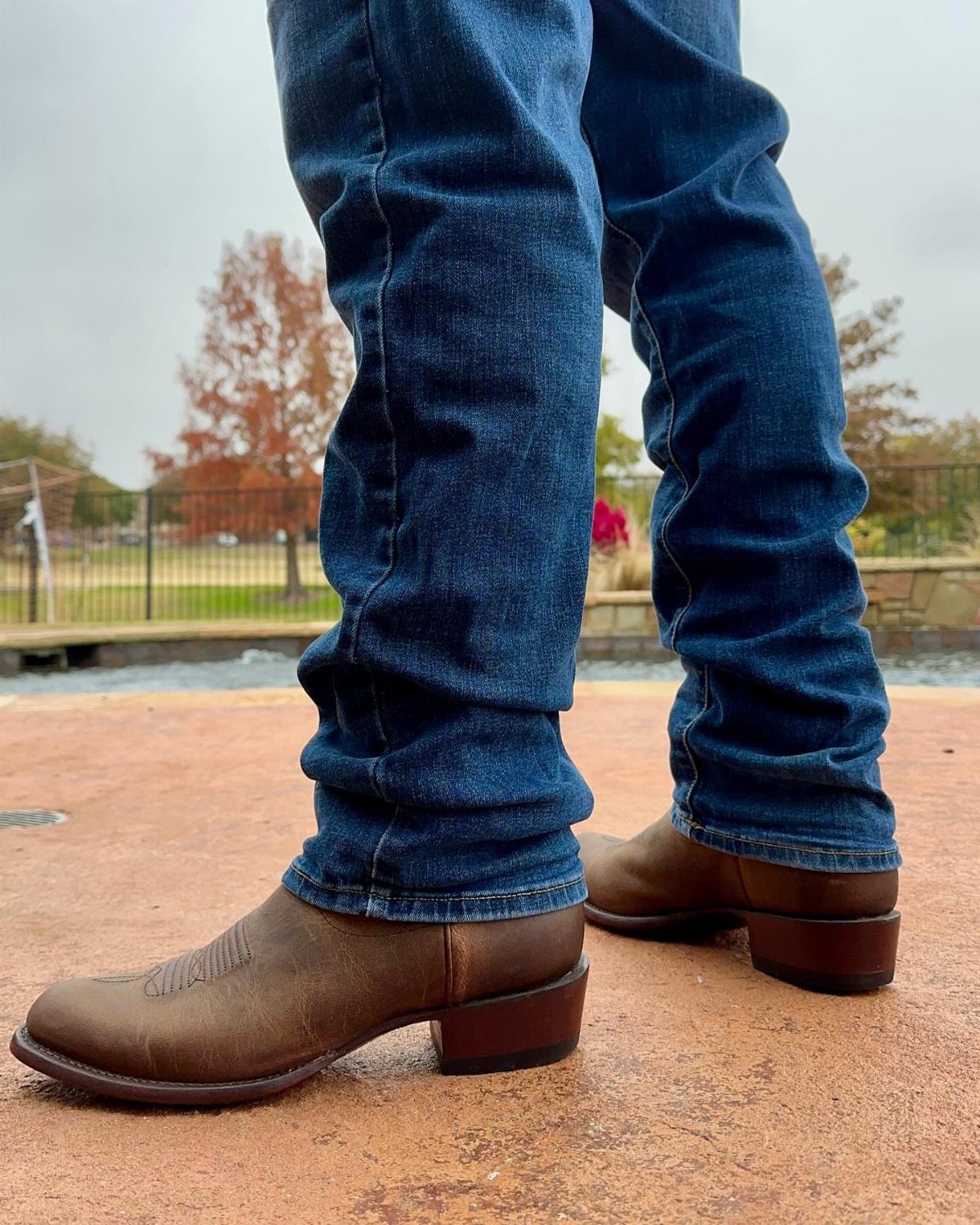
Straight-leg jeans worn over the shaft hide the pull-on boot’s best feature, so I prefer them stacked just above the top of the boot, where the leather still shows. Brown leather with mid-blue denim is the easy, classic version.
Keep the rest simple: a white or chambray shirt, a belt in a similar brown. The boots already carry the outfit.
5. Timberland 6-Inch Nubuck Boots

Wheat nubuck, a buffed leather with a velvety surface, is the color most people picture when they hear "6-inch," and it sits well with grey denim.
Add a muted green jacket and a black layer underneath, and the palette stays calm while the boots stay the warm spot in it.
Let the jeans break over the top of the boot rather than tucking them in. The 6-inch height is about right for a relaxed hem.
6. Oxford Boots with Wool Trousers
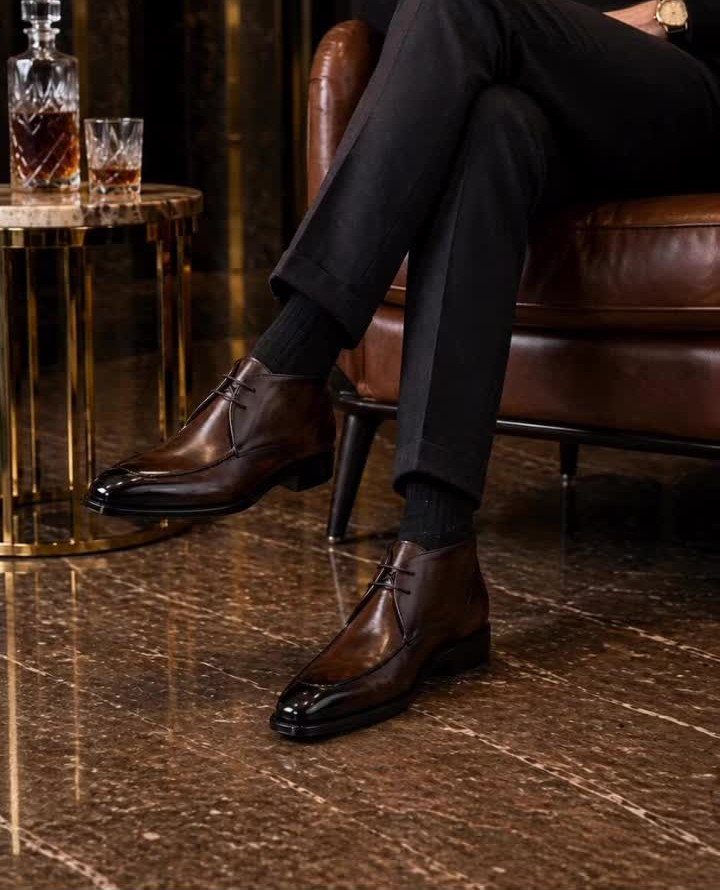
Closed lacing, where the eyelet tabs are stitched under the front panel, is what makes this a boot dressed like an Oxford.
Polished brown leather against dark wool trousers reads sharper than a casual boot and warmer than a dress shoe.
Black socks keep the line dark from hem to boot, which suits trousers with a clean break. I would choose a darker brown if you want it to stay formal.
7. Brogue Boots with Chunky Commando Soles
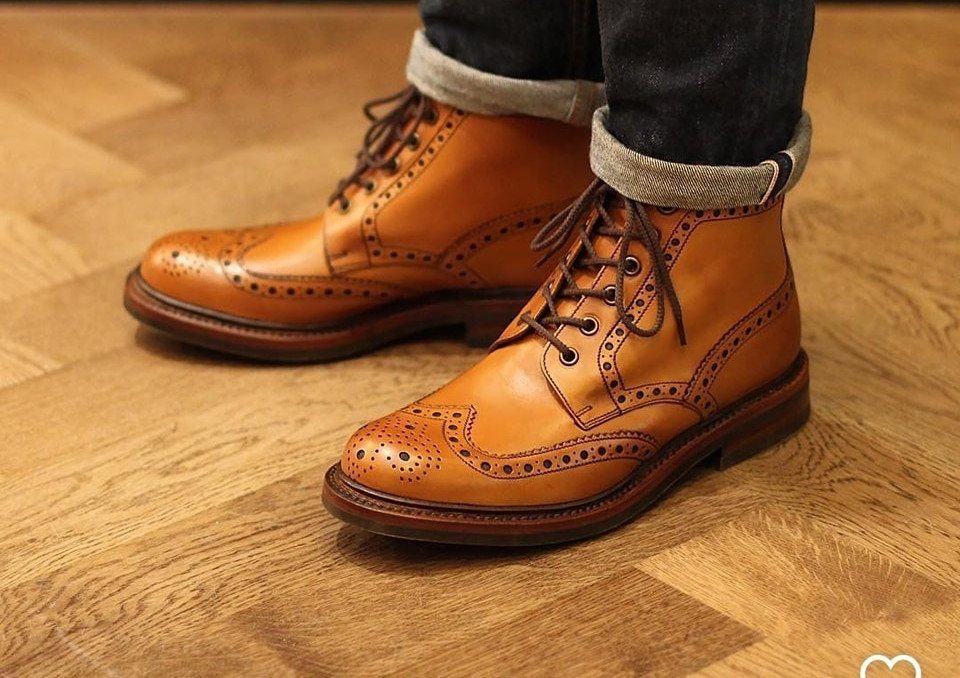
Tan leather with perforated wingtip detailing looks best when the sole matches the attitude, and a chunky commando sole gives a dressy brogue some weight.
Dark denim is the right partner: the blue stays deep, so the tan reads as the single warm color.
Cuff the jeans once so the toe cap and the brogue punching show. I would keep the top half plain, a gray knit or a white tee, and let the boots do the talking.
8. Combat Boots
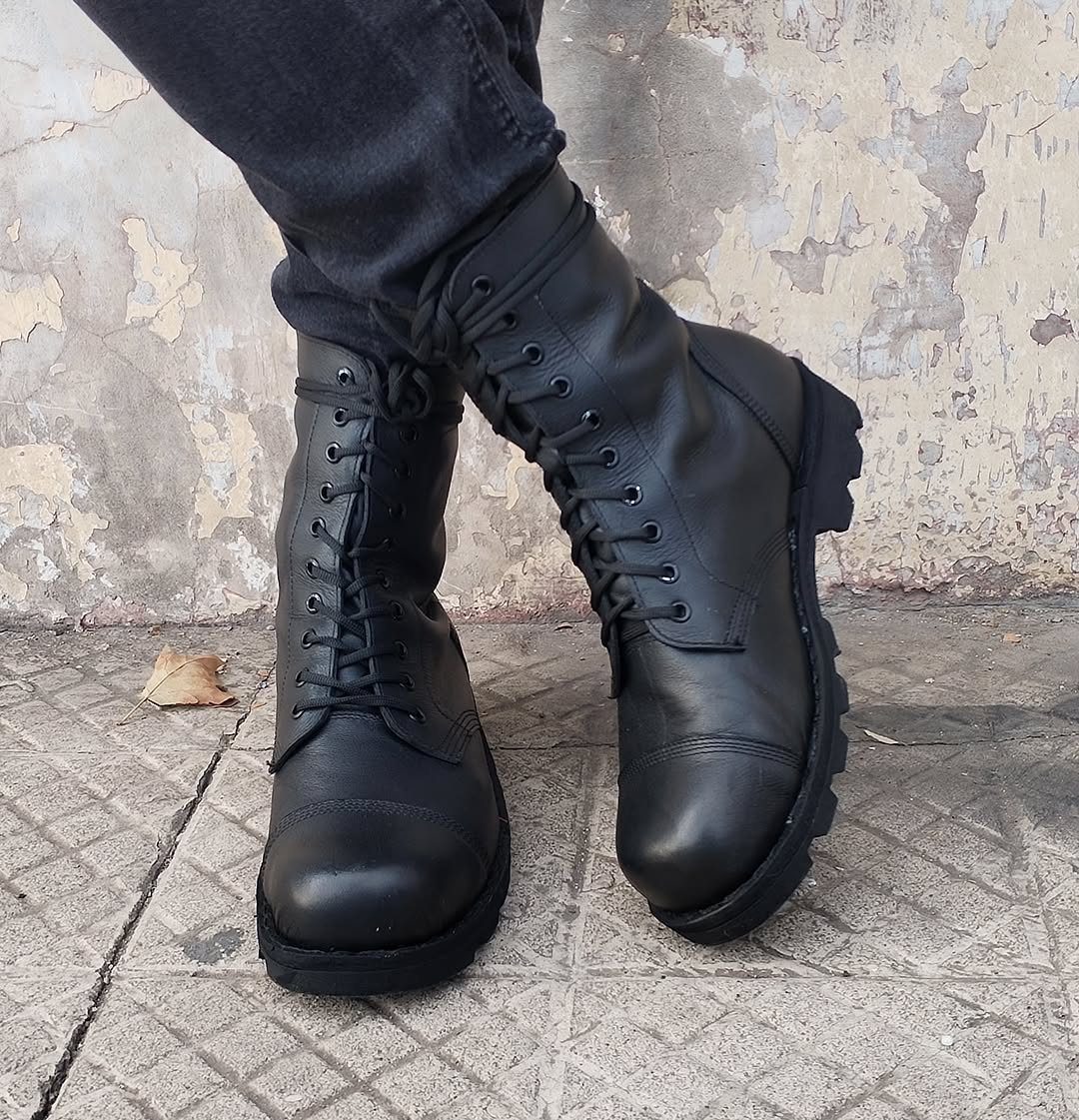
Black leather combat boots with dark gray denim make an off-duty outfit that works on nearly any street. Staying in one dark range keeps the focus on the boot’s shape, the lace-up front and the sturdy build.
Wear the jeans slim to straight and let them sit over the top of the boot instead of bunching.
A plain black tee or a worn-in jacket finishes it. Skip anything shiny, since the boots look best slightly scuffed.
9. Stacked Heel Boots
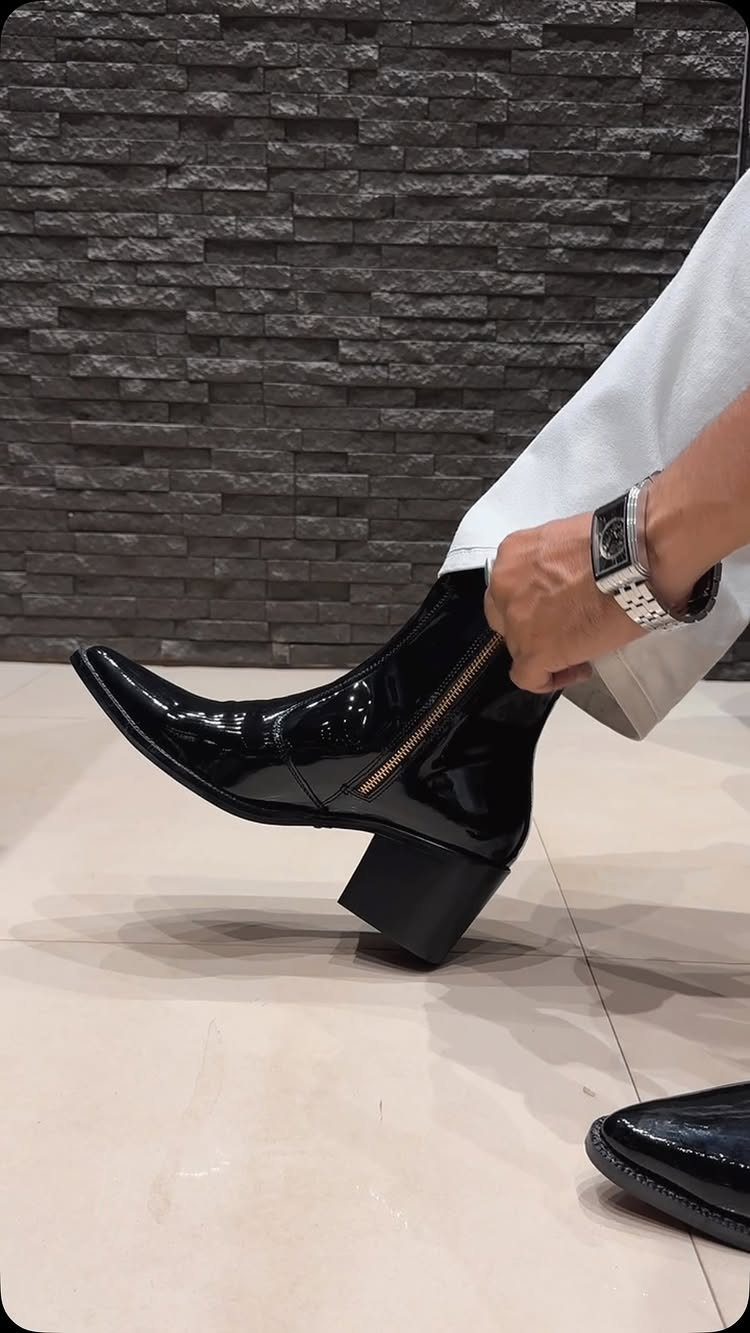
A stacked heel, often called a Cuban heel, lifts the boot a little and gives the walk a different rhythm than a flat sole.
With a pointed toe and a side zipper, the boot is easy to get on and keeps a sharp line at the ankle.
Light trousers cut clean at the ankle show it off, and a watch with a metal case picks up the polish. I would choose this over a flat boot for evenings, not for long days on your feet.
10. Thursday Captain Service Boots
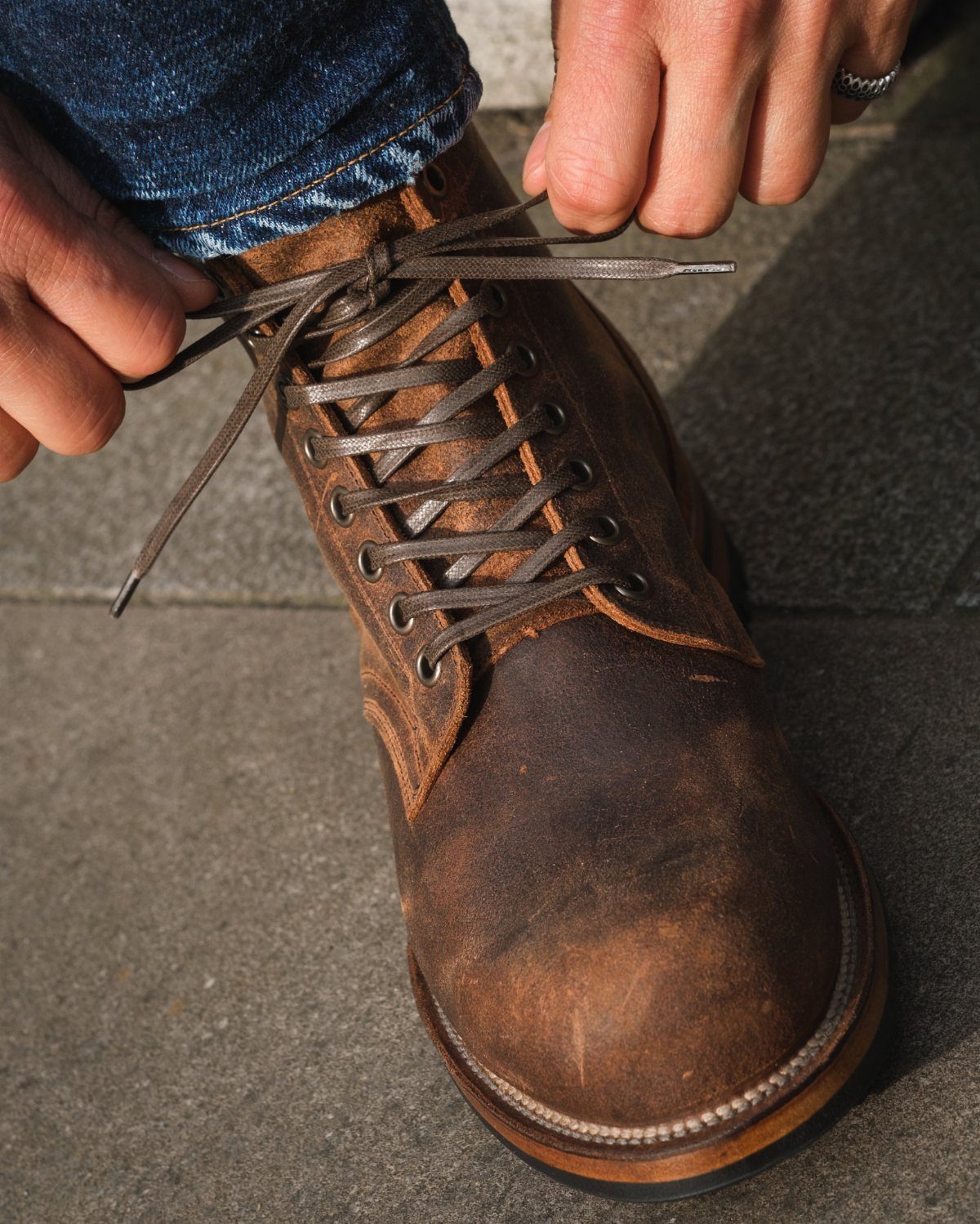
Service boots are lace-up leather boots made for daily wear, and brown leather with mid-blue jeans is the plainest pairing you can make. Lace them snug through the ankle and looser at the top so the boot sits comfortably.
Straight jeans that break over the tongue hide nothing and cover nothing.
A flannel or a gray sweater is plenty above them. I like this as the boot to reach for when I want zero fuss.
Choosing Boots for Fit
A Chelsea has no laces to take up slack, so the fit is set the day the boot is made. If the heel or forefoot is slightly off, it stays off.
Meermin’s Mallorca wholecut Chelsea, $280, comes in four lasts, the foot-shaped molds that decide a boot’s shape. Rod is the dressier one, Hiro has a wider heel, Orion is chiseled, and Negon has a wide forefoot.
Few brands at that price give you so many chances at a match. If you have a low instep and want roomy toes, Negon is the last to try first.
Have a shoe salesperson check your foot dimensions before you order, so you know whether you need width up front or room at the heel.
Quality leather softens with wear, but I would not count on it to fix a slipping heel or a tight forefoot, so the right size is the one that feels correct on day one.
Boot Care and Restoration
Start small with a scuff. A routine of cleaning, conditioning and polishing takes care of most light scuffs and scratches, and it keeps the leather soft and glossy for years.
Worn soles, damaged heels and deep creases call for more. Allen Edmonds will recraft a worn pair: the company swaps in new soles and heels and reconditions the leather so the boots look and wear close to new.
Restoration works best on well-made leather, which is a good reason to buy that kind in the first place.
Cowboy boots ask for one extra step, which is a dry, dark spot for storage between wears.
Frequently Asked Questions
What men’s boots are in style right now?
Black Chelsea boots, tan suede desert boots and wheat nubuck Timberland 6-inch boots are the three I’d reach for first.
Black Chelseas suit slim, dark denim cut close at the ankle, tan suede looks best against navy, charcoal or black trousers, and wheat nubuck sits well with grey denim.
Heeled boots on a stacked Cuban heel have never left the rock ‘n’ roll crowd, but I’d save them for evenings rather than long days on your feet.
What is the best material for men’s boots?
For daily wear I’d pick leather, because it outlasts most other materials and develops a patina the longer you wear it.
Full-grain leather has a smooth, firm face, while nubuck is sanded to a soft nap, and both need a protective spray before they meet rain.
Suede is the pick if you want a soft, matte texture, like a tan desert boot against dark trousers.
Can I wear boots year-round?
Yes, as long as you match the material and sole to the season.
Light-colored chukkas work in warm months; once temperatures drop, I’d reach for an insulated or water-resistant pair. Deeper lugs on the outsole bite into wet pavement, mud and leaves better than a flat sole does.
Do boots stretch over time?
Quality leather boots do, full-grain especially, softening at the toe box, instep and heel as they take the shape of your foot. A fit that feels tight but not painful in the store will usually relax with wear.
Stretch varies with the leather, the construction and the starting fit, and because a Chelsea has no laces to adjust, a heel or forefoot that fits poorly on day one won’t improve.
Can scuffed or worn boots be restored?
Yes, and well-made leather responds best. Surface scratches and scuffs typically buff out with a good cleaning, conditioner and polish, and that routine keeps the leather supple and shiny.