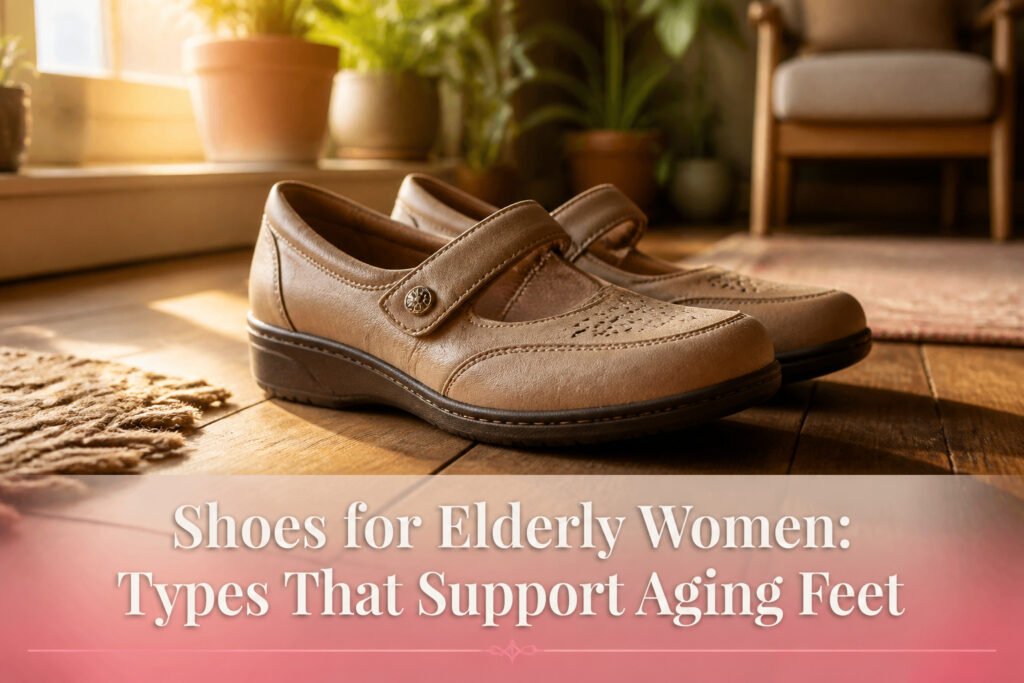
Shoes for elderly women are footwear engineered around feet that widen, flatten, and lose their natural padding. Afternoon swelling turns a morning fit into a pinching hazard, which is why fitting at 3 p.m. matters more than brand loyalty.
A heel between three-quarters and one and a half inches keeps the Achilles from straining without tipping balance; SAS built its reputation on removable insoles that adapt to exactly that kind of daily change.
What Makes a Shoe Work for Older Feet

Feet widen and flatten over time, and the fatty padding on the bottom thins.
That combination makes afternoon fitting non-negotiable: by 3 p.m. most feet have swelled to their true working size, so a shoe that feels fine at 10 a.m. will pinch by evening.
For sole construction, I look for a rocker bottom or at least a gentle heel-to-toe roll. It props the foot through each step instead of asking the ankle and knee to do the work.
A heel between three-quarters and one and a half inches works best; completely flat strains the Achilles, while anything over two inches throws balance off.
Closures matter more than people expect. Laced shoes let you adjust across the instep as the day swells, but Velcro works when finger dexterity or bending becomes unreliable.
Slip-ons save seconds and cost stability; I skip them unless the elastic goring is tight enough that the heel actually grips.
More bulk usually means more support, and less bulk usually means less. A thick midsole helps, yet it adds weight that tires a lighter frame by day’s end.
1. SAS Shoes

SAS earned its reputation among caregivers and podiatrists the old-fashioned way: by building around the problems aging feet actually present.
The removable insoles matter first. They let you swap in custom orthotics or simply pull them out to accommodate a brace or swollen joint without buying a wider shoe you don’t need all day.
The shock-absorbing soles handle the second problem, cushioning bone-on-bone steps when natural fat padding has thinned.
Width options run generous enough that morning snugness and afternoon expansion from fluid retention both find a fit; elderly wearers’ feet often change size across a single day. The downside is price.
SAS outlets soften that hit, and for patients whose podiatrist prescribes them, Medicare covers one pair annually. If your priority is a shoe that works straight from the box without the trial-and-return cycle, this is the default worth paying for.
2. Skechers

Skechers built its reputation on exactly what many elderly women prioritize: getting out the door without a struggle.
The uppers are soft and forgiving, the slip-on styles eliminate bending to tie laces, and the memory foam insoles mold quickly to the foot.
I see the appeal, especially at a price point that lets you replace them every few months without wincing.
The tread grips well, which matters on slick kitchen floors or uneven sidewalks, and the flexibility means the shoe moves with a foot that may have lost some range of motion.
The downside is structure. A Skecher bends where a more supportive shoe would hold; there is none of the rigid heel counter or arch bracing you find in SAS or purpose-built orthopedic options.
For a woman with significant pronation, swelling that needs true width sizing, or a history of falls, that flexibility becomes a liability rather than a convenience.
I would pair them with an over-the-counter insole for better support, but once you are buying inserts and a shoe, the cost gap narrows. Choose Skechers for errands and light walking; choose something sturdier when stability is the priority.
3. Ecco

Ecco sits at the intersection where Scandinavian design meets orthopedic function.
The brand’s direct-injected polyurethane soles bond the upper directly to the sole unit without glue or stitching, which removes weight and creates a flex point that follows where an older foot actually bends.
The result is a shoe that cushions without the bulbous profile that announces "comfort shoe" across a parking lot.
The leather tends to come in muted, wearable colors, and the lasts run narrow through the heel with enough toe spring to keep a natural gait from feeling forced.
A soft ballet flat or loafer from their line passes at brunch or a doctor’s appointment with equal credibility, which matters when your wardrobe is shrinking toward pieces that work harder.
Ecco sits above mass-market brands and rarely discounts deeply. The polyurethane sole also wears differently than rubber, feeling firm at first and softening over months rather than days.
For a woman who wants one pair that handles grocery runs and light social hours without a change, the cost per wear justifies itself, but I would not suggest it as a first purchase for someone still figuring out what her feet need post-sixty.
4. Clarks

Clarks built its name on comfort before comfort became a marketing category, and that lineage still shows in how the brand designs for feet that need all-day support.
The Cushion Plus technology underfoot uses a curved dual-density foam paired with a leather lining that shapes to the wearer over the first few weeks, which means the break-in period actually improves the fit rather than testing your patience.
The Unstructured line strips away stiffeners and heavy seams so the shoe moves with the foot instead of fighting it: featherweight soles, sheep- leather linings, and uppers that bend where a natural stride bends.
For women who stand or walk for hours, the loafers and slip-on styles in this line tend to outlast the trend-driven silhouettes because the construction priorities stay fixed on weight distribution and arch contact.
Clarks runs wide enough that forefoot pressure rarely becomes the reason you retire a pair, though the heel counter in some dress styles sits softer than I’d like for anyone with ankle instability.
The brand sits right where British understatement meets actual engineering: nothing calls itself orthopedic, but the support is there if you know which sub-line to ask for.
5. Vionic

Vionic is the brand that made podiatrist-grade support look like something you would actually wear to lunch.
The Orthaheel technology built into each pair starts with a deep heel cup and a firm midsole that realigns the foot from the ground up, which matters when fallen arches or plantar fasciitis have started to dictate what you can do in a day.
I have seen enough orthopedic shoes that announce a medical problem from across the parking lot; Vionic passes because the exterior reads as standard leather or suede, while the interior does the corrective work without fanfare.
The arch support is molded in, not a removable insert you have to fuss with or replace.
For elderly women dealing with overpronation, heel pain, or the general flattening that comes with decades of use, that built-in structure means the shoe keeps doing its job after months of wear, not just on day one.
The heel sits lower than you might expect from a support shoe, which keeps the ankle stable and reduces the tripping hazard that elevated platforms introduce.
The downside is weight. These are not the lightest option in this list, and the break-in period can feel stiff if you are used to softer soles.
I would start with a slip-on or adjustable-strap style rather than a lace-up if hand dexterity is any concern, since the support does not depend on how tight you pull them.
6. Orthopedic Shoes

True orthopedic construction starts with a molded insole that matches the arch and heel contour exactly, not the generic foam pad found in most "comfort" shoes.
Rigid midsole shanks, extra depth to accommodate swelling, and stretchable vamps for bunions or hammertoes separate medical-grade footwear from the merely cushioned.
Conditions like severe arthritis, diabetic neuropathy, or post-surgical feet make this level of support non-negotiable, since the wrong pressure point can ulcerate or destabilize a gait already compromised by balance loss.
Many elderly women resist orthopedic shoes for the simple reason that the reinforced structure reads as clunky next to the sleeker profiles they wore for decades.
These shoes prioritize foot health over fashion in ways that no styling trick fully resolves.
Medicare Part B sometimes covers custom-made orthopedic footwear when prescribed for diabetes or another qualifying condition, which shifts the cost equation enough that the aesthetic compromise becomes easier to accept.
7. Custom-Made Shoes

Custom-made shoes become the right call when bunions, hammer toes, or severe arthritis have reshaped the foot so thoroughly that no retail last matches it anymore.
A certified pedorthist or orthotist takes a plaster mold or digital scan of each foot, then builds the shoe around that exact shape rather than forcing the foot to adapt.
The process typically runs 4 to 8 weeks from first measurement to finished pair, and Medicare Part B often covers 80% of the cost when a doctor certifies medical necessity for diabetes-related neuropathy or qualifying foot deformities.
Private insurers vary, but the same documentation usually opens coverage. Custom orders take time and upfront paperwork; you get a shoe that actually encloses the foot without rubbing, pinching, or leaving gaps that throw off gait.
For women who have already burned through three brands in the orthopedics aisle and still end up with blisters or balance issues, this is the point where the last resort becomes the obvious choice.
Breathable Materials and Non-Slip Soles

Leather uppers hold their shape and protect the foot from bumps, but they breathe only where the construction is deliberately perforated. Mesh panels let air move freely, which matters when circulation slows and feet stay damp.
I reach for mesh when warmth is the enemy and for leather when structure matters more. Synthetics split the difference at a lower price, though they soften faster and trap heat more readily.
The outsole rubber compound is what keeps a woman upright on a glossy pharmacy floor versus sending her to the emergency room.
Tread depth helps, but the rubber itself should grip wet tile, not just carpet. A simple test: hold the shoe at ankle height, press the sole flat against a clean hard floor, and push forward.
If it skids before your full weight is behind it, the compound is too hard for real-world floors. Many slip-resistant soles marketed for restaurant workers use the same softer rubber I look for in shoes for elderly women.
The downside is wear. A softer-grip sole needs replacing sooner, and so does cushioning compressed daily for months.
One caregiver I noticed in the forums replaces working shoes every three months. That cadence sounds aggressive until you imagine the cost of a single fall.
Lightweight Design and Fall Prevention

Shoes under 250 grams per pair change how tired you feel by lunch, and that fatigue is what lets a foot drag on a threshold or a stair.
Heavier soles, especially the blocky athletic styles built for men’s frames, shift your center of gravity just enough that the hip compensates.
Over months that compensation shortens your stride and weakens the ankle stabilizers you need most when a rug slides or a curb catches you off guard.
The studies on falls and footwear point repeatedly to weight as a variable that gets ignored in favor of tread pattern.
A lighter shoe lets you pick the foot up cleanly, set it down where you meant to, and correct mid-step when the surface isn’t what you expected.
I would rather give up some cushioning and add a gel insole later than fight a pound of rubber all morning.
If you are already using a cane or a walker, the math gets more stark; every gram lifted is multiplied by the thousand steps before noon, and your arms are doing their own work now.
The stability shoes that rate highest for fall prevention are not the lightest on the shelf, but the gap matters.
Try them on and walk in place for thirty seconds; the pair that feels absent is the pair that keeps you upright.
Fashion and Function

The real shift in shoes for elderly women is that the "orthopedic" look has largely disappeared. Modern plastics and foams let manufacturers build support into normal-looking soles, and brands like SAS now make mary janes alongside their traditional sandals.
ECCO walking shoes weigh next to nothing and dress up better than older styles because the color and cut read as ordinary footwear.
New Balance even qualifies many of its running shoes for Medicare reimbursement as diabetic shoes, though you’d never pick them out on the street.
What this means practically: compromise on heel height first, not on color or closure style.
A flat with a working strap and a leather rose detail, like the L’Artiste style one traveler mentioned, keeps you in conversations rather than on the sidelines.
The social cost of the clunky "sensible" shoe is real. One 53-year-old traveler switched from SAS to ECCO specifically to avoid looking clunky in Italy, even though both brands handled cobbles fine.
My own call: if the shoe needs an orthotic, get the insert rather than the built-in orthopedic construction.
You’ll have more style options and you can move the support between pairs. The exception is when swelling or foot shape makes standard lasts impossible, in which case the disguised orthopedic brands are the better tool.
Frequently Asked Questions
What are the best shoes for elderly women?
SAS, Skechers, Ecco, and Clarks rank as the most reliable choices. SAS works best straight from the box with removable insoles and generous width options.
Skechers wins for easy on-and-off convenience. Ecco balances Scandinavian design with orthopedic function, while Clarks delivers all-day support through its Cushion Plus technology and an Unstructured line that moves with the foot rather than fighting it.
What are the best shoes for elderly people to prevent falls?
Weight matters as much as tread.
Shoes under 250 grams per pair reduce the fatigue that lets a foot drag on a threshold or stair. The SAS and Vionic lines both prioritize stable heels lower than two inches, keeping the ankle centered rather than tipping balance.
Test any candidate by walking in place for thirty seconds; the pair that feels absent is the pair that keeps you upright.
Replace working shoes roughly every three months, since compressed cushioning and hardened rubber both raise the risk of a skid.