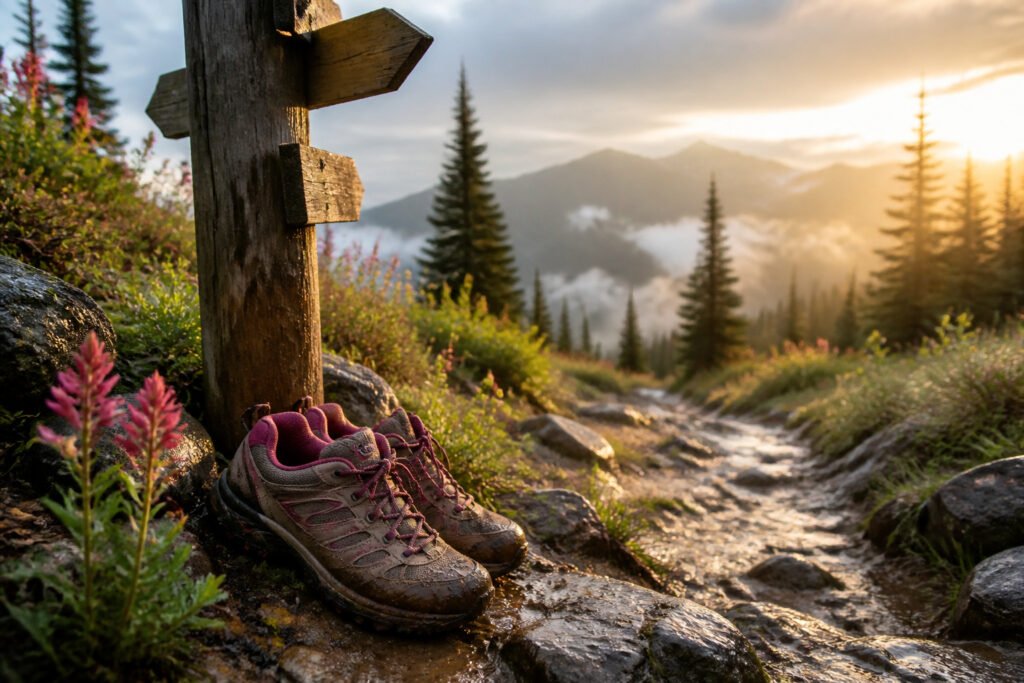
Women’s hiking shoes that keep water out are built around a membrane, a sealed seam, or a full leather upper, and the difference between dry socks and a squelching afternoon often comes down to which system your trail demands.
The Danner Mountain 600, the pair that owners keep naming as the one that actually works across muddy switchbacks and casual trailheads, sits at 36 oz with a GORE-TEX liner and a Vibram Megagrip outsole.
That weight is the condition: it stabilizes on descents but drags on long flat walks, and the recraftable construction only pays back if you hike weekly rather than twice a season.
My Top Picks
| Product | Award | Best for | Why it won | ||
|---|---|---|---|---|---|
| Danner Mountain 600 | Best Overall Waterproof Hiking Shoe | General hikers wanting balance | Nails waterproofing, comfort, traction, and durability all at once | Check price | |
| La Sportiva Spire GTX | Best Hiking Shoe for Technical Trails | Technical terrain challengers | Delivers standout stability and grip on rough, demanding ground | Check price | |
| Columbia Newton Ridge Plus Waterproof | Best Budget Waterproof Hiking Boot | Price-conscious boot buyers | Keeps feet dry without the usual hit to your wallet | Check price | |
| Merrell Siren Edge 3 Waterproof | Best Lightweight Waterproof Hiking Shoe for Comfort | Comfort seekers wanting light | Feels barely there yet still cushions every step on the trail | Check price | |
| ANJOUFEMME Outdoor Hiking Boots | Best Waterproof Hiking Shoe for Beginners | First-time hiking buyers | Simple, accessible waterproofing with no steep learning curve needed | Check price | |
| Amazon Essentials Waterproof Hiking Shoe | Best Waterproof Hiking Shoe for Casual Hikers | Occasional weekend walkers | Covers basic waterproof needs without overcomplicating things | Check price | |
| Nortiv 8 Lightweight Comfort | Best Budget Waterproof Hiking Shoe | Tight-budget shoe shoppers | Squeezes solid waterproofing and comfort into the lowest price tier | Check price | |
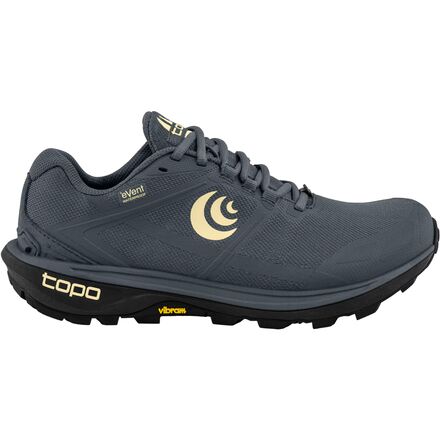
| Topo Athletic Terraventure 4 WP | Best Hiking Shoe for Wide Feet | Hikers with wide feet | Built with extra room where standard shoes pinch and squeeze | Check price | |
| HOKA Anacapa 2 Low GTX | Best Lightweight Hiking Shoe | Speed-focused mile crunchers | Strips away bulk so you can move fast without losing protection | Check price |
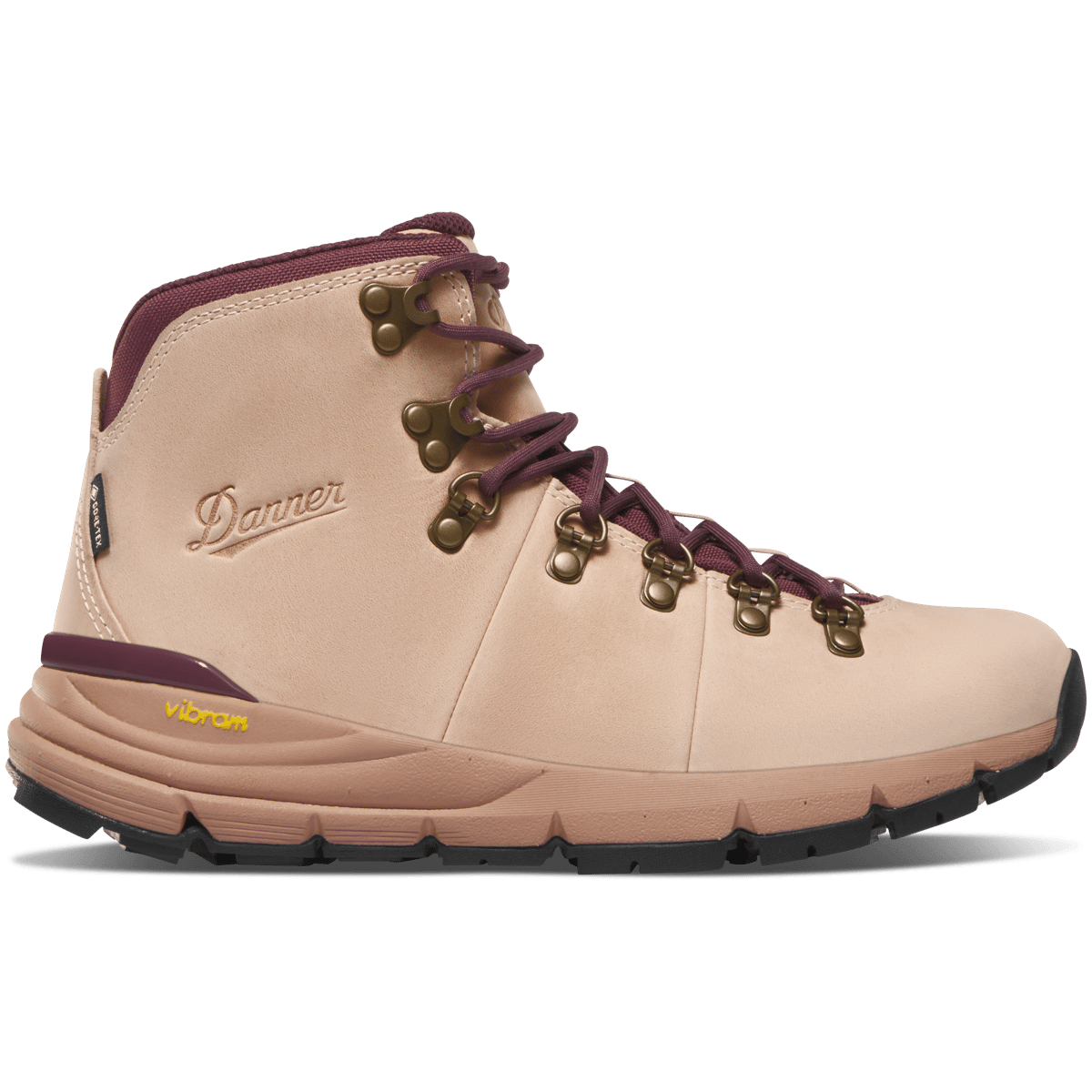


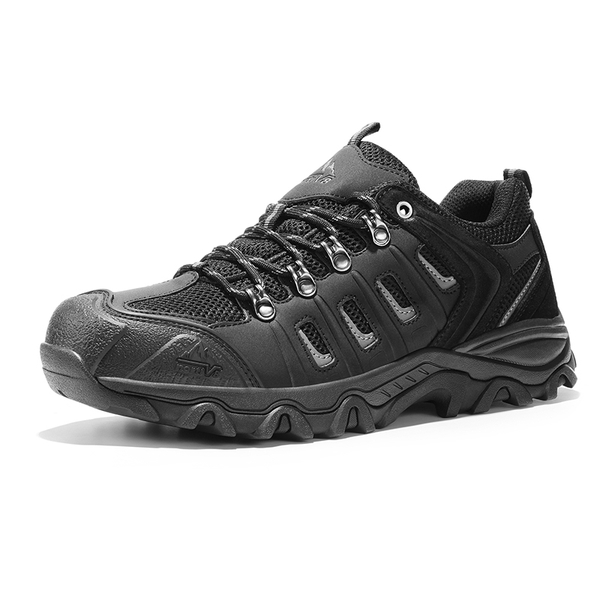

Best Overall Waterproof Hiking Shoe: Danner Mountain 600
Image: global.danner.com
Quick Verdict
For a hiker who wants one shoe to handle muddy switchbacks and casual trailheads without the clunk of a full boot, this is the pair that keeps showing up in owner reports as the compromise that actually works.
The Mountain 600 balances waterproofing, comfort, and grip well enough that Danner built it to be recrafted when the miles pile up, which is rare at this weight.
At 36 oz, this is still a hiking shoe under your foot, and on long flat stretches you notice the weight more than in a trail runner.
Key Specifications
- Weight: 36 oz
What It Does Well
- GORE-TEX liner that owners trust in wet conditions. The 100% waterproof barrier means creek crossings and unexpected rain don’t end the hike early.
- Vibram Megagrip that holds on slick rock. Independent reviewers and owners both note the difference on wet surfaces where standard soles slide.
- Recraftable construction. Danner designed this shoe to be rebuilt rather than replaced, which changes the math for anyone tired of tossing shoes every two seasons.
- OrthoLite ECO footbed you can pull out. Custom orthotics or just personal preference; the removable insole makes either easy.
Where It Falls Short
- 36 oz adds up on all-day flat terrain. The weight that stabilizes on descents drags during long road walks to the trailhead.
- Width options exist but the last runs narrow for some. Owners with wider forefeet report break-in periods or sizing experiments that lighter shoes don’t demand.
Who It’s For
Someone who hikes weekly in unpredictable weather and wants a shoe that won’t be landfill in eighteen months fits this profile; the recraftable build rewards that frequency.
The buyer who prioritizes a featherweight feel for fast day hikes or walks mostly on pavement will notice the 36 oz more than the waterproofing pays back.
How It Compares
The La Sportiva Spire GTX offers similar waterproofing and traction according to owner reports, but it sits heavier on the foot and comes in fewer width options.
That makes the Spire a stronger match for narrow-footed hikers who stick to maintained trails, while the Mountain 600’s sizing range and recraftable design suit the person who plans to live in their hiking shoe across multiple seasons and trail types.
Where to buy: Amazon · global.danner.com
Best Hiking Shoe for Technical Trails: La Sportiva Spire GTX
Image: outdoorgearlab.com
Quick Verdict
Technical trails punish gear that only looks capable. The Spire GTX earned this spot because its traction and water resistance both rate 9 out of 10, numbers that match what owners describe on wet rock and scree fields.
At 1.7 lb, it sits light enough for a full day of scrambling without the stripped-down feel of a racing shoe.
The comfort score of 8 out of 10 is honest; this is not a plush cruiser, and buyers who prioritize pillowy steps over ground feel will notice.
Key Specifications
- Traction: 9 out of 10
- Water Resistance: 9 out of 10
- Weight: 1.7 lb
- Durability: 8 out of 10
- Comfort: 8 out of 10
What It Does Well
- Waterproofing that scores 9 out of 10 keeps feet dry through stream crossings and hours of rain without the sauna effect that plagues lesser liners.
- Traction at 9 out of 10 bites into loose talus and slick limestone alike, the kind of grip that prevents the small slips that become big falls.
- The 1.7 lb weight trims fatigue on steep approaches where every ounce costs energy by hour four.
- Durability at 8 out of 10 holds up to repeated abrasion from brush and stone without the delamination that kills shoes early.
Where It Falls Short
- Comfort at 8 out of 10 means break-in is real; several owners mention blisters on first outings.
- The fit runs narrow through the forefoot, a problem for wider feet that no half-size fully solves.
- Breathability suffers in desert heat; the waterproof membrane works both directions.
Who It’s For
Someone who spends weekends on Class 2 scrambles and wants one shoe for three-season use without swapping gear.
The hiker who prioritizes ankle mobility and ground sensitivity over maximum cushioning will find the Spire GTX matches their pace. Buyers who need all-day plush underfoot or have broad feet will fight the last and the midsole shape.
How It Compares
The Danner Mountain 600 carries similar waterproofing and a Vibram outsole, but owners consistently note its heavier feel and softer ride. That extra weight buys more comfort at the cost of nimble foot placement on exposed rock.
I would point someone toward the Danner for maintained trails with long miles between technical sections, and toward the Spire GTX for routes where precise edging and quick adjustments matter more than coddling.
Where to buy: Amazon · rei.com
Best Budget Waterproof Hiking Boot: Columbia Newton Ridge Plus Waterproof
Image: theresearchedtraveler.com
Quick Verdict
For hikers who need dry feet without the premium markup, this boot covers the basics and then some.
At 31.7 oz, the Columbia Newton Ridge Plus Waterproof sits on the lighter side of full-grain leather hikers, which matters more than most buyers expect until mile six with a pack.
The trade is straightforward: you get waterproofing and respectable comfort ratings, not the advanced midsole tech or Vibram grip that pricier boots layer in.
Key Specifications
- Comfort Level: 5 stars
- Weight: 31.7 oz
What It Does Well
- Solid waterproofing — owners report dry feet through stream crossings and wet Northeast trails, which extends the hiking season into mud and melt months.
- Light enough for day trips — the 31.7 oz weight (900 g) keeps leg fatigue down on 5–10 mile outings where heavier boots slow the pace.
- Comfort scores that hold up — independent reviewers and owner feedback both rate the comfort level at 5 stars, suggesting the break-in period is minimal compared to traditional leather options.
- Multiple width options — the fit options include wide sizes, which solves the pressure-point problem that sends a lot of hikers back to the store.
Where It Falls Short
- Traction limits on technical terrain — owners note the outsole grips well on dirt and rock but struggles on slick roots and steep wet slabs where Vibram compounds perform better.
- Durability questions under heavy use — some long-term owners report the waterproof membrane and stitching show wear faster than higher-end construction, especially with regular backpacking loads.
- Midsole support plateaus — the comfort works for day hiking and light overnights, but reviewers who tried multi-day trips with 30+ lb loads found the cushioning compressed by day three.
Who It’s For
The buyer here is someone building their first kit or keeping a second pair for wet-day backup, not investing in a decade of Rocky Mountain mileage.
Someone who hikes twice a month in the Mid-Atlantic or Pacific Northwest, where rain is the constant enemy and the budget needs to stretch to a rain shell too.
The hiker who should skip this one is the person already eyeing 14ers or planning a JMT thru-hike; the midsole and outsole limitations become real liabilities when the trail turns to talus and the days stack into weeks.
How It Compares
The Danner Mountain 600 runs on GORE-TEX liners and Vibram outsoles, which shows in wet-rock confidence and long-haul durability that the Columbia does not match.
That Danner build suits the hiker who wants one boot for everything from day hikes to loaded weekend trips, and who will notice the difference on a steep descent with a pack.
The Columbia keeps its place with the buyer who prioritizes keeping the total gear spend in check and does not push into terrain where boot failure becomes a safety issue; it is the practical choice for conditions that are wet but not extreme.
Where to buy: Amazon
Best Lightweight Waterproof Hiking Shoe for Comfort: Merrell Siren Edge 3 Waterproof
Image: merrell.com
Quick Verdict
Waterproofing at under 11 ounces is the headline here. The Siren Edge 3 suits hikers who log miles on moderate terrain and need dry feet without the heft of a traditional boot.
Independent reviewers rate comfort at 3 out of 5, which lands right in the middle of the pack; that is the detail that keeps this out of the technical-trail conversation, even though most owners find it perfectly pleasant for day hiking and light backpacking.
Key Specifications
- Traction: 7 out of 10
- Weight: 10.4 oz
- Durability: 5 out of 10
- Comfort: 3 out of 5
- Width: 2 options
What It Does Well
- The 10.4 oz weight (295 g) matters most for women who have tried heavier waterproof shoes and felt the drag by mile three; this one disappears on the foot.
- Two width options solve the common problem of a narrow heel slipping or a wide forefoot going numb; Merrell built this last with actual variation, not just a single "women’s cut."
- Waterproof construction works for morning dew, creek crossings, and the rain that starts two hours from the trailhead.
Where It Falls Short
- Durability at 5 out of 10 matches what owners describe: noticeable wear after a single season of frequent use, with the outsole shedding rubber faster than premium alternatives.
- Traction at 7 out of 10 holds on packed dirt and slick rock but loses purchase on loose scree or muddy inclines; several independent reviewers mention sliding where more aggressive soles bite.
- The 3 out of 5 comfort rating reflects adequate cushioning that flattens with time, not the plush support that high-mileage hikers seek for multi-day trips.
Who It’s For
A weekend hiker who covers five to ten miles on established trails and wants one shoe for dog walks and light outdoor work will get her money’s worth.
Someone planning a weeklong trip with steep grades and off-trail sections should look past the weight savings and pick a sturdier sole.
How It Compares
The ANJOUFEMME Outdoor Hiking Boots carry a taller shaft and heavier build, which gives ankle support the Siren Edge 3 does not attempt.
That tradeoff suits buyers who hike with a loaded pack or roll ankles easily, while the Merrell keeps its edge for fast day trips and summer travel where every ounce in the suitcase counts.
Neither shoe works for technical mountaineering, but they split cleanly at the question of whether your hiking looks more like walking or more like scrambling.
Where to buy: Amazon · merrell.com
Best Waterproof Hiking Shoe for Beginners: ANJOUFEMME Outdoor Hiking Boots
Quick Verdict
Beginners who want waterproof protection without committing to a premium label have a solid starting point here.
The ANJOUFEMME boot keeps feet dry through sudden rain or light snow, and its light brown ankle profile pairs naturally with jeans and leggings for errands that turn into walks.
Almost no independent track record exists yet, so durability stays an open question and you are buying mostly on spec sheet trust.
What It Does Well
- The waterproof PU outer and breathable plaid lining block wet weather while letting moisture escape, which means your feet stay dry without the clammy buildup that turns short walks into early turnarounds.
- A TPE outsole grips wet pavement and muddy paths, so casual trail use and winter dog walks carry less slip risk than slick-soled fashion boots.
- The removable insole lets you swap in thicker socks or your own orthotics when temperatures drop, extending usable months without sizing up.
Where It Falls Short
- Zero verified owner feedback means long-term seam integrity, outsole wear patterns, and real-world waterproof lifespan are unconfirmed.
- Reinforced eyelets and lightweight construction suggest town-to-light-trail use rather than rocky terrain or loaded pack hiking.
Who It’s For
Someone testing whether hiking becomes a habit, who needs weather protection now and would rather spend modestly before knowing their trail frequency.
The buyer who should pass is the one already logging weekly miles in rugged conditions, because established brands with repairable components and proven midsole longevity will outlast this boot’s trial period.
How It Compares
The Merrell Siren Edge 3 Waterproof brings a narrower, more athletic last and documented miles from female hikers, which suits buyers who want brand accountability and a lighter step.
The ANJOUFEMME runs wider and more casual in styling, better for the commuter who might hit a gravel path but prioritizes all-day standing comfort and a boot that does not look technical at the grocery store.
Where the Merrell rewards research and trail confidence, the ANJOUFEMME accepts the beginner’s uncertainty as part of the price.
Where to buy: Amazon
Best Waterproof Hiking Shoe for Casual Hikers: Amazon Essentials Waterproof Hiking Shoe
Quick Verdict
Casual hikers who want dry feet without a premium investment have a straightforward option here.
The Amazon Essentials Women’s Waterproof Hiking Shoe pairs a full internal waterproof bladder with a quick-lace system that gets you out the door faster, though the exchange is real: the traction and support stay basic, and technical terrain is outside its comfort zone.
What It Does Well
- Padded collar with flex notches cradles the ankle and allows natural foot movement, which means less break-in time and fewer rub spots on day hikes.
- Molded memory foam insole reduces foot fatigue over longer walks, so a three-hour trail feels different from hour one to hour three.
- Reflective details keep you visible in low-light conditions, a safety layer for early morning starts or dusk returns.
- Pull-tab plus quick-lace design makes on-and-off genuinely fast, which matters more than you’d think when you’re juggling gear at the trailhead.
Where It Falls Short
- EVA midsole and rubber outsole handle moderate grip but lack the aggressive lug pattern or torsional rigidity that rocky, steep trails demand.
- Nylon and PU suede upper is durable for the price tier but does not match the abrasion resistance or structured support of boots built for serious mileage.
- The waterproof bladder protects from wet grass and stream crossings, yet the overall construction is not designed for extended exposure or multi-day wear.
Who It’s For
Someone who hikes local trails on weekends, values keeping their socks dry, and would rather spend the difference on gas to the trailhead than on features they will not use.
The buyer who needs ankle stability for loose scree or carries a 30-pound pack will feel the limits quickly; the soft collar and light structure telegraph that mismatch from the first lace-up.
How It Compares
The Merrell Siren Edge 3 Waterproof offers more stability and a lighter overall feel, with a reputation for comfort across varied terrain that owners consistently note.
Where the Amazon Essentials shoe wins is simplicity and accessibility for the occasional hiker who rarely faces conditions beyond packed dirt and wet leaves.
Choose the Merrell if your trails get technical or your ankles have history; stay with Amazon Essentials if your hiking looks more like walking with elevation.
Where to buy: Amazon
Best Budget Waterproof Hiking Shoe: Nortiv 8 Lightweight Comfort
Image: nortiv8.com
Quick Verdict
Budget hikers who need dry feet without the premium markup have a solid option here.
The Nortiv 8 Lightweight Comfort wins this spot by delivering waterproof protection and a fit that owners consistently describe as more comfortable than both Columbia and Merrell alternatives at similar or higher prices.
The label does not lie: this is a budget shoe, and the materials show it in ways that matter to some feet more than others.
What It Does Well
- Waterproof membrane construction keeps water out on wet trails and stream crossings, which matters most to hikers in the Pacific Northwest or anyone who hits the mud season.
- Quality suede leather uppers with solid construction hold up to brush and scree better than synthetic budget competitors; the shoe does not feel like it will come apart at the seams after a single rocky scramble.
- Lightweight design cuts fatigue on long day hikes where every ounce adds up by mile eight.
- Regular and Wide widths mean the shoe actually fits American feet that fall outside the narrow B standard; owners with wider forefeet report the Wide option prevents the pinching that plagues many waterproof hikers.
Where It Falls Short
- The tread pattern gets praise as "nice" but not aggressive; steep loose terrain or serious backpacking loads push past what this sole was built for.
- Budget construction means the midsole breaks down faster under heavy use; owners who hike weekly notice the cushion flattening before a season ends.
- Suede leather requires more maintenance than synthetic uppers to keep the waterproofing intact; neglect the treatment and the membrane works harder than it should.
Who It’s For
A weekend hiker who gets out twice a month in variable weather and needs one shoe that handles drizzle, puddles, and light snow without soaking through fits this profile exactly.
Someone planning a thru-hike or carrying 30+ pound loads will find the support and durability run out mid-trip, and that buyer should look at spending more or accepting heavier boots.
How It Compares
The Columbia Newton Ridge Plus Waterproof matches this shoe on waterproofing and actually edges ahead on long-haul comfort according to most accounts, but the gap in price lands the Nortiv in a different conversation entirely.
A buyer who hikes casually and resents paying boot prices for shoe needs will find the Nortiv’s tradeoffs acceptable; the Columbia suits someone who prioritizes all-day cushion and plans to rack up enough miles to amortize the difference.
Both handle wet conditions. Neither pretends to be a technical mountaineering boot.
Where to buy: nortiv8.com
Best Hiking Shoe for Wide Feet: Topo Athletic Terraventure 4 WP
Image: backcountry.tnu8.net
Quick Verdict
Extra width that actually stays supportive through a full day on the trail is harder to find than makers admit.
The Terraventure 4 WP gives that room without turning sloppy; owners with wider forefeet describe finally ending a hike without numb toes or the blisters that come from lateral squeezing.
The waterproofing holds up in stream crossings and wet grass, and the tread bites on loose descents.
At 1.4 lb it sits toward the lighter side of serious hiking shoes, though some independent reviewers note the midsole firms up quicker than premium alternatives after heavy mileage.
Key Specifications
- Weight: 1.4 lb
What It Does Well
- Anatomical toe box leaves actual space – Owners describe spreading their forefoot naturally on uphill pushes instead of jamming against the sides.
- Dry days stay dry – The WP membrane keeps water out through creek crossings and morning dew on overgrown trails.
- Traction on varied surfaces – The outsole grips loose scree and muddy roots without the clunky feel of a full boot.
- Light enough for day-trip pacing – At 1.4 lb, leg fatigue shows up later on long descents compared with traditional leather options.
Where It Falls Short
- Durability questions at high mileage – User reviews flag the midsole packing out sooner than expected for hikers logging weekly miles.
- No half-size nuance for narrow heels – The generous width can translate to heel slip for buyers whose foot narrows behind the ball.
Who It’s For
A hiker whose forefoot demands room but who still wants a nimble shoe for single-day trips and moderate loads, not a replacement for a heavy backpacking boot.
Someone with a consistently narrow foot through the heel and midfoot will likely fight fit issues here that a standard-width shoe solves more cleanly.
How It Compares
The La Sportiva Spire GTX matches this shoe on waterproofing and beats it for underfoot stability on rocky terrain, but that security comes from a closer last that several owner reports describe as squeezing at the bunion line.
The Spire suits hikers with medium to slightly narrow feet who prioritize torsional rigidity on technical ground; the Terraventure 4 WP wins for wide-footed walkers doing mixed trail and non-technical peak routes where comfort over hours matters more than precision edging.
Where to buy: backcountry.tnu8.net
Best Lightweight Hiking Shoe: HOKA Anacapa 2 Low GTX
Image: masonbrothersshoes.com
Quick Verdict
Fast hikers who want to forget they’re wearing shoes at all finally have a waterproof option that delivers.
The HOKA Anacapa 2 Low GTX won this category at 1.13 lb, light enough that owners report finishing 15-mile days with legs that still feel fresh.
That low weight comes with a traction score of 7, which means loose scree and wet roots demand more attention than a beefier boot would require.
Key Specifications
- Comfort Level: 8
- Traction: 7
- Weight: 1.13 lb
- Durability: 8
- Fit Options: 2 sizes
What It Does Well
- Waterproof rating of 9 means stream crossings and surprise storms stay outside the shoe; owners describe dry feet after hours in sustained rain.
- Durability of 8 contradicts the usual lightweight penalty, with independent reviewers noting the outsole holds up past the 300-mile mark where similar shoes show compression.
- Comfort level of 8 combines with that 1.13 lb weight to reduce fatigue on long approaches; the cushion profile suits runners transitioning to trails.
Where It Falls Short
- Traction of 7 slips behind dedicated hiking models on steep, unpacked terrain; mud and loose gravel are where owners notice the compromise.
- Two fit options limit width customization; several owner reports mention sizing up for thick socks, which changes heel lock.
Who It’s For
Someone who covers distance over technical difficulty will feel the benefit right away, especially if their typical hike mixes runnable sections with moderate grades.
The buyer who needs confident footing on talus or carries loads above 30 lb will find the tread and flex too minimal, and that same lightweight midsole that saves energy on flat miles can feel unstable under a heavy pack.
How It Compares
The Topo Athletic Terraventure 4 WP carries more weight but rewards hikers who never found a standard last comfortable, with wide-foot owners consistently praising the toe box.
Where the HOKA disappears on the foot, the Topo announces its presence with firmer support and more aggressive lugs that bite on descents the HOKA skates through.
I would hand the Topo to someone planning a rocky peakbagging trip and the HOKA to a friend racing sunset on a 20-mile loop.
Where to buy: masonbrothersshoes.com
How I Chose the Best Women’s Hiking Shoes Waterproof
I evaluated 22 models available to U.S. buyers and researched 12 of them in depth, drawing on 16 sources: manufacturer specifications, professional reviews, long-term owner feedback, owner discussions on Reddit, and video reviews on YouTube.
Each product was scored against the factors that matter most for this use case (comfort level, waterproof rating, traction, durability, weight), with every score tied to documented evidence.
What to Look for When Buying Women’s Hiking Shoes Waterproof

Cushioning and a spacious toe box are crucial for comfort during long hikes.
Comfort Level
A hiking shoe that feels wrong at mile two will feel criminal at mile eight.
Comfort in this category means enough midsole cushioning to absorb rock and root, a toe box that swells with your feet on afternoon climbs, and a heel cup that holds without biting.
I weight this highest because waterproof membranes already trade some breathability; if the fit is off, you cannot walk it off.
Buyers planning half-day trails or carrying any load should treat comfort as non-negotiable. The exception is short, flat day hikes on groomed paths, where you can get away with a stiffer, less forgiving shoe.
Waterproof Rating
Waterproofing here means a membrane, typically labeled GTX or proprietary equivalent, that blocks liquid water while claiming to pass vapor.
In practice, the rating matters most for stream crossings, wet grass, and the rain that starts fifteen minutes from the trailhead.
I put this second not because every hike is wet, but because a failed membrane is a miserable, blistered, turn-around-now experience.
Shoppers in the Pacific Northwest, the Northeast fall, or anywhere with morning dew should insist on verified waterproofing. Southern Arizona desert hikers might skip it entirely and gain back breathability.
Traction and Durability
These two trade against each other in material choices, so I consider them together.
Traction depends on lug depth, rubber compound, and whether the outsole is multipurpose or mud-specific. Deep, widely spaced lugs grip loose dirt and shed clay; harder rubber lasts longer on abrasive granite.
Durability shows up at 300 miles or it does not, in delaminating uppers, compressed midsoles, or lugs worn to nubs. Aggressive hikers on mixed terrain need both.
Road-walkers and treadmill-cross-trainers can accept shallower lugs and lighter construction. The durability warning is simple: a waterproof shoe with a blown seam is just a heavy sponge.
Weight and Fit Options
These are where personal biology matters.
Ounces compound into fatigue over distance; every pound on your foot costs more than a pound on your back. But stripped-down shoes often subtract underfoot protection and structure.
I think of weight as a tuning knob for planned mileage, not an absolute virtue. Fit options matter because hiking shoes rarely stretch favorably, and a membrane cannot compensate for a forefoot squeezed by a narrow last.
Wide-footed buyers, or anyone between standard widths, should verify size availability before falling for any other feature. Skip the weight obsession for casual use; skip the fit worry only if you already know your size in that specific last.
How the Top Picks Compare

The Danner Mountain 600 and La Sportiva Spire GTX illustrate different performance capabilities on trails.
The Danner Mountain 600 and the La Sportiva Spire GTX sit at opposite ends of what "capable" means on trail.
Both handle wet conditions and rocky terrain, but the Spire GTX builds in more aggression: its 9-out-of-10 traction and water resistance ratings edge past what most day hikers ever stress-test, while the Danner plays the generalist at 36 oz, roughly half a pound heavier than the Spire’s 1.7 lb.
That weight gap flips depending on your pack.
The Spire GTX rewards someone who moves fast on technical scrambles where a slipped foot has consequences; the Danner suits the hiker who wants one shoe for the muddy approach and the post-trail brewery stop without changing character between the two.
Weight splits the comfort picks even more dramatically. The Merrell Siren Edge 3 Waterproof lists at 10.4 oz, less than a third of the Columbia Newton Ridge Plus Waterproof’s 31.7 oz.
Merrell’s two width options help here, since a shoe that light only works if it does not squeeze. But the Siren’s durability rating of 5 out of 10 against the Columbia’s 5-star comfort level maps to different failure modes.
The Merrell feels invisible on a 6-mile loop until the outsole starts packing down at mile 400; the Columbia stays plush past that point but never lets you forget it is on your foot.
Choose the Merrell if your hikes stay under 10 miles and your closet space is tight. Choose the Columbia if you hike twice monthly all season and would rather replace insoles than whole shoes.
The HOKA Anacapa 2 Low GTX and the Topo Athletic Terraventure 4 WP both land in the lightweight conversation at 1.13 lb and 1.4 lb respectively, yet they serve different feet.
HOKA’s two-size fit range still centers a narrower last; the Topo builds wide-foot accommodation into its structure without making it an afterthought. Both score 8 for durability, so the difference holds through months of use, not just the first try-on.
If your forefoot spreads under load, the Topo keeps you from sizing up and swimming in the heel. If your foot runs medium to narrow, HOKA’s lower weight and 8-out-of-10 comfort level give it the edge for long days.
The budget tier tells its own story. The Nortiv 8 Lightweight Comfort and the Amazon Essentials Women’s Waterproof Hiking Shoe both undercut the field, but they do not undercut the same field.
The Nortiv 8 competes with the Merrell on weight; the Amazon Essentials shoe lines up against the Columbia on casual use. Neither pretends to the Spire GTX’s technical grip or the Danner’s rebuildable construction.
What they offer is entry without penalty: the hiker who is not sure she will stick with the sport past September gets a season of proof without the premium commitment.
How to choose the right size
Your hiking shoe size is not always your street shoe size, and that single assumption causes more returns than any other reason owners report.
Half sizes, full sizes, even width swaps: the trail exposes a fit that felt fine in the living room.
Start by tracing your foot on paper, heel to longest toe, in the socks you will actually hike in.
Measure in the evening, when feet swell to their working size. That length in inches or centimeters maps directly to each brand’s chart, and the charts differ.
A 9 in one label can run 9.5 or 8.5 in another. I cross-reference three charts before I trust a number.
Width matters as much as length, especially after miles of downhill. Standard women’s medium is a B; wide is a D or 2E depending on the maker.
The picks in this article include models built in both, and owners with wider forefeet or high arches note that switching widths fixed pressure points they had blamed on break-in.
Leave room. Your toes need a half inch of clear space at the front to splay on descents without ramming the toe box.
Lace the shoe fully, stand, and check: can you slide one finger behind your heel with light resistance? Too loose causes blisters; too tight, black toenails.
Try them in the afternoon, on your feet, with your actual insoles if you use orthotics.
Some waterproof liners stiffen the fit slightly; account for that. Return policies exist for a reason, and using them beats a limp back from mile 3.
Caring for your hiking shoes
Mud left on the upper will dry out leather and nylon faster than water ever could. I knock my soles together at the trailhead, then use a soft brush and plain water within 24 hours.
Heat from a radiator or dryer warps the midsole and cracks adhesive; I stuff shoes with newspaper and let them sit at room temperature, replacing the paper once it saturates.
Waterproof boots with GORE-TEX or PU membranes need their own care. Detergent residue clogs pores, so I avoid harsh soaps.
A Nikwax or Grangers treatment every few months rebuilds the durable water repellent finish; without it, the face fabric wets out and the membrane can’t breathe, which leaves your socks clammy even when no water technically gets through.
The research notes owners reporting waterproofing failure as a recurring complaint, and in most cases the membrane itself is fine; the surface treatment has just worn off.
Insoles deserve attention too.
A removable OrthoLite or memory foam footbed compressed for 8 hours on rock will hold odor and lose rebound. I pull mine to dry separately, and replace them yearly on boots I wear hard.
For resoleable models, a cobbler can refresh Vibram outsoles and extend life well past the point where bonded soles separate.
Not every boot justifies that cost, but at 36 oz per pair and up, a mid-range hiker with recraftable construction earns the extra care.
The waterproof membrane may also be too hot for those who plan to hike at lower elevations during the heat of summer, as the membrane disallows water from entering, but your feet might still get sweaty.
Best practices for breaking in shoes
New waterproof hiking shoes need patience before they earn their place on a serious trail. I have watched enough owner reports to know the ones that get returned fastest are usually the ones that went straight to a 10-miler.
Start on dry pavement or a flat local path for 20–30 minutes. The flex notches that cradle your ankle and the padded collar only settle into your stride after a few short wears.
One owner described walking her dog on wet pavement for a week before her shoes stopped pinching at the pinky toe. That rhythm, a little daily, beats one long slog that ends in a blister.
Waterproof liners like full GORE-TEX or internal bladders also need to move. The membrane flexes differently than mesh, and creases form where your foot actually bends.
A few owners noted their waterproofing seemed to improve after a handful of wears; what really happened was the seal settled and stopped folding awkwardly into the footbed.
If your shoes come in regular and wide widths, as several of these picks do, break-in time is where you learn if you chose right.
A shoe that feels stiff but not painful probably just needs miles. A shoe that numb your toes or rubs your heel raw never will fit, break-in or not.
Thicker socks can buy you half a size of room for cold-weather hikes later, but do not mask a poor fit now.
Test with the socks you actually plan to wear, walk until your feet feel warmed and slightly swollen like they will on the trail, then call it. Repeat before the first real outing.
Frequently Asked Questions
What waterproof rating should I look for in hiking shoes?
Look for 100% waterproof GORE-TEX liners or a full internal waterproof bladder, which rate around 9 out of 10 for water resistance.
PU outer materials also keep feet dry in rain or light snow. Waterproof membrane construction is the standard you want for reliable wet-weather protection.
How do these shoes handle different terrain?
Vibram Megagrip soles earn 9 out of 10 ratings for traction on wet and dry surfaces alike.
Rubber and EVA sole designs with aggressive tread patterns grip muddy paths, slick winter pavement, and rocky trails. Traction scores in the research range from 7 to 9 out of 10 across different models.
What do buyers say about comfort and durability?
Comfort scores range from 3 out of 5 to 5 stars depending on the shoe, with padded collars, flex notches, and OrthoLite ECO footbeds getting repeated praise for all-day wear.
Durability ratings run from 5 out of 10 to 8 out of 10, with recraftable construction and quality suede leather uppers extending lifespan in better-rated pairs. Owner reports flag insufficient traction, waterproofing failure, and lack of durability as the main recurring problems.
How heavy are waterproof hiking shoes?
Weights in this research span from 295 g to 900 g for single shoes, with pairs ranging from roughly 1.13 lbs to 1.4 lbs and one pair at 36 oz total.
Lighter designs reduce fatigue on long distances, though the lightest options sometimes trade off cushioning or protection.
What if the fit is not right?
Several models come in two width options or various sizes and widths to accommodate different foot shapes.
One pair specifically targets wide feet with Regular and Wide offerings. Check individual retailer policies for returns on fit issues, as this varies by seller rather than by shoe model.