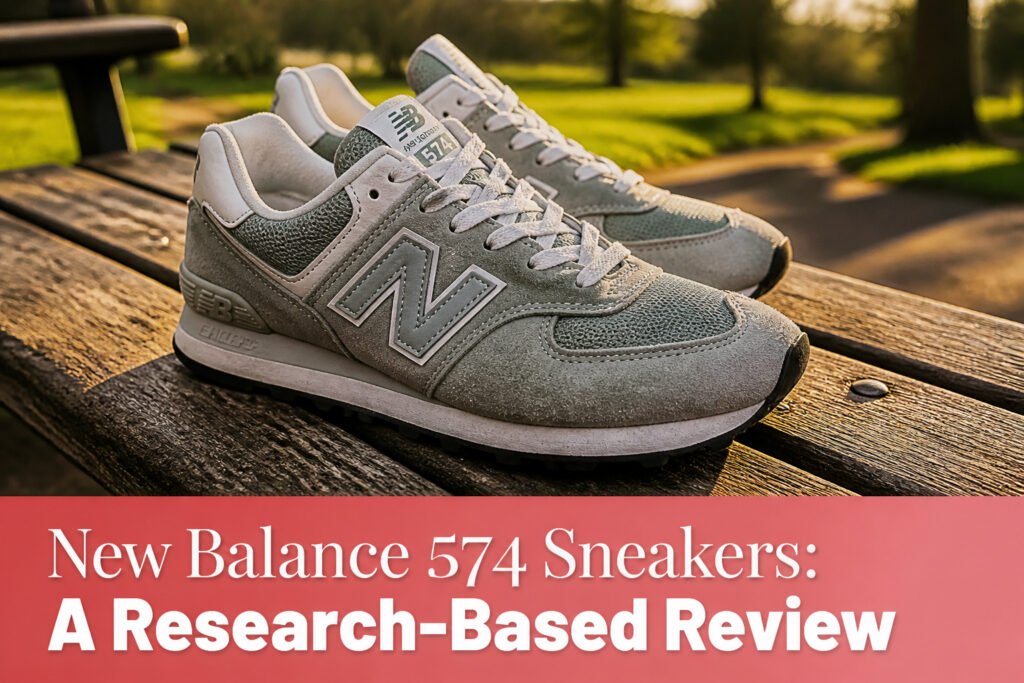
The New Balance 574 is a retro sneaker launched in 1988 that now serves as an everyday lifestyle shoe, built with genuine suede, recycled polyester mesh, and ENCAP cushioning.
Its value holds only if you accept a rigid, inflexible midsole and poor warm-weather breathability: RunRepeat lab tests scored the mesh upper just 3 out of 5 for breathability, with zero air passage through the toebox.
At roughly $85 and roughly $85 and 13.9 oz, it occupies a middle ground between disposable fashion and technical running gear, backed by a 0.55 friction coefficient on wet concrete that beats most sneakers in its class.
What the 574 Is and Why It Still Matters

The New Balance 574 debuted in 1988 as a running shoe built from the best parts of the 575 and 576, with ENCAP cushioning meant for actual miles.
That technical pedigree is still in the sole, but the silhouette long ago left the track for sidewalks and grocery runs.
The upper pairs suede with mesh, including recycled polyester at the vamp, collar, and tongue, while the midsole’s EVA foam carries approximately 3% bio-based materials from renewable sources.
What keeps the 574 in rotation four decades later is its refusal to commit fully to either side of the sneaker divide.
It is not a disposable fashion shape that falls apart in a season, and it is not a technical runner demanding a rotation schedule.
The 574 sits between those poles: comfortable enough for all-day wear, restrained enough to pair with most wardrobes, and priced low enough that replacing it does not feel like a capital event.
That middle ground is harder to find than the hype cycles suggest.
Pros

The New Balance 574 earns its place in heavy rotation through a few clear strengths.
- Traction that holds up. RunRepeat put the 574 through a grip test on wet concrete and recorded a friction coefficient of 0.55, well above the sneaker average. That outsole grips reliably on dry pavement and rain-slicked sidewalks alike, though I would not trust it on ice.
- All-day comfort backed by numbers. The same lab measured shock absorption at 92 SA, an above-average score that explains why the shoe works for long stretches of walking or standing despite its basic cushioning and modest price.
- Value that compounds. The 574 costs less than premium competitors but outlasts plenty of them; the per-wear math favors it heavily.
- Color range that fits real wardrobes. Neutrals, pastels, and saturated tones all cycle through seasonally, so finding a pair that works with what you already own is rarely a struggle.
With a very high friction coefficient of 0.55, this New Balance shoe is notably grippier than the average sneaker.
For most daily conditions, that grip removes the small hesitation you feel stepping onto damp tile or a just-washed floor.
Cons

The thick wedge EVA midsole on the New Balance 574 runs rigid and inflexible, which limits natural foot mobility more than I’d want in an everyday sneaker.
If you bend toward soft, flexible soles, the 997H or the pricier 2002R handle that better.
Breathability is the bigger problem.
Lab testing with smoke pumped through the upper showed zero passage through the toebox mesh, with only slight escape at the tongue gaps. The "mesh" panels are densely woven enough to block light entirely, and microscope inspection found no perforations.
That earned a 3 out of 5 breathability score, and in warm weather I found the shoe stifling enough that I couldn’t wait to get it off.
- The rigid midsole will bother anyone who counts on forefoot flex for long walks or standing work shifts.
- The low breathability makes this a poor choice for summer wear, hot climates, or anyone whose feet run warm.
- If you need a warm-weather sneaker, the PUMA RS-X vents better at a similar tier.
Who Should Buy

The New Balance 574 lands squarely in that sweet spot for someone who wants a recognizable sneaker without the markup that usually follows the name.
At roughly $85, it undercuts most retro runners by a noticeable margin, yet the suede-and-mesh build and ENCAP midsole hold up well enough that you are not replacing them every season.
That value proposition matters most if you walk a lot, stand through shifts, or just want one pair that handles coffee runs and casual Fridays without looking like you gave up.
Comfort here is straightforward rather than technical.
The EVA foam and heel cushioning are built for all-day wear, not for tempo runs or trail miles, and the padded collar does more for a full day on your feet than for a 5K.
Color options run deep enough that you can treat the 574 as a neutral base or a deliberate accent, which helps if you are building a smaller, more deliberate wardrobe rather than chasing drops.
I would steer clear only if you need real arch support, weatherproofing, or a shoe that transitions into actual workouts. For everyone else, the 574 is the practical choice you buy once and reach for without thinking.
Who Should Not Buy

The thick wedge EVA midsole on the New Balance 574 runs rigid and inflexible, which makes it a poor match if you want a sneaker that bends and moves with your foot.
I would steer runners and anyone doing high-mileage walking toward softer, more flexible options like the 997H or the 2002R instead.
Hot weather use is another weak spot.
The 574 lacks the ventilation that summer walking or active days demand, so I would not reach for it on warm afternoons when breathability matters. A shoe like the PUMA RS-X handles that job better.
Cushioning and Feel Underfoot

The New Balance 574 runs on a lightweight EVA foam midsole, the same basic cushioning setup it launched with back in 1988.
That foam scores 92 SA for shock absorption, which sits above average against other sneakers in its price bracket and protects your joints through long walks or standing shifts.
The tradeoff shows up in energy return, where the 574 manages just 43% — well below what modern high-rebound foams deliver.
What this means in practice is a flat, stable ride that cushions impact without pushing back. Walking feels fine; the foam absorbs what it needs to.
But pick up the pace and the shoe stays dead underfoot, offering no spring to carry you into the next stride. For anything faster than a brisk walk, the 574’s cushioning simply isn’t built to help.
Durability and Materials
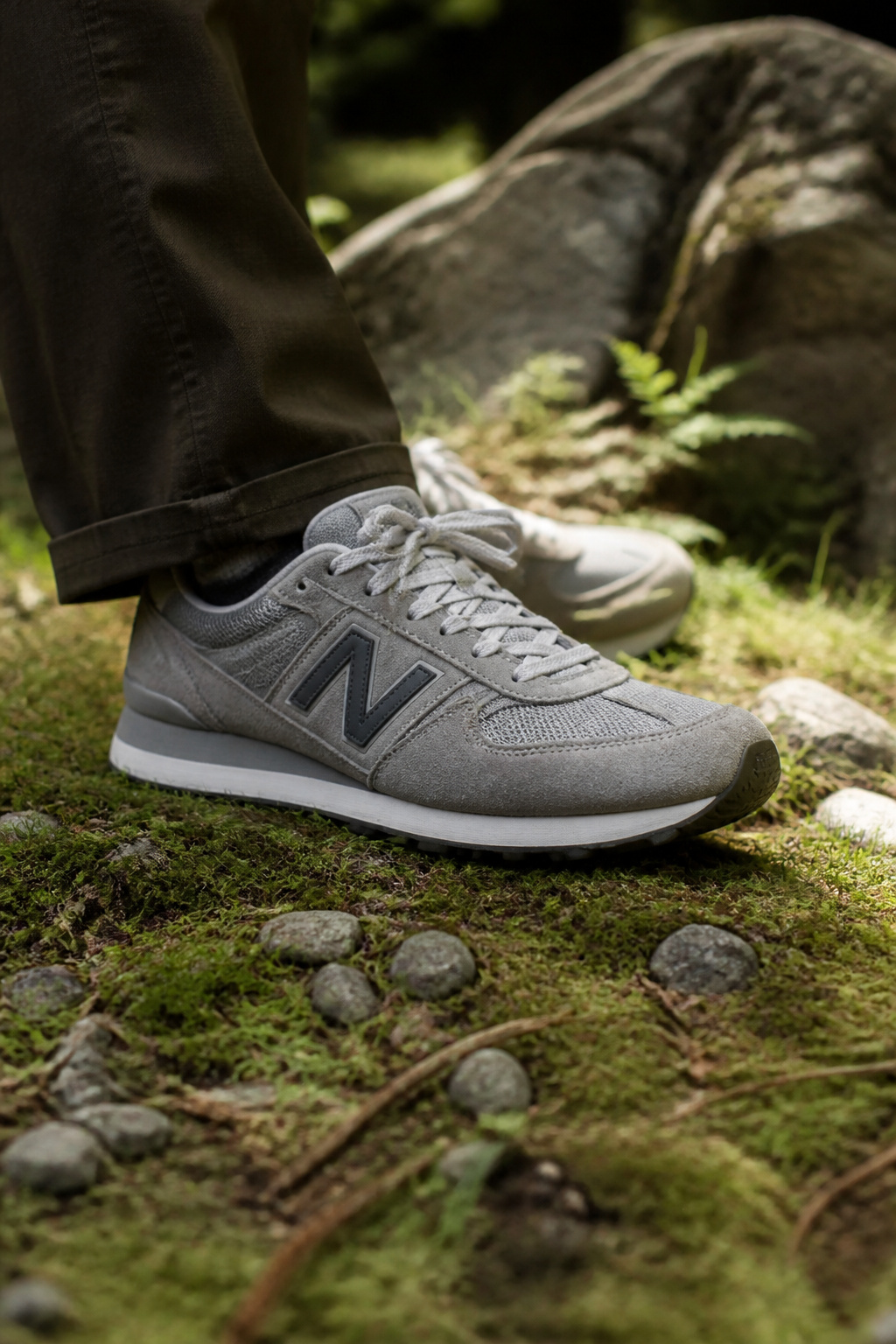
The suede on the 574 is the real deal, not a synthetic stand-in, and that changes how the shoe ages.
RunRepeat tested it with a butane torch and a leather scratch awl; the synthetic heel panel and "N" logo caught fire, but the suede didn’t, and it held up to the awl too.
For a shoe at this price, that is unusual.
The toebox gets a wide suede overlay that protects the mesh underneath, and in Dremel testing at 10K RPM and 3.2N of force, the suede only showed a small dimple.
That earned a 4 out of 5 for toebox durability, against a field where mesh-heavy alternatives at similar prices start fraying within months.
The rubber outsole and ENCAP midsole hold their shape, and the recycled components, recycled polyester in the vamp, collar, and tongue mesh and 5% recycled rubber in the outsole, are a secondary benefit rather than the main selling point.
Breathability and Weather Suitability

The New Balance 574 earns a breathability score of 3 out of 5, which lands it firmly in "skip this for July" territory.
RunRepeat’s smoke test makes the problem visible: zero smoke passes through the mesh toebox, and only a little escapes around the tongue gaps.
Those mesh panels are densely woven enough to block light entirely, with no perforations visible even under magnification.
The suede upper is genuine, which partly explains the heat trap.
Real suede doesn’t ventilate like engineered knits, and the synthetic heel panel and "N" logo add more layers that don’t breathe. For an $80–$90 shoe, the material quality is respectable, but it works against you in warm weather.
I treat the 574 as a three-season sneaker. Spring mornings, fall afternoons, and dry winter days are where it lives comfortably.
Above 75°F, my feet overheat in these within an hour of walking. If your climate runs hot or your feet run warm, this is not your everyday shoe, and no amount of vintage styling makes up for damp socks.
Weight

The New Balance 574 weighs 13.9 oz (393g) in a men’s US size 9, which sits almost exactly on the average for low-top sneakers at 13.7 oz.
That middle weight is where this shoe earns its keep for all-day wear. The suede and mesh upper reads bulky visually, but the scale does not lie, and neither does a full afternoon on your feet.
A lighter mesh runner, often down near 9 oz, can feel quicker at first but tends to telegraph every sidewalk crack through thinner cushioning.
The 574 avoids that. On the other end, a leather cupsole or retro basketball build pushing 20 oz turns into a noticeable load by evening.
The 574 splits that difference cleanly: enough substance to absorb pavement, not enough to drag. For someone building a capsule wardrobe around one reliable sneaker, this weight class is the practical compromise that actually works.
Size and Fit

The New Balance 574 runs true to size, but width options matter more here than with most sneakers.
At 88.7 mm across the widest interior point, the standard width sits snug even on a medium foot and rules itself out for broader shapes.
New Balance offers alternative widths for this model, which is the saving detail that keeps it wearable across actual foot diversity.
The 574’s rigid structure means fit is less forgiving than stretchier knit or mesh uppers.
There is no real break-in period to wait for, which is good news, but also no give to hope for if the initial fit is off.
Order the width your foot actually is, not the width you usually accept from brands that do not bother making one.
How I Wear the 574

The 574’s suede and mesh upper sits at a visual midpoint between a running shoe and a street sneaker, which is exactly where its styling range lives.
I reach for mine with straight-leg denim or a cotton midi skirt and a tucked tee; the streamlined last keeps the foot from looking bulky, but the ENCAP midsole adds enough height that cropped pants work better than full-length flares.
Grey remains the most useful colorway because the tonal suede panels hide scuffs and the mesh breaks up the silhouette without shouting for attention.
Brighter suedes or collaborations read as deliberate statements, which narrows the shoe to weekends rather than a casual office.
The recycled polyester mesh and lightweight build mean the 574 is best for dry, mild days and indoor hours, not standing-water commutes or formal settings where leather is expected.
For a woman building a capsule wardrobe from pieces she already owns, the 574 earns its shelf space as the shoe that handles grocery runs, coffee meetings, and travel days without changing first.
What Else to Consider at This Price

A softer, more flexible sole sits at the top of most shoppers’ wish lists once they try the 574 on.
The wedge EVA midsole here is built for stability, not bend; if your stride wants to roll and flex, you will notice the resistance immediately. Support under a long day of standing is where the 574 still beats most pliable alternatives.
Summer heat changes the calculation entirely. Mesh uppers move air in a way the 574’s layered construction never will, and the difference matters once temperatures climb past mild.
You sacrifice some of the shoe’s deliberate structure and that denser lower midsole that gives the heel its planted feel.
I would steer flexible-sole seekers toward the 997H line and heat-beaters toward something like PUMA’s RS-X before I would talk either group into making the 574 work.
The 574 wins when you want one shoe to handle seasons and surfaces without thinking about it, not when you are optimizing for a single condition.
My Verdict After Months of Wear

The New Balance 574 earns its keep as a sneaker that does not ask you to choose between looking pulled-together and staying comfortable through a full day on your feet.
The support holds up for walking commutes, standing errands, or travel days when you are logging real hours upright.
The color range means most women can find a pair that works with what they already own, which matters more than trend appeal when you are building a wardrobe around pieces that last.
Where it falls short is under scrutiny. The 574 is not a running shoe, and treating it like one will cost you in joint soreness and shortened lifespan.
The cushioning is tuned for lifestyle wear, not impact absorption at pace. If your weeks include actual miles on pavement or trail, you need dedicated footwear for that and the 574 for everything else.
I would recommend this to the woman who wants one reliable pair for casual Fridays, weekend markets, and airport terminals: someone who values versatility over specialization and will wear them enough to justify the moderate price.
I would not recommend it to the committed runner, the hiker, or anyone whose feet need orthotic-level structure.
You lose some flexibility and gain some focus, or the other way around. The 574 chooses flexibility, and for the right wardrobe, that is exactly the right choice.
Frequently Asked Questions
What are the pros and cons of the New Balance 574?
The 574 grips wet concrete with a friction coefficient of 0.55, above the sneaker average, and scores 92 SA for shock absorption.
Two clear drawbacks are the rigid wedge EVA midsole that limits natural foot flex and a breathability score of 3 out of 5 that traps heat in warm weather.
How does the New Balance 574 fit?
It runs true to size, but width matters more here than with most sneakers.
The standard width measures 88.7 mm at its widest interior point, which fits snug even on medium feet. New Balance offers alternative widths for this model, so order the width your foot actually needs rather than accepting the default.
Is the New Balance 574 good for summer wear?
No.
Lab smoke testing showed zero air passage through the toebox mesh, with ventilation only at tongue gaps. The scored breathability of 3 out of 5 and densely woven panels that block light entirely make this shoe stifling above 75°F.
Why are New Balance 574 so popular?
The 574 occupies a middle ground that is harder to find than hype cycles suggest: comfortable enough for all-day wear, restrained enough for most wardrobes, and priced around $85 so replacement never feels like a major expense.
It pairs recognizable styling with genuine suede and ENCAP cushioning without the markup of premium retro runners.
What is New Balance 574 good for?
Daily walking, standing through shifts, casual Fridays, travel days, and coffee runs. The 92 SA shock absorption and planted heel feel protect joints through long hours upright, but the shoe is not built for actual running, hiking, or tempo-paced miles.
Is the New Balance 574 a dad shoe?
The silhouette reads as a visual midpoint between a technical runner and a street sneaker, which gives it crossover appeal beyond any single demographic.
Its styling range works with straight-leg denim, cotton skirts, or cropped pants, and grey colorways in particular function as a neutral wardrobe base rather than a statement.
Are New Balance 574 still cool?
Cool has a shorter lifespan than the 574’s four-decade production run. What persists is practicality: the shoe stays in rotation because it pairs with what people already own, hides scuffs in tonal suede, and does not require outfit planning.
Brighter colorways and collaborations read as deliberate fashion choices; core neutrals simply work.