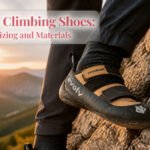
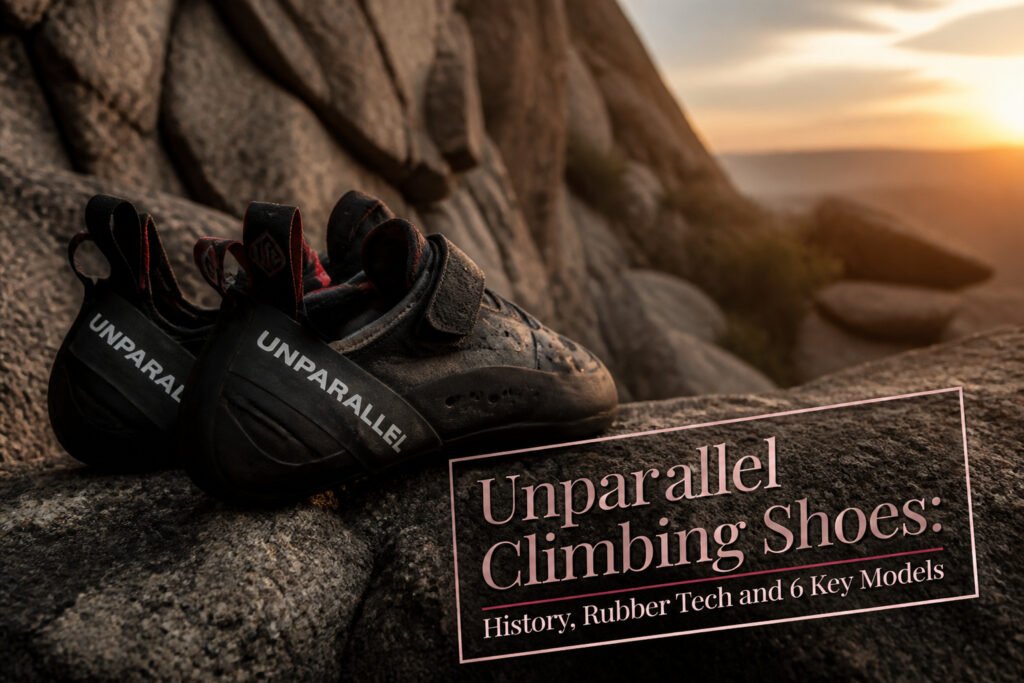
Unparallel climbing shoes are a California-made footwear line built by the same engineers who developed Five Ten’s Stealth rubber formulas before Adidas bought that brand in 2012.
Their two rubber compounds demand different sacrifices: RS sticks to marginal smears but wears fast, while RH holds structure through long pitches at the cost of some friction.
Tomoa Narasaki designed the Flagship Pro himself with 3.5 mm of RS rubber and a split midsole, a detail that signals these are competition-grade shoes shaped by actual finals-level climbers rather than marketing committees.
Where Unparallel Came From
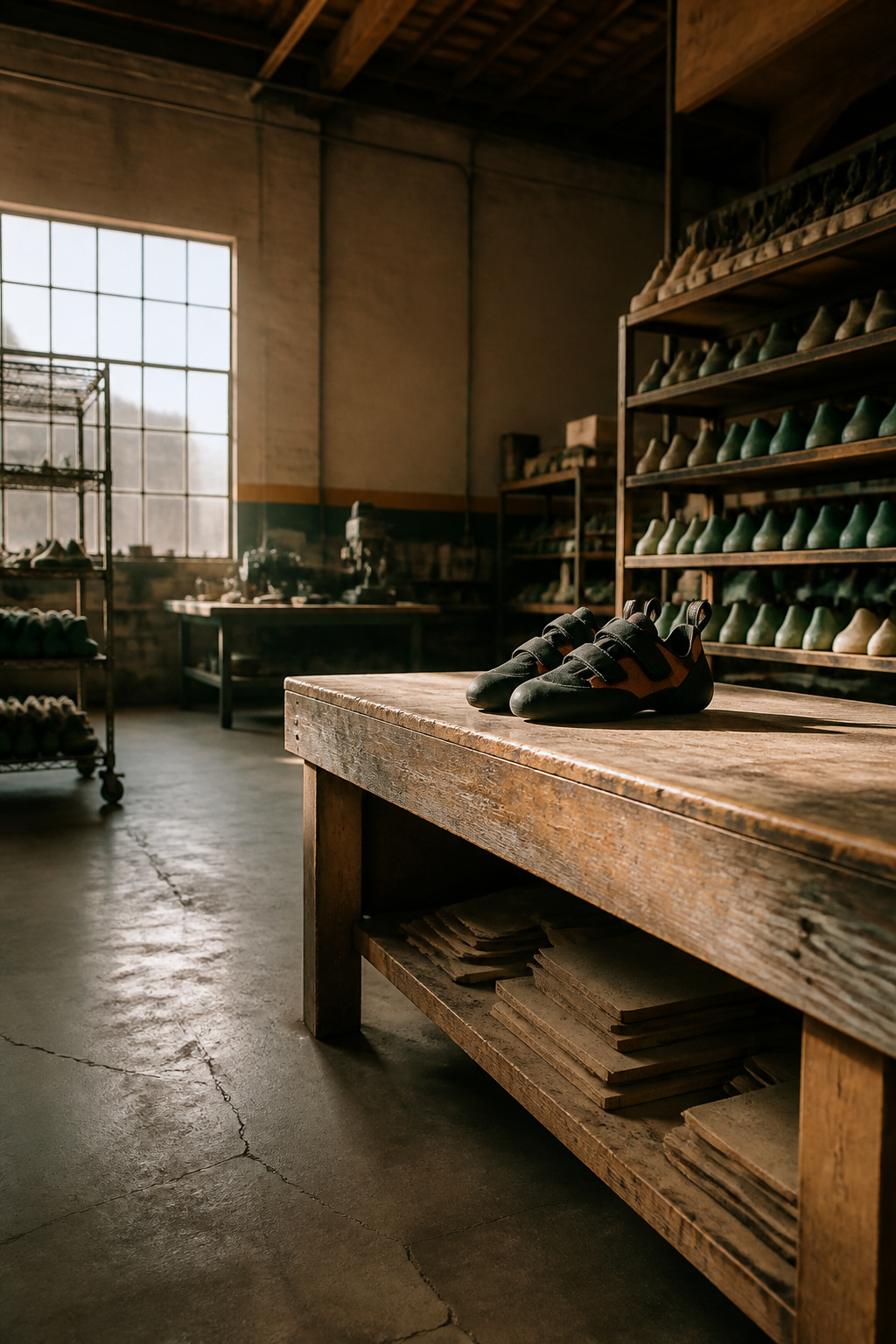
Charles Cole founded Five Ten in 1985, and Adidas bought the trademark in 2012.
Sang Lee, who had run Five Ten’s production, left with a team of former engineers and started Unparallel in 2017. The new company kept manufacturing in California, carrying forward the rubber expertise that had made Five Ten’s Stealth rubber famous.
Old Five Ten fans often claim Unparallel shoes are slightly better, with fit and quality cleaned up in the rebranded version.
For climbers, this lineage matters practically: the same people who developed the sticky rubber formulas climbers trusted for decades are still refining them, just under a new name with their own factory floor.
RS and RH Rubber

Unparallel builds every model around two rubbers that behave almost like different sports. RS, or Rubber Soft, is the friction-first compound: it smears, it sticks to marginal footholds, and it lets you feel the rock through the sole.
RH, or Rubber Hard, trades some of that stick for structure. A stiffer platform supports your arch and toes on long pitches, and the rubber itself wears longer before you burn through the rand.
The UpMocc, built on RH, still grips remarkably well for a harder compound; sized loose it works for full days on Lumpy Ridge granite, though really sustained hard slab eventually asks for more support than a soft-flexing shoe can give.
Some models split the difference.
The Qubit combines RS, RH, and VD rubber in different zones. VD, which stands for Virtual Damping, shows up mainly in toe patches where repeated hooking and torquing would chew through softer compounds too fast.
Picking between RS and RH is not about good versus bad rubber; it is about whether your day involves delicate smearing on boulders or hours of edging on multi-pitch routes.
I reach for RH when I know my feet will still be in the shoes at hour six, and RS when the move I am staring at depends entirely on how much rubber I can trust against a dime-edge smear.
Up Mocc
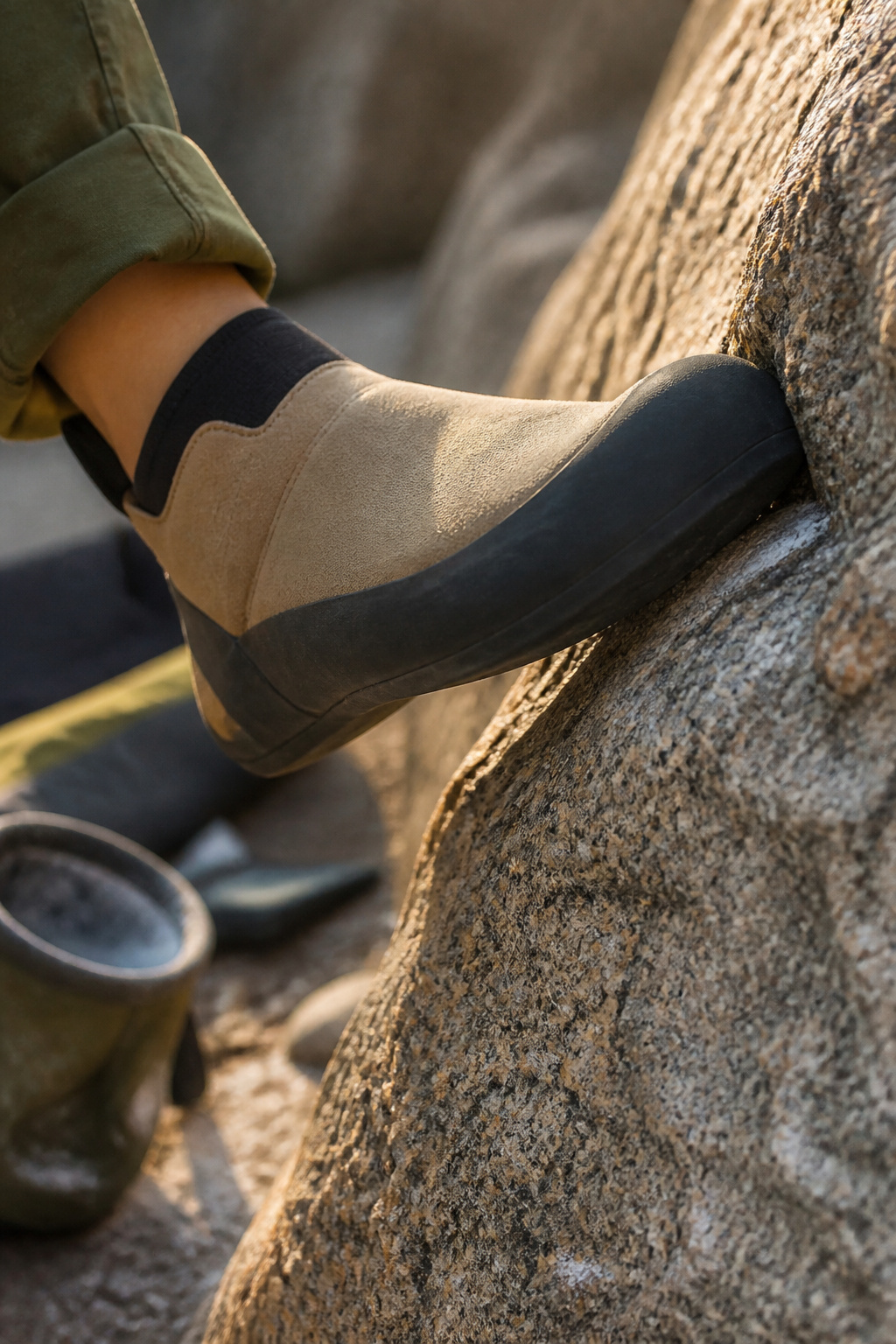
At $127, the Up Mocc sits at the friendlier end of the Unparallel lineup without reading as entry-level compromise.
The slipper build runs smooth leather through the upper with a full RH rubber sole at 4.2 mm, and that combination is where the comfort comes from: no laces, no velcro, just a soft pocket that molds over time.
The catch, of course, is fit security. Unparallel addresses this with a VD rubber toe patch that adds grip for toe hooks and keeps the shoe from shifting when you weight it oddly on slab or in cracks.
OutdoorGearLab scored it an 8.0 for comfort and 9.0 for smearing, with edging trailing at 6.0, which tells the story.
This is the shoe for the climber who does a little of everything and would rather own one pair that handles most days than specialize for each discipline.
Sizing runs generous: half to a full size down for comfort, one and a half to two sizes for performance. The Up Mocc suits someone building a quiver on a budget or anyone whose feet rebel against aggressive downturns.
It will not out-edge a dedicated sport shoe or out-precision a bouldering slipper, but it will not force you to change footwear between the gym crag and the multipitch either.
Flagship Pro
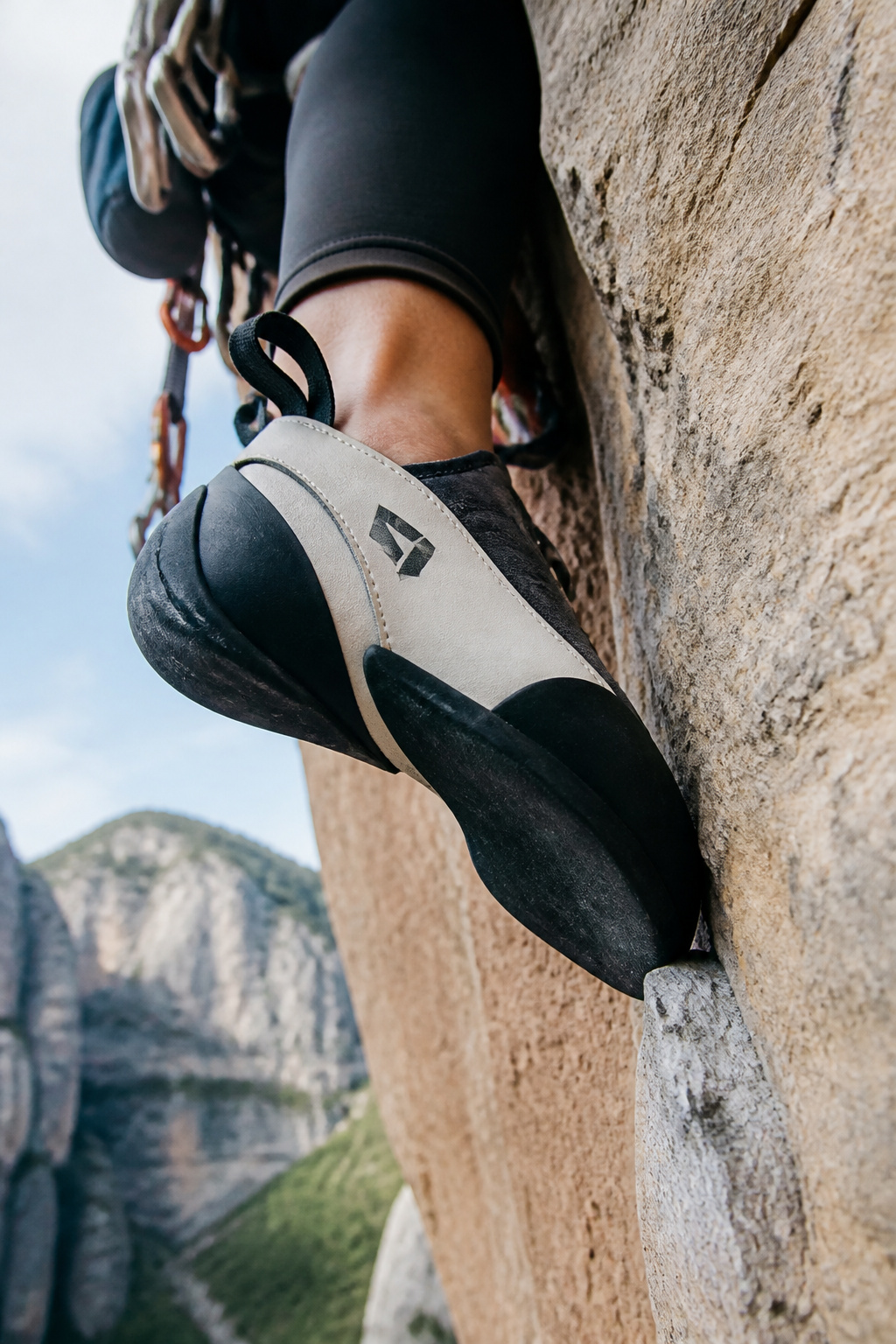
The Flagship Pro was built around the idea that a shoe aggressive enough for World Cup finals should not need a break-in period.
Tomoa Narasaki designed it to perform from first wear, and the downturned profile with 3.5 mm of RS rubber delivers exactly that.
RS rubber this thin lets you feel the smallest edges while the split midsole still gives enough support to trust your weight on micro-holds.
On steep terrain the shoe excels at toe and heel hooks, and the built-in structure carries over to hard bouldering, route climbing, and indoor training without softening out.
Comfort is what you give up. A downturn this pronounced fights your foot’s natural shape; the shoe wants to curl your toes and keep them curled.
For a single hard pitch or a bouldering session the performance gain is clear, but wear it all day at the crag and your feet will remind you why "all-around" here means all-around hard climbing, not all-around comfort.
That split midsole is worth noting: it keeps some stiffness despite the thin rubber, so the Flagship Pro edges better than softer slippers that bag out and lose precision over time.
The shoe still demands good footwork; thin rubber punishes sloppy placement more than thick, supportive platforms would. Size it for performance, not for walking between problems.
Qubit
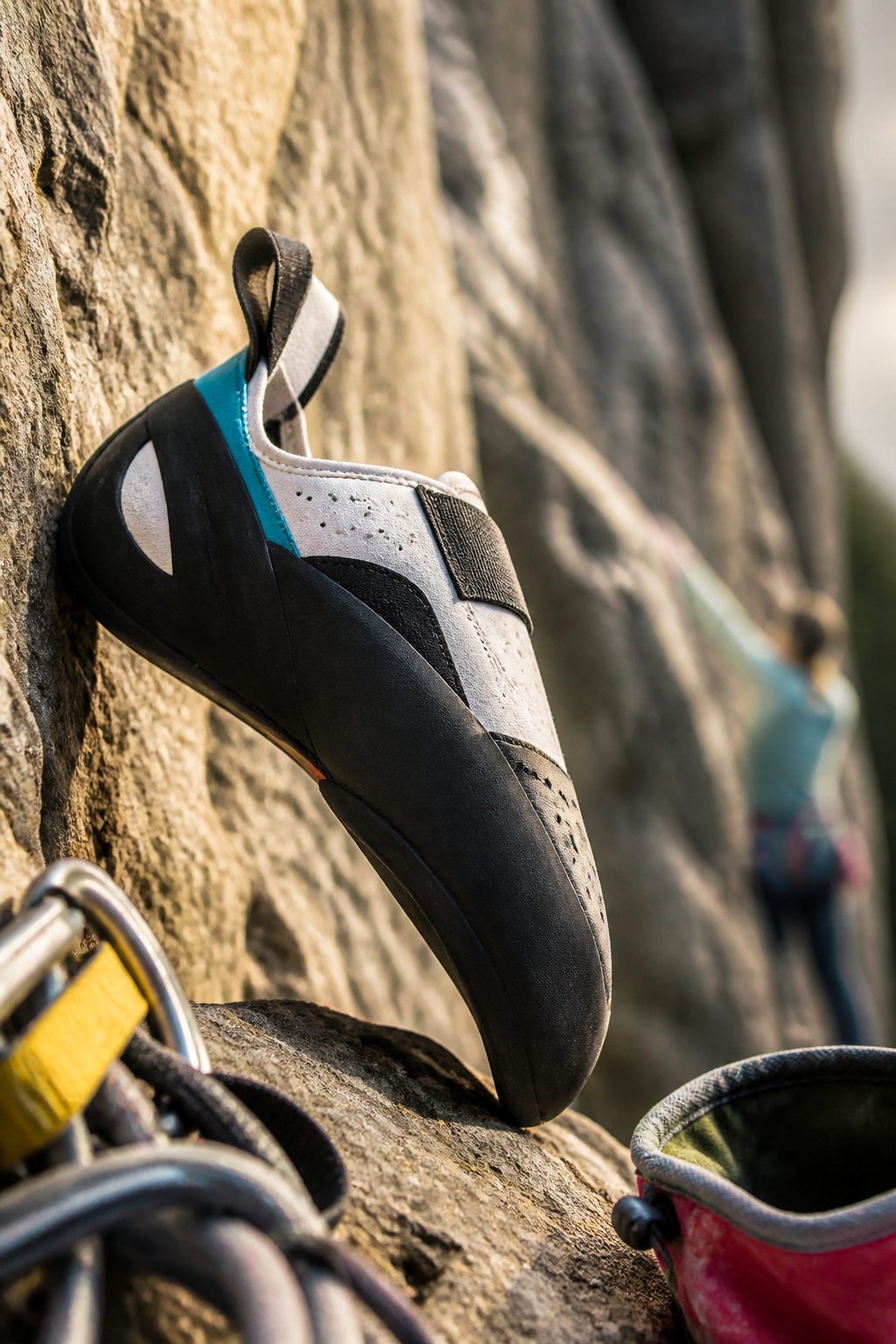
The Qubit sits in that narrow space where one shoe has to handle roof problems and still edge on vertical faces.
A long RH midsole gives it enough structure to stand on small footholds, while the aggressive downturn keeps your toes loaded for overhanging work.
The 3D RS molded toe patch adds grip for toe hooks without the dead, board feel of a pure boulder shoe.
It bridges categories better than most, but that same versatility is where it gives ground to specialists.
On sustained steep terrain, a softer shoe with more sensitivity lets you read the wall through your feet. On long technical routes, the Qubit’s support is welcome, though a stiffer dedicated edging shoe still wins for micro-footholds.
The fit runs slightly wider and softer than the Regulus, which makes it more forgiving for a full day but less precise when the foothold is nothing more than a dime edge.
Leopard II
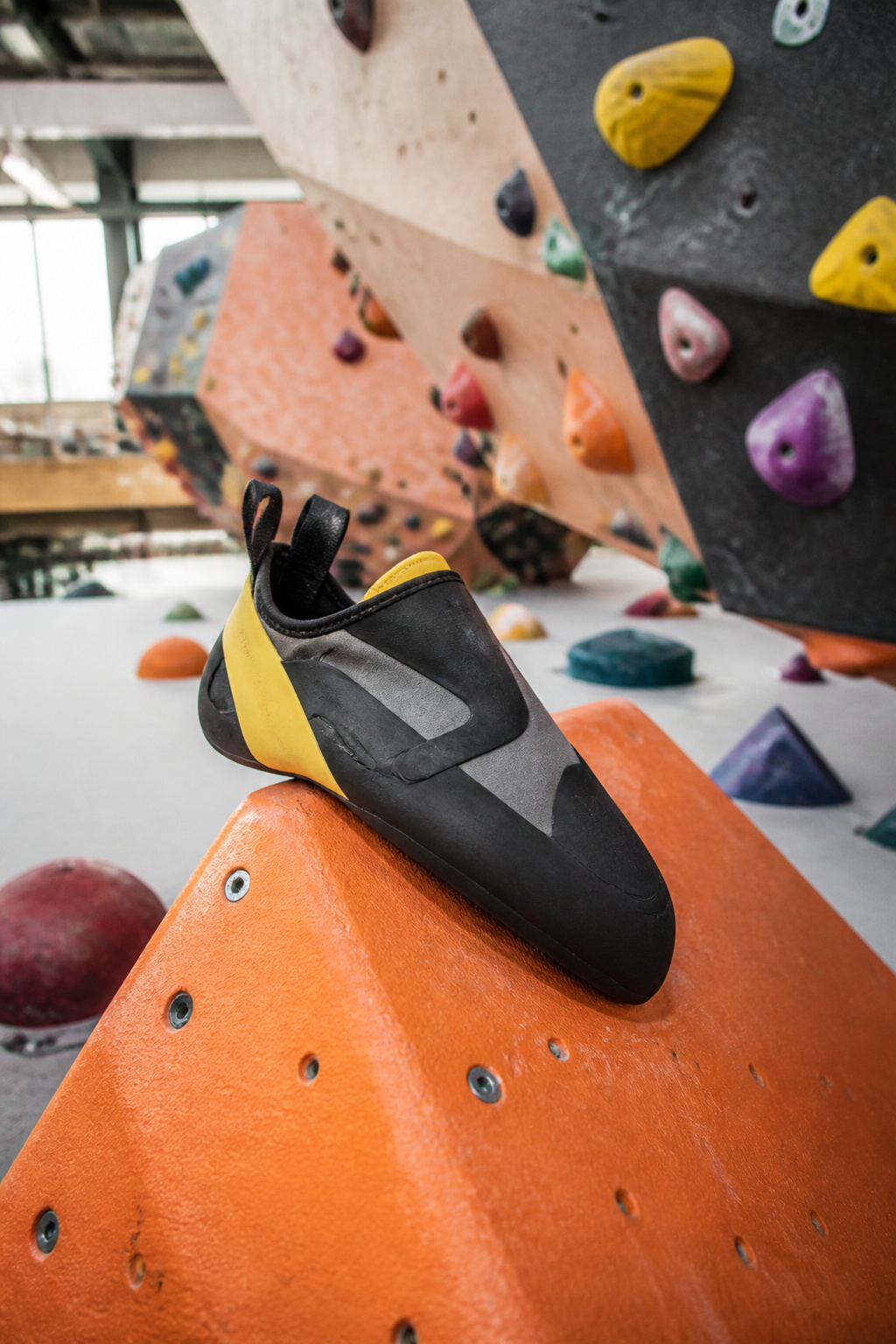
The Leopard II carries less rubber wrap than its aggressive siblings in the Unparallel line, which makes it the softest shoe the brand builds.
That softness pairs with a VD rubber sole and an RS heel to deliver exceptional stickiness on plastic, so the Leopard II earns its spot as an indoor specialist.
Sensitivity matters more than support when you’re reading colored volumes and smearing between bolted holds, and this shoe trades away the structure that would dull that feedback.
Outdoors, the same softness becomes a liability. Small edges and crystalline rock demand a platform that does not deform under your body weight, and the Leopard II’s soft midsole lets too much through.
Sandstone exceptions exist, where the rubber grips textured surfaces well enough to compensate, but on vertical granite or limestone pockets a stiffer shoe wins every time.
Outdoor Gear Lab’s testing on the budget end of this brand found that "the inexpensive UpMocc, on the other hand, is built with an ultra-sticky rubber, inspiring confidence on small holds of all varieties, both outside and in the gym."
The Leopard II inverts that proposition: it pays more for the same stickiness and saves nothing, so you buy it when your week lives in the gym and the rock outside is a rare treat.
Souped Up

The Souped Up carries an RH split midsole and an RS toe patch, the same combination that drives the Flagship Pro, though here the toe patch uses VD rubber instead.
That split midsole is what lets the forefoot bend independently of the heel, so your toes can pull in and grip during a hook while the arch still has something to push against.
It matters most on overhanging problems where you’re toe-hooking repeatedly or holding body tension through your feet.
The shoe wraps in soft, sticky rubber throughout and runs more smeary than the Flagship Pro, with slightly more rubber coverage overall.
That bendiness pays off on steep terrain and indoor volumes where feel trumps edging support, but sharp outdoor edges will let you know the midsole is not there to shield your toes.
Sizing runs from half a size to a full size up depending on foot shape and how tight you want the wrap.
Up Lace

The Up Lace is Unparallel’s stiff-midsole performance shoe built for long vertical climbs and crack climbing, where support matters more than feel.
Its rounded toe and rigid platform keep your foot from folding over small edges during hour-long pitches, and the wrap of side rubber up the shoe adds protection when you jam into cracks.
Laces matter here in a way they do not on a bouldering slipper.
A Velcro strap or slip-on tension system cannot fine-tune pressure across a whole foot the way laces can, and on a multi-pitch route that distinction becomes the difference between tolerable and miserable.
The lacing system on this model is fast enough that you are not fumbling at the base of a route.
Some climbers compare the Up Lace to a stiffer Anasazi Pink or a laced Miura with better fabric.
The heel in particular gets mentioned as an improvement over older Five Ten models. Sensitivity is what you give up: this is not the shoe for reading friction on glassy slabs or pulling hard on overhung terrain.
For that, you want a softer slipper like the Sirius. The Up Lace wins when the day is long and the climbing is straight up.
Sizing Down for Performance
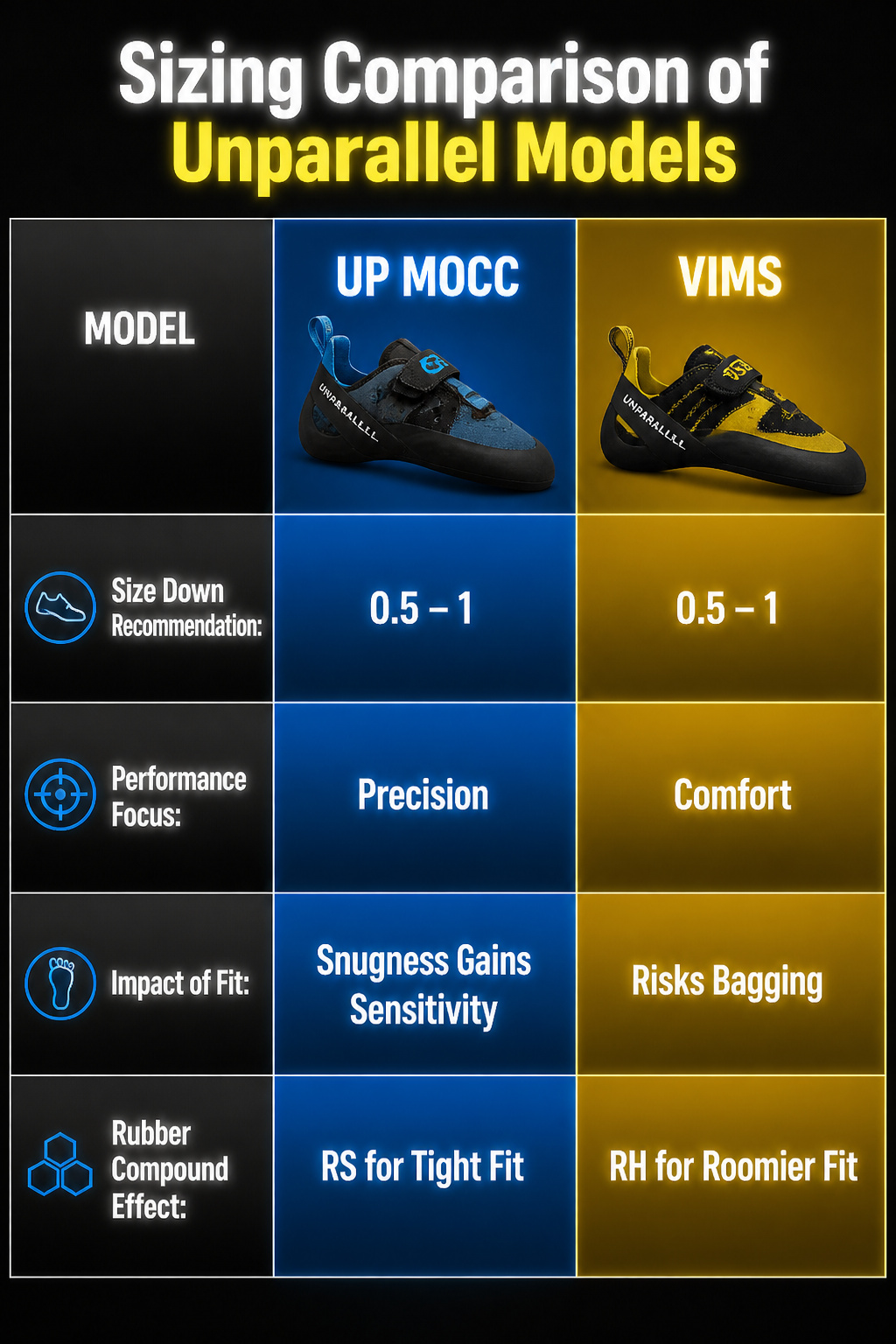
Most Unparallel models need 0.5 to 1 size down from your street shoe, though the exact amount depends on the model and what you plan to do with it.
The Up Mocc illustrates this tension clearly: size down aggressively and you gain precision on small edges, but you lose the relaxed fit that makes the same shoe workable for cracks and all-day pitches.
Size up for comfort and crack performance, and the shoe bags where you need tension.
Personal preference splits the difference. Some climbers take their street size in Unparallel and accept a roomier toe box; others downsize a full size for hard sport or bouldering where sensitivity matters more than support.
The Vims, with their softer midsole, reward a snugger fit for steep terrain but punish that choice on vertical slabs where the foot wants more structure.
Wrong in either direction costs you. Too large, and the heel lifts or the toe rolls on thin edges; too small, and the rand stretches prematurely or you numb out mid-pitch.
The rubber compounds compound this: RS sticks better when you can feel the hold, which a tight fit provides, while RH models tolerate a hair more room because the stiffer sole does some of the work your toes would otherwise do.
What Pros Wear and What It Proves

Tomoa Narasaki, a World Cup competitor, designed the Flagship Pro himself, and that distinction matters more than a typical athlete sponsorship.
When a climber puts their own name on a shoe’s development rather than simply wearing a brand’s existing model, the design reflects what they actually need on the wall, not what a marketing team wants to sell.
The Flagship Pro carries 3.5 mm of RS rubber and a split midsole that keeps support intact despite the aggressive downturn. Narasaki built it for overhangs and micro-edging straight from the box, no break-in period required.
That specificity tells you something: this is a shoe shaped by someone who spends hours on tiny footholds in competition settings, not by a committee guessing at what climbers want.
The broader pattern with Unparallel is that their pro users tend to be climbers who could wear any brand but choose this one without the massive sponsorship infrastructure of La Sportiva or Scarpa.
Their presence in finals and hard outdoor sends signals that the rubber technology and last shapes are holding up where it counts.
The UpMocc, for instance, lacks competition glamour but earns its reputation on long multi-pitch days and gym sessions alike, with premium sticky rubber that performs on marginal rock and plastic both.
Quality Control to Watch For

Delamination around the toe rubber and ripped pull tabs showed up on early pairs of the Regulus and Sirius, enough that some buyers passed on reordering.
Newer releases have reportedly cleaned up most of the fit and quality issues, and sizing now stays consistent across models, but the exception of the UpMocc still shifts slightly from year to year.
Try on the exact pair you plan to keep rather than trusting a previous season’s size, and check the toe cap rubber and pull tabs under good light before you commit.
If the shoe tightens down well from toe to heel with no gapping in the heel cup, you have likely dodged the problems that plagued the first run.
Frequently Asked Questions
What are the best Unparallel climbing shoes?
The Up Mocc, Flagship Pro, and Qubit stand out for most climbers. The Up Mocc works as an affordable all-rounder at $127, the Flagship Pro handles aggressive sport and bouldering, and the Qubit bridges steep and vertical terrain.
Pick based on whether you need one shoe for everything or a specialist for your main style.
How do Unparallel climbing shoes fit?
Most models need 0.5 to 1 size down from your street shoe, though the exact amount varies by model and use.
The Up Mocc runs especially generous: half to a full size down for comfort, one and a half to two sizes for performance.
Sizing too large lets the heel lift or toe roll; too small numbs your feet or stretches the rand early.
What types of rubber do Unparallel climbing shoes use?
RS (Rubber Soft) and RH (Rubber Hard) are the two main compounds.
RS sticks better and smears well but wears faster; RH lasts longer and supports edges but sacrifices some friction. Some models also use VD (Virtual Damping) on toe patches where repeated hooking would destroy softer rubber.
Who owns Unparallel climbing shoes?
Sang Lee founded Unparallel in 2017 after leaving Five Ten, taking a team of former engineers with him. The company remains independent and manufactures in California, carrying forward the rubber expertise that made Five Ten’s Stealth rubber famous.
Where can I buy Unparallel climbing shoes?
Retailers like Backcountry carry them, and outdoor gear shops with climbing selections often stock the line.
Check the exact pair you plan to keep before buying if possible, since sizing can shift slightly from year to year on models like the Up Mocc.
What is a no edge climbing shoe?
Their RS rubber models like the Flagship Pro thin the sole to 3.5 mm for sensitivity instead, letting you feel holds directly through the rubber rather than wrapping the toe in a continuous band.